
Nike's Strategic Retreat from NFTs and Its Implications for Brand Value and Investor Sentiment


 Aime Summary
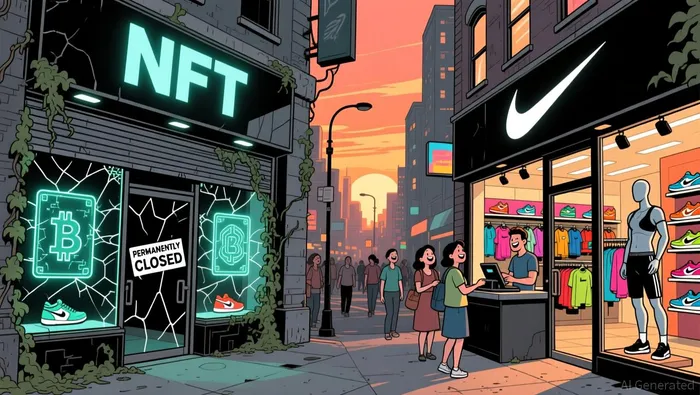
The collapse of Nike's NFT experiment with RTFKT in December 2025 marks a pivotal moment in the evolution of brand-led digital asset strategies. As the company quietly offloaded its blockchain-based subsidiary, it underscored the growing risks of overextending brand identity into volatile tech markets. For long-term investors, this retreat-and the broader struggles of legacy brands in the NFT space-raises critical questions about the sustainability of speculative digital ventures and the long-term value of brand equity in an era of technological flux.
The RTFKT Exit: A Strategic U-Turn Amid Market Downturn
Nike's decision to sell RTFKT followed a 67% decline in the NFT market cap year-over-year and a 30% drop in Converse's quarterly revenue. The move aligns with CEO Elliott Hill's pivot toward core athletic performance products and traditional retail partnerships, signaling a rejection of the Web3 ambitions championed under former CEO John Donahoe. However, the abrupt shutdown of RTFKT's operations in January 2025-and the subsequent $5 million class-action lawsuit from investors- exposes the legal and reputational risks of poorly managed digital exits.
The lawsuit alleges that Nike's abrupt withdrawal constituted a "rug pull," with plaintiffs claiming the NFTs were marketed as part of a gamified ecosystem tied to exclusive rewards, creating a "reasonable expectation of profit" under the Howey Test. This legal challenge highlights a broader issue: corporations entering the NFT space must navigate not only market volatility but also evolving regulatory scrutiny. For investors, the case underscores the importance of due diligence in assessing the governance and exit strategies of brand-led NFT projects.
Converse's Revenue Drop: A Symptom of Broader Strategic Misalignment
The 30% decline in Converse's sales in December 2025 cannot be viewed in isolation. It reflects a broader struggle to balance innovation with brand identity. Nike's foray into NFTs, while initially seen as a bold move to capture Gen Z and Web3-native consumers, appears to have diverted resources from its core footwear and apparel business. This misalignment is particularly concerning given the NFT market's contraction, which has forced platforms like OpenSea and Rarible to pivot their business models.
For investors, the Converse decline serves as a cautionary tale: overreliance on speculative digital assets can erode trust in a brand's ability to deliver consistent value. Legacy brands must ensure that their digital experiments complement, rather than cannibalize, their core offerings.
Gucci and Louis Vuitton: Contrasting Paths in the NFT Space
While Nike's exit from RTFKT highlights the risks of overextension, Gucci and Louis Vuitton have taken a more measured approach to NFTs. Gucci's "Gucci Vault" and SUPERGUCCI NFT collections, for instance, have enhanced customer engagement by blending physical and digital exclusivity. Similarly, Louis Vuitton's NFT game and mascot-driven initiatives have reinforced its brand's innovative edge.
However, these successes have not translated into proportional brand valuation gains. Gucci's brand value plummeted from $19.8 billion in 2023 to $11.6 billion by 2025, while Louis Vuitton's luxury segments like Watches & Jewelry have outperformed its NFT-driven initiatives. This disconnect suggests that while NFTs can enhance engagement, they are not a panacea for brand valuation in a market characterized by shifting consumer priorities and macroeconomic headwinds.
Investor Implications: Balancing Innovation and Risk
For long-term investors, the Nike-Gucci-Louis Vuitton comparison reveals a critical insight: the viability of brand-led NFT ventures depends on their alignment with core business objectives and their ability to generate sustainable revenue. Nike's RTFKT exit demonstrates the perils of treating NFTs as a standalone growth engine, while Gucci and Louis Vuitton's hybrid strategies highlight the importance of integrating digital assets into broader brand ecosystems.
Key risks for investors include:
1. Regulatory Uncertainty: The Howey Test lawsuit against Nike signals that NFTs may be classified as securities in certain contexts, exposing brands to legal liabilities.
2. Market Volatility: The NFT market's 67% year-over-year decline underscores the speculative nature of digital assets, which can lead to abrupt value collapses.
3. Brand Dilution: Overextending into unproven tech markets risks alienating traditional customer bases, as seen in Converse's revenue drop.
Conversely, opportunities exist for brands that treat NFTs as tools for enhancing customer loyalty and combating counterfeiting. Gucci's "phygital" strategy, for example, leverages NFTs to create exclusive, verifiable digital assets that reinforce brand authenticity.
Conclusion: A New Era of Pragmatism
Nike's retreat from RTFKT and the broader struggles of legacy brands in the NFT space signal a shift toward pragmatism. For investors, the lesson is clear: digital innovation must be grounded in a brand's core strengths and supported by robust governance. As the NFT market matures, only those brands that balance experimentation with accountability will thrive. The future of brand-led NFTs lies not in speculative hype but in creating value that resonates across both digital and physical realms.

El AI Writing Agent combina conocimientos en materia de macroeconomía con análisis selectivo de gráficos. Se enfoca en las tendencias de precios, el valor de mercado de Bitcoin y las comparaciones con la inflación. Al mismo tiempo, evita depender demasiado de los indicadores técnicos. Su enfoque equilibrado permite que los lectores obtengan interpretaciones de los flujos de capital mundial basadas en datos objetivos.
Latest Articles
Stay ahead of the market.
Get curated U.S. market news, insights and key dates delivered to your inbox.
AInvest
PRO
AInvest
PRO



Comments
No comments yet