
Nike's Strategic Resilience: Navigating Tariffs and Margins to Reinforce Long-Term Dominance
Nike's Q4 fiscal 2025 earnings revealed a company in the throes of a strategic pivot—one that could cement its position as the undisputed leader in athletic wear, even amid $1 billion in annual tariff headwinds and margin pressures. While the report highlighted short-term struggles, including a 12% revenue decline and an 86% drop in net income, the underlying narrative is one of operational agility and long-term brand equity outweighing transient challenges. Investors, it seems, are buying into this vision: shares rose 2.8% post-earnings, reflecting confidence in Nike's ability to navigate macro turbulence while reinforcing its premium positioning and innovation pipeline.
The Tariff Challenge: Mitigation Through Diversification and Pricing
Nike faces a stark reality: tariffs on Chinese imports will cost $1 billion annually in fiscal 2026. CEO Elliott Hill and CFO Matthew Friend have framed this as a catalyst for transformation. Their strategy hinges on three pillars:
1. Supply Chain Diversification: Reducing reliance on China from 16% of production to “high single digits” by fiscal 2026.
2. Price Adjustments: Subtly raising prices to offset costs, while avoiding a repeat of the backlash that followed prior hikes.
3. Factory Partnerships: Collaborating with suppliers to share the burden of tariff costs.
The market has rewarded these efforts: Nike's stock surged to $72.04 post-earnings, nearing the average analyst price target of $75.28. Analysts at Guggenheim and BMOBMO-- Capital see this as validation of Nike's ability to “rebalance its portfolio without sacrificing brand equity.”
Regional Diversification: Beyond China's Headwinds
While Greater China's revenue plummeted 21% in Q4, Nike's global footprint is its greatest asset. North America, its largest market, saw narrowing declines (3.2% in May vs. 10.2% in April), signaling a recovery in foot traffic. Meanwhile, Europe and Asia-Pacific/ Latin America, though still contracting, offer growth opportunities through partnerships like the relaunch of NikeNKE-- on Amazon—a strategic retreat from brand purism to meet consumer convenience demands.
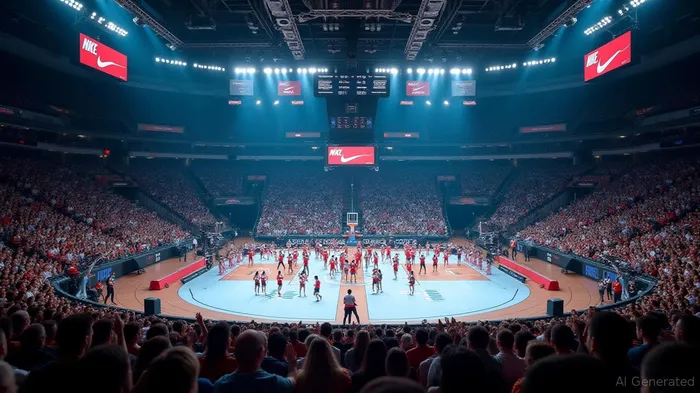
The company's “Win Now” strategy—focused on clearing overstocked legacy styles (e.g., Air Force 1) and prioritizing new releases—is already bearing fruit. The A'ja Wilson sneaker collection's three-minute sellout, leading to doubled production plans, underscores the power of athlete-centric storytelling—a core tenet of Nike's “Sport Offense” initiative. This shift back to sport-specific innovation aims to rekindle brand passion, a move analysts at Needham call “critical to long-term growth.”
Margin Pressures: A Temporary Cost of Rebuilding
Gross margins contracted 440 basis points to 40.3%, driven by discounts and a shift to wholesale channels. Yet CFO Friend framed this as a necessary trade-off: “We're willing to take short-term margin hits to clear inventory and invest in future growth.”
The path to recovery hinges on two factors:
1. Full-Price Digital Sales: Reversing the 26% decline in NIKE Digital by prioritizing premium, limited-edition drops over clearance.
2. Cost Discipline: Reducing SG&A expenses by 3% in Q4, with plans to reinvest savings into marketing and product R&D.
Analysts at Deutsche BankDB-- note that while FY2026 margins may dip further, the “long-term trajectory remains intact,” with a potential return to double-digit operating margins by fiscal 2027.
Balance Sheet Flexibility: A Cushion for Uncertainty
Nike's financial health remains a pillar of resilience. With $9.2 billion in cash and $12 billion remaining on its $18 billion buyback program, the company has ample liquidity to weather tariffs, invest in innovation, and return capital to shareholders.
Even as debt rose slightly to $7.96 billion, the absence of near-term maturities and a 50% reduction in inventory overhang signal prudent management. Morningstar's “Wide Moat” rating reaffirms the belief that Nike's brand power and ecosystem (including digital platforms and retail partnerships) remain unmatched.
Investor Takeaway: Buy the Dip, Trust the Brand
While near-term risks—geopolitical instability, Chinese market recovery timelines, and competitive threats—persist, Nike's Q4 call reveals a company executing its strategic roadmap with precision. Analysts at Guggenheim and BMO have raised price targets to $110 and $92, respectively, citing undervalued brand equity and innovation pipelines.
The stock's 14.29% upside to its $71.48 consensus target suggests the market hasn't fully priced in Nike's long-term potential. For investors, this is a buy-the-dip opportunity: a $1 billion tariff bill pales against the $46.3 billion revenue base and the enduring demand for athletic wear in a health-conscious world.
Recommendation: Buy Nike (NKE) with a 12-month target of $75–$80, supported by improving product momentum, balance sheet strength, and the “sport-centric” repositioning of its brand.
Nike's story isn't just about surviving tariffs—it's about proving that premium brands with operational grit and innovation can turn headwinds into tailwinds. The next chapter is already being written.

Stay ahead of the market.
Get curated U.S. market news, insights and key dates delivered to your inbox.
AInvest
PRO
AInvest
PRO



Comments
No comments yet