
What Nike's Q2 Earnings Reveal About Its Recovery — and Risks for Investors


 Aime Summary
Nike's Stock: A Rocky Year with Mixed Earnings Results
Nike's stock has had a rocky year, but recent earnings results offer a mix of good news and red flags. With a sharp post-earnings stock drop of over 10% in after-hours trading, investors are asking whether the company's turnaround efforts are hitting the right notes — or missing key beats. The answer isn't simple, but the numbers tell a nuanced story of progress and persistent challenges.
A Profit Beat, But Margins Tell a Different Story
Nike reported fiscal Q2 2026 earnings with an EPS of $0.53, well above the expected $0.37. Revenue also came in at $12.4 billion, up 1% year-over-year and beating the $12.2 billion forecast. That might sound encouraging, but the gross margin contraction is hard to ignore. Gross margins dropped by 300 basis points to 40.6%, and the company warned of further declines in the next quarter, with estimates of another 175-225 basis points. That kind of margin erosion can quickly offset revenue gains, especially if costs keep rising or demand softens.
Investors are particularly sensitive to margin trends because they affect long-term profitability and, by extension, stock valuations. Nike's net profit margin of 6.4% in this quarter is already down from 9.4% in the same period last year. Even if sales keep rising, shrinking profit margins can limit how much money flows back to investors and management.
Winners and Losers in the Business Mix
Looking beyond the headline numbers, Nike's performance varied by segment. The wholesale segment grew 8% to $7.5 billion, showing that retailers are still hungry for NikeNKE-- products. This is a positive sign for long-term brand strength and product appeal. The Running segment also posted a strong performance, with over 20% growth for the second quarter in a row. That's a key category for Nike and a sign that its product innovation is still resonating with consumers.
But the direct-to-consumer (DTC) side of the business is struggling. 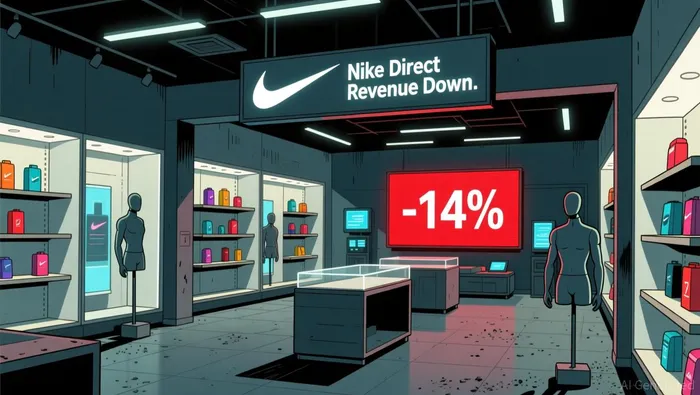 Nike Direct revenue fell 8% to $4.6 billion in Q2, driven by a 14% drop in digital sales and a 3% decline in store revenue. DTC is a big part of Nike's growth strategy, so these declines are concerning. The company's own restructure of its digital platform — including the Win Now initiative — hasn't yet delivered the expected margin improvements.
Geographically, the story is equally mixed. North America revenue rose 9%, showing that the U.S. and Canada remain core markets for Nike. But Greater China, a key growth region in recent years, fell 17% in the same period. This decline adds to the broader worries about consumer spending in China and the challenges posed by tariffs and supply chain costs.
What This Means for Investors
For now, the key takeaway for investors is that Nike is growing — but not as profitably as it would like. The company is managing to outperform expectations in terms of revenue and earnings, but the margin pressures are casting a cloud over future performance. The stock's sharp post-earnings drop reflects investor concerns that these issues might persist longer than anticipated.
Nike is also returning capital to shareholders, with $598 million returned in the second quarter. That's a positive for long-term investors, but it's unlikely to offset the negative momentum from its DTC and China struggles.
A Long Path to Stability
The company's recently appointed CEO, Elliott Hill, has called this the "middle innings" of Nike's recovery according to reports. That suggests he sees progress but also acknowledges that challenges remain. Investors should watch for updates on how the Win Now strategy is being executed, whether DTC performance turns around, and how much gross margin can be stabilized in the next few quarters.
In the short term, the market will be watching for any signs of margin improvement or cost management that could reverse the recent slide. Until then, Nike's stock appears to be navigating a path between growth and profitability — a familiar challenge for many large consumer brands but one that can be tough for investors to stomach in the near term.
Earnings call transcript: Nike beats Q2 2026 expectations, stock rises
NIKE Q2 Earnings & Revenues Beat Estimates, Digital Slump Persists
Why Nike Stock Is Plunging in After-Hours Trading
Soft Inflation Ushers Santa Onto Wall Street
Nike's Hard Crash Won't End

Delivering real-time insights and analysis on emerging financial trends and market movements.
Latest Articles
Stay ahead of the market.
Get curated U.S. market news, insights and key dates delivered to your inbox.
AInvest
PRO
AInvest
PRO



Comments
No comments yet