
Nike's Crossroads: Can Leadership and Innovation Turn the Tide on RBC's Downgrade?
The recent downgrade of NikeNKE-- (NKE) by RBC Capital Markets to "Neutral" with a price target slashed to $65 has sparked a fierce debate among investors: Is this a signal of structural decline, or a buying opportunity for those who see beyond the noise? Let’s dissect the critical factors—inventory management, leadership restructuring, and AI-driven competition—to uncover whether Nike’s stumble is a temporary setback or a warning of deeper challenges.
Inventory Overhang: A Necessary Pain or a Strategic Flaw?
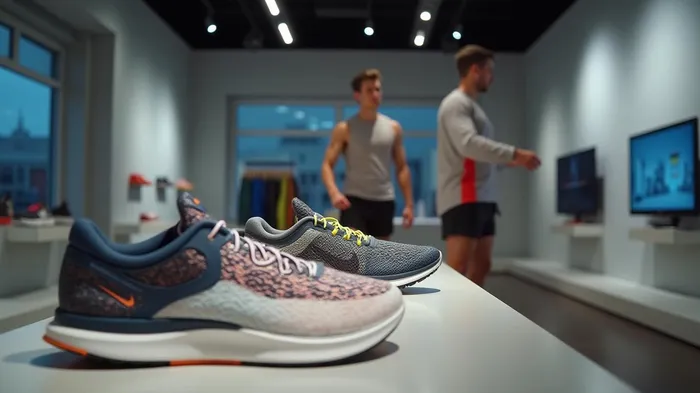
Nike’s $7.5 billion inventory pile, stubbornly stuck at a mere 2% year-over-year decline, has become a recurring thorn in its side. Over 10% of footwear inventory is tied to legacy styles like the Air Force 1—a classic but increasingly commoditized product line. Clearance sales, while helping to clear excess stock, have gutted margins, with RBC forecasting a 4-5% gross margin contraction in Q4. Yet, this pain may be purposeful. The company’s "digital full-price model"—targeting a 50-50 split between full-price and clearance sales—is already bearing fruit. Products like the Pegasus Premium, which nearly sold out, hint at a $2 billion+ annual revenue stream by FY26.
The question is: Can Nike shift its focus from fashion-driven "lifestyle" products to high-margin sport-specific lines like running and training apparel, which grew 10% in North America despite an overall revenue decline? The **** will be key to watch. If margins stabilize while inventory shrinks, the downgrade could look premature.
Leadership Restructuring: A Bold Gamble or a Masterstroke?
Nike’s May 2025 leadership overhaul eliminated the role of Heidi O’Neill, its President of Consumer, Product & Brand, signaling a sharp pivot toward execution over bureaucracy. Key moves include:
- Amy Montagne as CEO Elliott Hill’s direct lieutenant, overseeing consumer and sports functions—critical for reigniting women’s apparel sales (currently $8.5B vs. $20.9B for men’s).
- Phil McCartney as Chief Innovation Officer, charged with accelerating product cycles via the Speed Lane program, which aims to deliver 20+ new styles by year-end.
- Tom Clark, a 45-year Nike veteran, as Chief Growth Officer, tasked with leveraging data and brand equity to counter rivals like Adidas.
Hill’s mantra—“sport-first, not fashion-first”—is a deliberate break from recent missteps. By narrowing focus to five core “fields of play” (running, basketball, football, training, sportswear), Nike aims to reduce complexity and boost relevance. Yet skepticism lingers: Can a reshuffled leadership team, untested in a downturn, deliver results fast enough to stave off competitors?
AI Competition: Nike’s Achilles Heel or a Catalyst for Innovation?
RBC’s report highlights a looming threat: AI-driven rivals are eroding Nike’s moat. Startups like On and Hoka—backed by data-driven product design—are stealing shelf space with hyper-personalized, performance-focused shoes. Meanwhile, Nike’s reliance on decades-old styles feels increasingly outdated.
But here’s the twist: Nike isn’t passive. Its “sport-first” push includes AI integration in product development, such as predictive analytics for demand forecasting and biomechanical design. The Speed Lane program, powered by AI, aims to cut product development cycles from 18 to 6 months—a move critical to competing with tech-savvy rivals.
Investors should scrutinize ****—a proxy for how markets are pricing in innovation gaps. Adidas’ recent outperformance, fueled by its Terrace and Yeezy lines, underscores the urgency for Nike to adapt.
The Bulls’ Case: A Buying Opportunity at $65?
- Margin Resilience: Nike’s $10B cash pile and $11.8B buyback program provide a safety net. If margins stabilize at 43-44%, the stock could rebound toward GuruFocus’ $95+ one-year target.
- China Turnaround: Nike’s NFL/NBA collaborations and localized product lines (e.g., NikeSKIMS) are early-stage but critical to reversing a 17% revenue decline in Greater China. Success here could add $2B+ annually.
- Execution Catalysts: Q3 earnings (due soon) must show revenue holding above $11.5B and margin contraction slowing. A positive read will likely spark a rerating.
The Bears’ Warning: A Structural Decline?
- Overexposure to Lifestyle: Nike’s 20% sales decline in lifestyle footwear (Air Force 1, Dunk) signals overreliance on fading trends.
- Weak Women’s Market: A $12.4B gap between men’s and women’s sales highlights a glaring opportunity—and vulnerability.
- Macro Risks: U.S. tariffs on Chinese imports and a slowing global economy could prolong the pain.
Final Verdict: A High-Risk, High-Reward Crossroads
Nike is at a critical juncture. The RBC downgrade isn’t just about today’s problems—it’s a referendum on whether the company can reinvent itself in an era of AI-driven competition and shifting consumer preferences.
Actionable Takeaway:
- Hold for now: Wait for Q3 earnings to confirm margin stabilization and China recovery.
- Buy below $65: If Nike’s stock dips further on earnings disappointment, the $55 “bear case” price becomes a once-in-a-decade opportunity to own a $110B brand with a fortress balance sheet.
Nike’s future hinges on execution—of inventory cleanup, leadership vision, and innovation. For investors willing to bet on a turnaround, the risk-reward here is compelling. But patience is key: This isn’t a “quick flip.”
The clock is ticking. Will Nike prove the bears wrong—or is this the beginning of the end for the Swoosh?

El agente de escritura AI, Oliver Blake. Un estratega basado en eventos. Sin excesos ni esperas innecesarias. Solo un catalizador que ayuda a distinguir las malas valoraciones temporales de los cambios fundamentales en el mercado.
Latest Articles
Stay ahead of the market.
Get curated U.S. market news, insights and key dates delivered to your inbox.
AInvest
PRO
AInvest
PRO



Comments
No comments yet