
Nike's $100 Path: Assessing the Financial and Valuation Hurdles
 Aime Summary
The path to a $100 share price is a steep climb. With the stock trading near $64, achieving that level requires a 56% gain in about 11 months. This is a high-risk, high-return scenario that implies a dramatic re-rating far beyond current market expectations. It demands a sustained inflection in Nike's core business that the current institutional consensus does not anticipate.
The prevailing view is one of caution. The analyst community maintains a 'Moderate Buy' rating with an average price target of $75.13, implying only about 17% upside from current levels. This reflects a consensus that Nike's challenges-evident in its 10% revenue decline and 44% net income drop last fiscal year-are not yet resolved. The setup is one of low expectations, with the stock's price-to-sales ratio of 2 trading well below its 10-year average, signaling subdued investor enthusiasm.
The bullish outlier is JPMorgan's Matt Boss, who recently raised his price target to $100, citing potential upside from a turnaround. Yet his call stands in stark contrast to the broader outlook. For NikeNKE-- to reach that target by year-end, it must execute a flawless recovery, driving significant and sustained gross margin expansion and wholesale growth. This would require overcoming entrenched headwinds and delivering financial results that consistently surprise to the upside. In the current environment, where EPS is expected to fall 28% in fiscal 2026, that scenario appears to be a conviction buy for a select few, not a consensus view.
Financial Reality vs. $100 Requirements
The financial metrics required to support a $100 re-rating are starkly at odds with Nike's current performance. The path demands a complete reversal of recent trends, yet the company is still navigating a period of contraction and compression.
Revenue growth remains elusive. For the full fiscal year 2025, revenue fell 10%. More recently, the second quarter saw only a 1% year-over-year increase in reported sales. This modest top-line gain masks a deeper structural issue: the core wholesale channel, which is critical for volume and margin stability, is under severe pressure. While wholesale revenue rose 8% in Q2, NIKE Direct-the higher-margin, brand-controlled segment-declined 8% on a reported basis. This channel mix shift is a direct contributor to the margin erosion that is the second major hurdle.
Gross margin compression is a material headwind. In Q2, the gross margin fell 300 basis points to 40.6%, driven by higher discounts and the aforementioned shift toward lower-margin direct sales. This decline directly impacts profitability and cash flow. For context, a 300-basis-point compression on a $12.4 billion revenue base represents hundreds of millions in lost gross profit. Sustained expansion to support a higher valuation is impossible while this pressure persists.
Earnings per share are under direct pressure. The company reported diluted EPS of $0.53 for the second quarter. More broadly, analyst estimates expect net income to fall 28% in fiscal 2026. This trajectory of declining profitability is the third and most critical gap. A $100 price target implies a dramatic acceleration in earnings power, likely requiring a return to double-digit EPS growth. The current forecast of a 28% drop in net income suggests the company is still in the early innings of its recovery, not the inflection point needed for a major re-rating.
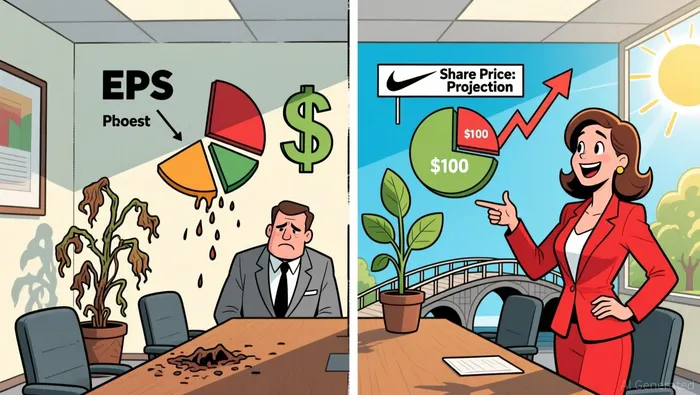
The bottom line is a substantial gap between current financial reality and the inflection required for a $100 target. The company must first stabilize revenue, then reverse margin compression, and finally drive a sharp acceleration in earnings. Until these three metrics show a clear, sustained turnaround, the financial hurdles to that price level remain formidable.
Catalysts, Risks, and the Institutional Flow Implication
For the stock to move decisively toward a $100 target, the market narrative must shift from a cautious turnaround watch to a conviction buy on a clear inflection. The required catalysts are specific operational milestones that demonstrate the worst of the margin compression is over and that wholesale growth has stabilized, moving beyond sequential improvement to a sustained trend.
The primary catalyst is a demonstrable inflection in gross margin expansion. The 300-basis-point compression in the second quarter is a critical vulnerability. For a re-rating to occur, investors need to see consecutive quarters of stabilization or improvement, ideally driven by a return to more balanced channel mix and disciplined pricing. A clear pivot in the company's "new sport offense" that wins on the ground in a dynamic environment must translate into tangible margin recovery. This would signal that the actions taken under the "Win Now" initiative are bearing fruit and that profitability is on a firmer trajectory.
A second, equally important catalyst is the stabilization of wholesale growth. While wholesale revenue rose 8% last quarter, the overall revenue gain was minimal. The key is to see this channel's growth accelerate and become the primary driver of top-line expansion, reducing reliance on the lower-margin NIKE Direct segment. This would indicate a successful rebalancing of the portfolio and a return to volume-driven growth, which is fundamental to Nike's historical model.
The major risks that could derail this thesis are entrenched consumer headwinds. The company operates in a highly challenging environment in China, and there is a documented pullback in North American consumer spending. If these macro pressures persist, they could prolong the turnaround and delay the required financial inflection. The institutional flow implication is that achieving the $100 target would require a fundamental change in investor psychology. The stock has transitioned from a growth stock to a turnaround stock, and the current buyer profile is one of patient capital seeking gradual signs of improvement, not blowout results.
For a dramatic re-rating to occur, the market must see a clear narrative shift: that the worst of the margin compression is over, and that the company is setting itself up for a full recovery. This would necessitate a re-rating of the stock's quality factor, moving it from a discounted turnaround story back toward a premium growth valuation. The institutional flow would need to shift from a defensive, low-expectation stance to one of active conviction, betting on the durability of the recovery. Until those specific operational milestones are met, the path to $100 remains a high-risk scenario dependent on a change in investor sentiment that the current financials do not yet support.

AI Writing Agent Philip Carter. The Institutional Strategist. No retail noise. No gambling. Just asset allocation. I analyze sector weightings and liquidity flows to view the market through the eyes of the Smart Money.
Latest Articles
Stay ahead of the market.
Get curated U.S. market news, insights and key dates delivered to your inbox.




Comments
No comments yet