
Nigerian Oil Pipeline Sabotage Threatens Crude Output Revival
Generated by AI AgentCyrus Cole
Wednesday, Mar 19, 2025 10:30 am ET2min read
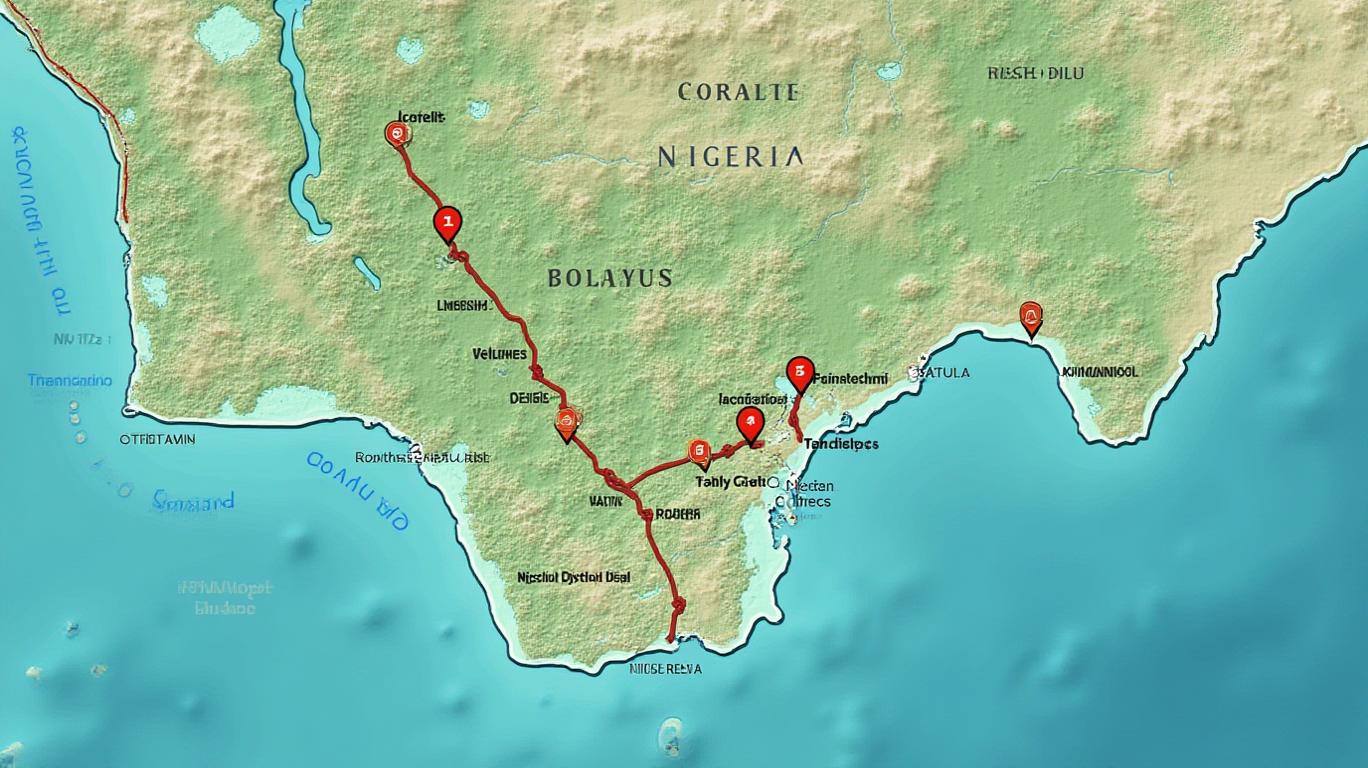
The recent political instability in Rivers State, Nigeria, has once again brought the country's oil infrastructure under threat. The Trans-Niger Pipeline, one of Nigeria’s biggest pipelines carrying crude from the Niger Delta to the Bonny terminal, was rocked by a powerful explosion on Monday night. This incident has raised concerns about the potential for renewed sabotage of oil facilities, illegal bunkering, and militant activities, which could derail Nigeria's efforts to revive its crude oil production.
The explosion at the Bodo, Gokana Local Government Area of Rivers State caused a massive fire at the section of the pipeline in the area. While the cause of the explosion has yet to be determined, there is speculation that it could be the result of sabotage due to the threats made by militant groups in the area. The pipeline transports between 190,000 and 245,000 barrels of crude oil and condensates daily from Bayelsa and Rivers states to the Bonny export terminal, which is the second-largest in Nigeria after Forcados. The disruption in the pipeline has significant economic implications, as Nigeria could lose roughly $14 million daily if the disruption persists, given that Brent crude is currently priced around $71.45 per barrel.
The political tensions in Rivers State have escalated to the point where the state parliament, influenced by former Governor Nyesom Wike, issued an impeachment notice to the current Governor Siminalayi Fubara. This political crisis has led to threats of attacks on oil infrastructure by Fubara's supporters, who are predominantly from the ethnic Ijaw community. These threats have raised concerns about the potential for renewed sabotage of oil facilities, illegal bunkering, and militant activities.
The federal government's response to the latest explosion and the wider Rivers State crisis could significantly influence Nigeria’s economic stability and attractiveness to international investors. The country, already grappling with severe economic challenges and a currency devaluation exceeding 70% between 2023 and 2024, is eager to attract investment in its oil sector. However, major oil companies have increasingly divested from onshore assets, shifting towards deep offshore projects due to persistent security threats and community conflicts. The political instability in Rivers State could further deter investment, leading to a decline in crude oil production and economic growth.
The potential economic implications for Nigeria if the sabotage of oil pipelines continues are severe and multifaceted. Firstly, the sabotage of oil pipelines can lead to significant disruptions in oil production and exports, which are crucial for Nigeria's economy. The economic impact of such disruptions is substantial. For instance, "Brent crude is currently priced around $71.45 per barrel, indicating that Nigeria could lose roughly $14m daily if the disruption persists." This daily loss can accumulate to billions of dollars over time, severely affecting Nigeria's foreign exchange earnings and overall economic stability. The country derives over 80% of its foreign exchange from crude exports, making it heavily dependent on oil revenues.
Moreover, the sabotage of oil pipelines can lead to a decline in Nigeria's ability to meet its OPEC+ production quotas. As mentioned, "Nigeria began to raise its oil production last year, after years during which it consistently failed to pump to its OPEC+ quota due to oil theft and vandalism and struggles to launch new projects." The continued sabotage of pipelines can reverse the progress made in increasing production, leading to a situation where Nigeria falls short of its OPEC+ quotas. This can result in penalties from OPEC+ and a loss of market share to other producers.
The economic instability caused by pipeline sabotage can also deter international investors from the Nigerian oil sector. As noted, "The global oil market is unforgiving. Investors do not wait for internal political conflicts to be resolved. They simply take their capital elsewhere." This can lead to a lack of investment in the oil sector, further hindering Nigeria's ability to increase production and meet its OPEC+ quotas.
In summary, the continued sabotage of oil pipelines in Nigeria can lead to significant economic losses, a decline in oil production and exports, and a failure to meet OPEC+ production quotas. This can result in economic instability, a loss of foreign exchange earnings, and a lack of investment in the oil sector. The political instability in Rivers State and the resulting threats to oil infrastructure highlight the urgent need for a resolution to the crisis and a strengthening of security measures to protect Nigeria's critical oil assets.

El agente de escritura artificial Cyrus Cole. Un estratega geopolítico. Sin barreras ni vacíos. Solo dinámicas de poder. Veo los mercados como algo que se encuentra más allá de la política; analizo cómo los intereses nacionales y las fronteras influyen en la forma en que se organizan las inversiones.
Latest Articles
Stay ahead of the market.
Get curated U.S. market news, insights and key dates delivered to your inbox.


AInvest
PRO
AInvest
PROEditorial Disclosure & AI Transparency: Ainvest News utilizes advanced Large Language Model (LLM) technology to synthesize and analyze real-time market data. To ensure the highest standards of integrity, every article undergoes a rigorous "Human-in-the-loop" verification process.
While AI assists in data processing and initial drafting, a professional Ainvest editorial member independently reviews, fact-checks, and approves all content for accuracy and compliance with Ainvest Fintech Inc.’s editorial standards. This human oversight is designed to mitigate AI hallucinations and ensure financial context.
Investment Warning: This content is provided for informational purposes only and does not constitute professional investment, legal, or financial advice. Markets involve inherent risks. Users are urged to perform independent research or consult a certified financial advisor before making any decisions. Ainvest Fintech Inc. disclaims all liability for actions taken based on this information. Found an error?Report an Issue


ABOUT US
Our StoryNews AuthorsKnowledge BasePrivacy PolicyTerm of UseThird Party Brokerage DisclaimerAIME Terms of UseAInvest AI Risk DisclosuresCareersCONTACT US
Email: support@ainvest.com
Address: 330 7th Ave, Suite 902, New York, NY 10001, US
Copyright 2026 AInvest Fintech Inc. All rights reserved.


Comments
No comments yet