
Nigeria Opens Stablecoin Sandbox a Year After Binance Crackdown
 Aime Summary
Nigeria’s Securities and Exchange Commission (SEC) has signaled a strategic shift in its approach to digital assets, with Director-General Emomotimi Agama stating the country is “open for stablecoin business” while emphasizing adherence to evolving regulatory frameworks [1]. Speaking at the Nigeria Stablecoin Summit in Lagos, Agama outlined a vision for Nigeria to become a global leader in stablecoin innovation, aiming to facilitate cross-border trade across Africa within five years. He reiterated that firms operating within Nigeria’s regulatory sandbox—a program testing compliance models for emerging technologies—would find a supportive environment for innovation [1].
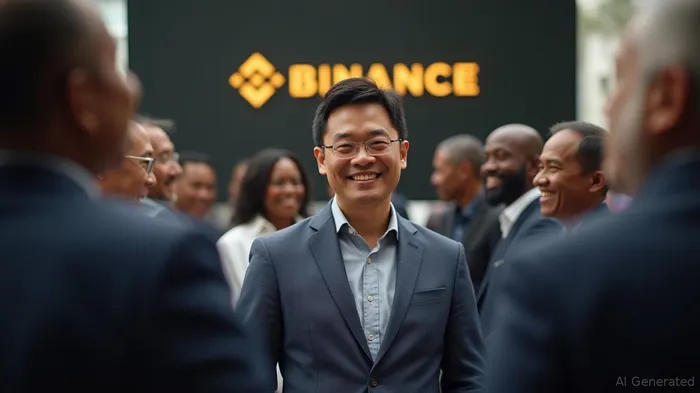
This announcement follows a year marked by regulatory turbulence, including the 2024 crackdown on crypto exchange Binance, which saw the detention of U.S. citizen Tigran Gambaryan. Gambaryan, a former IRS investigator and Binance executive, was arrested during a compliance visit to Abuja in February 2024. His case, which drew international attention, ended in October 2024 after his trial was discontinued due to health complications [1]. U.S. lawmakers had previously raised concerns about Nigeria’s handling of the case, linking it to broader tensions between regulators and the crypto sector [1].
Agama’s renewed engagement with stablecoin startups reflects a calculated effort to rebuild trust with global investors and position Nigeria as a “stablecoin hub of the global south.” However, analysts caution that credibility hinges on consistent enforcement and transparent policies. “Nigeria’s stablecoin signal is a strong step, but real revival requires regulatory reliability and robust ramps,” said Hank Huang, CEO of Kronos Research [1]. He emphasized the need for clear licensing frameworks, reliable access to fiat currency, and “predictable enforcement” to attract firms.
The SEC’s regulatory sandbox initiative, which has already onboarded stablecoin-focused firms, is central to this strategy. Agama described stablecoins as a “critical element of the cryptocurrency ecosystem,” while acknowledging their potential risks, including national security concerns [1]. This duality—balancing innovation with oversight—appears to define Nigeria’s approach. Meanwhile, grassroots participation in crypto remains active despite the 2024 crackdown, according to Ryan Yoon of Tiger Research. Yoon noted that stablecoin adoption could aid domestic currency management but stressed that Nigeria’s emergence as a hub would be gradual [1].
While the government’s public outreach and sandbox model suggest a thawing of regulatory stance, skepticism persists. Stakeholders highlight that restoring deep liquidity and trust will require sustained policy clarity, visible re-engagement from major crypto players, and legal safeguards [1]. Agama’s vision, though ambitious, remains contingent on execution. As Nigeria seeks to leverage stablecoins for economic growth, the path forward will depend on aligning rhetoric with tangible actions to reassure investors and foster a stable regulatory environment [1].
Source: [1] [title: Nigeria Invites Stablecoin Startups, a Year After Binance Crackdown] [url: https://decrypt.co/331751/nigeria-invites-stablecoin-startups-year-after-binance-crackdown]

Stay ahead of the market.
Get curated U.S. market news, insights and key dates delivered to your inbox.






Comments
No comments yet