
Nigeria's Informal Traders Adapt to AI Platforms: 80% Use Smartphones, 33.3% Understand AI Algorithms
 Aime Summary
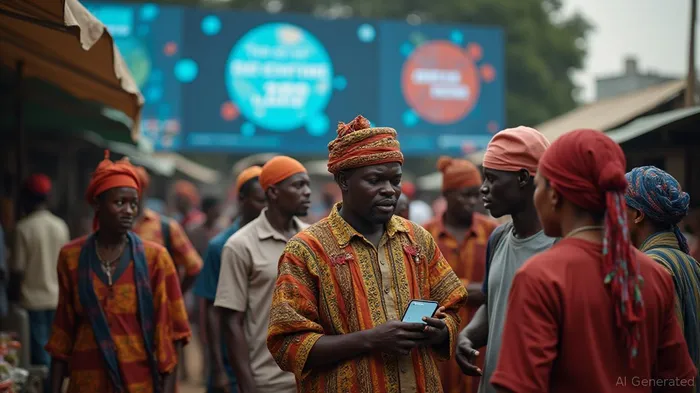
In Lagos, Nigeria, the rapid integration of AI-powered digital platforms into informal trade is reshaping how over 85% of the labor force—comprising market vendors, artisans, and food sellers—operates. While smartphones and apps like WhatsApp, Facebook, and Instagram are becoming central to business operations, a significant portion of traders remain unaware of the algorithms and data practices underlying these tools. Of 42 surveyed traders, 80% (34) use smartphones, but only 33.3% (14) understand what AI is, and 41.5% admit to not understanding how platforms rank or promote sellers. This knowledge gap exacerbates inequalities, as algorithms favor high-performing sellers based on engagement, response times, and user ratings, often at the expense of those lacking digital fluency [1].
Platforms like JumiaJMIA-- and Instagram amplify visibility for sellers who optimize their listings or maintain high engagement metrics, creating a "hustle versus algorithm" dynamic. For example, sneaker seller Ifeanyi credits Jumia with securing his largest order to date, while Ankara fabric vendor Ayo notes Instagram’s role in expanding her business beyond Lagos. However, 45.2% of respondents reported declining sales over 6–12 months, attributing this to economic conditions and digital competition. Notably, only 6 traders directly linked losses to AI-powered automation, but 16.7% acknowledged digital tools provide an edge. Legal expert Oladipupo Ige of the Data Privacy Lawyers Association of Nigeria highlights that platforms often obscure their ranking mechanisms, leaving traders in the dark about how visibility is determined [1].
Barriers to full digital inclusion remain entrenched. Poor internet connectivity (30% of respondents) and the high cost of data and smartphones (27%) hinder access, while 10% cite a lack of training and 12.5% express trust concerns. For older traders like Iya Shola and Alhaja, who have operated for decades, digital tools are either irrelevant or too risky. Alhaja recounts a past loss of N350,000 due to a delivery scam, reinforcing her distrust of online transactions. Similarly, Joy Okoye, a line market leader, relies on WhatsApp for orders but dismisses AI-powered platforms as unnecessary for her established customer base [1].
The Nigerian government, through the National Information Technology Development Agency (NITDA), is addressing these challenges via initiatives like DL4ALL, aimed at improving digital literacy and inclusion. Director Hadiza Umar emphasized the need to integrate digital skills into vocational training and expand access to tools like smartphones and stable internet. NITDA also advocates for transparent AI governance, urging platforms to explain their algorithms and comply with the 2023 Nigeria Data Protection Act. The agency is working with education ministries and private partners to ensure informal workers can leverage digital tools without falling victim to opaque data practices [1].
Legal concerns persist, however. Ige points to cases like Araka v. Ecart (Domino’s case), where prolonged data use for marketing after transactions violated privacy laws. He warns that platforms often bury excessive data collection practices in privacy policies, leaving users unaware of how their information is used. For instance, Rasheedah Ayeni’s niece received unsolicited promotions despite never sharing her number publicly, highlighting gaps in data protection enforcement [1].
The path forward hinges on balancing innovation with inclusion. Traders emphasize foundational needs: affordable devices, reliable internet, and localized training. As Umar notes, Nigeria’s digital future must prioritize “meaningful adoption” where informal workers see themselves reflected in technological progress. Yet, for many, the question remains: who is shaping this future, and how can it ensure fairness for those who lack the tools or understanding to navigate algorithmic systems [1]?
Source: [1] Algorithm and Hustle: How AI-powered digital platforms affect informal trade [https://coinmarketcap.com/community/articles/68872498361abe5ce4db1f2f/](https://coinmarketcap.com/community/articles/68872498361abe5ce4db1f2f/)

Stay ahead of the market.
Get curated U.S. market news, insights and key dates delivered to your inbox.
AInvest
PRO
AInvest
PRO



Comments
No comments yet