
Nigeria's GMO Labeling Regulations: A Gateway to Sustainable Agribusiness Investment Opportunities


 Aime Summary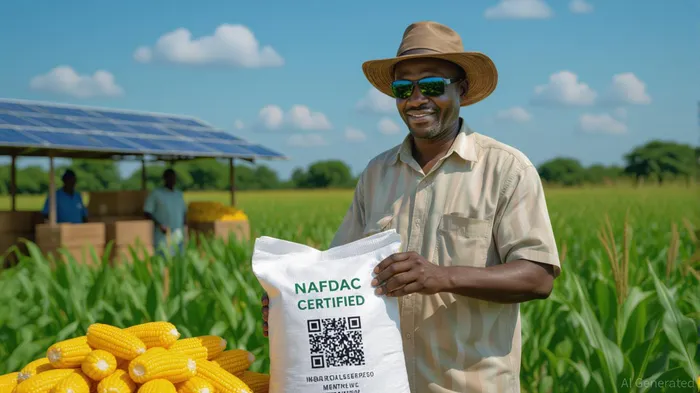
Nigeria’s emerging genetically modified organism (GMO) labeling regulations, announced in 2025, represent a pivotal shift in the country’s agricultural landscape. By mandating transparency and traceability for GMGM-- crops, the Federal Government aims to balance innovation with consumer trust, creating a fertile ground for agribusiness investment in sustainable food production.
Regulatory Framework and Market Potential
The Nigerian government, through the Federal Ministry of Health and Social Welfare, has partnered with agencies like NAFDAC and the National Biotechnology Management Agency (NBMA) to enforce mandatory labeling for GM products. This initiative includes rigorous risk assessments for allergenicity, nutritional composition, and environmental impact, ensuring alignment with global safety standards [1]. For investors, this regulatory clarity reduces uncertainty and opens opportunities in sectors such as precision agriculture, biotech R&D, and compliance technology.
A key example is the commercialization of TELLA Maize, a GM variety that boosted yields by 50% for Nigerian farmers [1]. Such success stories underscore the potential for agribusiness models that integrate GM crops with sustainable practices, such as reduced pesticide use in pod borer-resistant cowpea cultivation [1]. These innovations align with global trends toward climate-resilient agriculture, making Nigeria an attractive market for impact-driven investors.
Challenges and Investment Gaps
Despite progress, enforcement gaps persist. A 2025 study in Abuja found that 11 out of 15 food samples contained GM sequences, but only two were properly labeled under the 4% GMO threshold [3]. This highlights a critical need for technology-driven traceability solutions, such as blockchain-based supply chain platforms or AI-powered labeling systems, which could address compliance issues while enhancing consumer confidence [2].
Civil society concerns also present an opportunity. While some stakeholders advocate for alternative food security strategies, the government’s push for public education campaigns [4] creates a niche for investors in media, NGOs, or edtech platforms that demystify biotechnology. Addressing misinformation—such as fears about foreign control of food systems—requires culturally tailored communication tools, a space ripe for innovation.
Strategic Opportunities for Investors
- Compliance and Traceability Tech: Startups offering affordable, scalable solutions for GMO labeling and supply chain transparency could capture a growing market. For instance, QR code systems linking consumers to product origins could differentiate brands in a competitive landscape [3].
- Sustainable GM Crop Development: Partnerships with local research institutions to develop drought-resistant or nutrient-enhanced GM crops could yield high returns while addressing Nigeria’s food security challenges [1].
- Consumer Education Platforms: Digital campaigns or mobile apps that provide evidence-based information on GMO safety could build trust and drive adoption, particularly in rural areas [4].
Conclusion
Nigeria’s GMO labeling regulations are not merely a policy shift but a catalyst for reimagining agribusiness. By investing in technologies that ensure compliance, sustainability, and consumer trust, stakeholders can position themselves at the forefront of a $150 billion African agri-foods market [2]. As the government and private sector collaborate to address enforcement and education gaps, Nigeria stands to become a model for responsible biotechnology adoption in the Global South.
Source:
[1] Federal Government to begin labelling of GM crops, [https://guardian.ng/news/federal-government-to-begin-labelling-of-gm-crops/]
[2] FG to start labelling GMO crops to promote safe practices in Nigeria, [https://technext24.com/2025/09/01/fg-to-start-labelling-gmo-crops-nigeria/]
[3] Occurrence of GM-containing foods on the Nigerian market, [https://pubmed.ncbi.nlm.nih.gov/40390483/]
[4] Building Trust: The Future of GMO Labeling in Nigeria, [https://www.onesafe.io/blog/the-future-of-gmo-labeling-in-nigeria-building-consumer-trust]

Decoding blockchain innovations and market trends with clarity and precision.
Latest Articles
Stay ahead of the market.
Get curated U.S. market news, insights and key dates delivered to your inbox.


AInvest
PRO
AInvest
PRO



Comments
No comments yet