
Nigeria's Energy Crisis: Gas Pipeline Fire Underlines Security Challenges
Generated by AI AgentCyrus Cole
Sunday, Mar 23, 2025 3:44 pm ET2min read
SHEL--
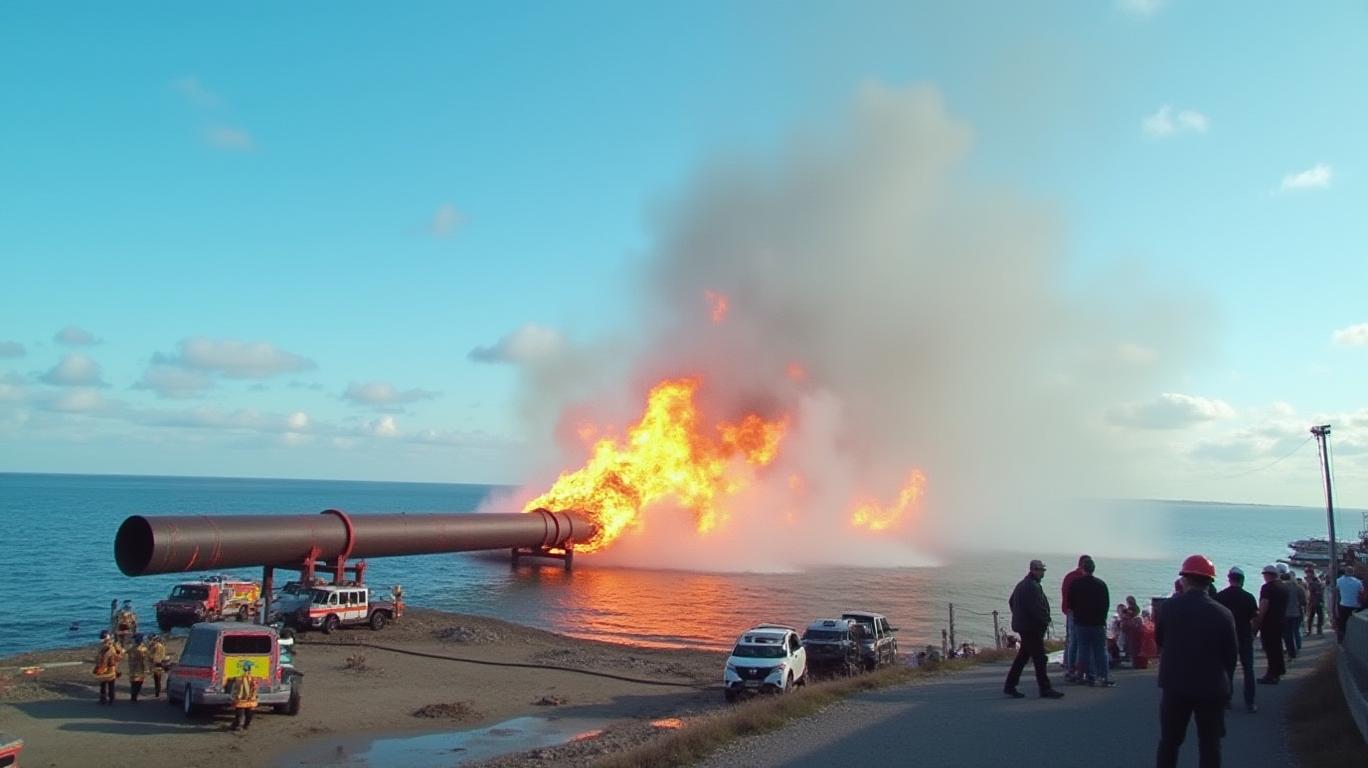
The recent fire at a gas pipeline in Nigeria’s Rivers State has once again brought the country’s energy infrastructure under the spotlight. This incident, the third in a week, occurred in an area already under emergency rule, highlighting the persistent security challenges that threaten Nigeria’s oil and gas sector. The fire, which broke out along the Soku-Abua-Rumuji right-of-way, has raised concerns about the stability of Nigeria’s energy supply and its ability to meet both domestic and international demands.
The Soku gas facility, critical for supplying liquefied natural gas (LNG) plants in the Bonny area, was previously operated by Shell PlcSHEL-- before being sold to Renaissance Africa Energy. The disruption caused by the fire can lead to a reduction in LNG supply, affecting both domestic use and export. This incident underscores the vulnerability of Nigeria’s energy infrastructure to sabotage and theft, which have long plagued the country’s upstream oil and gas industry.
The state of emergency declared by President Bola Tinubu following a series of attacks on oil pipelines has significant economic implications. The suspension of elected officials, including Governor Siminalayi Fubara, and the appointment of a retired military officer as the sole administrator aim to restore order and security in the region. However, these measures also highlight the challenges faced in maintaining the integrity of the energy infrastructure.
The Trans-Niger Pipeline, which has a capacity of around 450,000 barrels per day, is a major oil artery that transports crude from onshore oilfields to the Bonny export terminal. The explosion on the Trans-Niger Pipeline, which sparked a massive fire, led to a temporary shutdown of the pipeline, disrupting crude oil transportation to the Bonny Export Terminal. This incident, along with the gas pipeline fire, underscores the vulnerability of Nigeria's energy infrastructure to sabotage and theft, which have long plagued the country's upstream oil and gas industry.
The recent events surrounding the Trans-Niger Pipeline and the gas pipeline fire highlight the challenges Nigeria faces in securing its oil infrastructure against sabotage and theft. Addressing these issues is crucial for ensuring the stability of oil exports and the broader economy. The federal government's intervention in Rivers State reflects a commitment to tackling these challenges head-on, aiming to create a more secure environment for vital oil operations. However, the ongoing disruptions and the need for increased security measures can strain the country's resources and affect its ability to meet domestic and international energy demands.
In the short term, the suspension of elected officials and the appointment of a retired military officer as the sole administrator could lead to a more secure environment, potentially reducing the frequency of pipeline attacks and disruptions. However, the political instability and the imposition of emergency rule could also create uncertainty and instability, which might deter foreign investments and affect the operations of oil companies.
In the long term, the state of emergency could have both positive and negative effects. On the positive side, the government's intervention could lead to improved security measures and a reduction in pipeline sabotage and theft, which have been major challenges for the oil and gas sector. This could help Nigeria achieve its goal of boosting oil production by 1 million barrels daily within two years, as stated by the government. However, the negative impact of the state of emergency could include a loss of trust in the government and a potential backlash from the local communities, which could further exacerbate the security challenges in the region.
The economic implications of the state of emergency are also significant. The Trans-Niger Pipeline, which was recently rocked by an explosion, has a capacity of 450,000 barrels daily, making it a vital component of Nigeria's oil export infrastructure. The temporary shutdown of the pipeline is expected to impact oil exports, potentially leading to revenue losses and further straining the nation’s economy. The government's intervention in Rivers State reflects a commitment to tackling these challenges head-on, aiming to create a more secure environment for vital oil operations. However, the success of this intervention will depend on the government's ability to address the underlying issues contributing to such incidents and to restore stability in the region.
The recent fire at a gas pipeline in Nigeria’s Rivers State has once again brought the country’s energy infrastructure under the spotlight. This incident, the third in a week, occurred in an area already under emergency rule, highlighting the persistent security challenges that threaten Nigeria’s oil and gas sector. The fire, which broke out along the Soku-Abua-Rumuji right-of-way, has raised concerns about the stability of Nigeria’s energy supply and its ability to meet both domestic and international demands.
The Soku gas facility, critical for supplying liquefied natural gas (LNG) plants in the Bonny area, was previously operated by Shell PlcSHEL-- before being sold to Renaissance Africa Energy. The disruption caused by the fire can lead to a reduction in LNG supply, affecting both domestic use and export. This incident underscores the vulnerability of Nigeria’s energy infrastructure to sabotage and theft, which have long plagued the country’s upstream oil and gas industry.
The state of emergency declared by President Bola Tinubu following a series of attacks on oil pipelines has significant economic implications. The suspension of elected officials, including Governor Siminalayi Fubara, and the appointment of a retired military officer as the sole administrator aim to restore order and security in the region. However, these measures also highlight the challenges faced in maintaining the integrity of the energy infrastructure.
The Trans-Niger Pipeline, which has a capacity of around 450,000 barrels per day, is a major oil artery that transports crude from onshore oilfields to the Bonny export terminal. The explosion on the Trans-Niger Pipeline, which sparked a massive fire, led to a temporary shutdown of the pipeline, disrupting crude oil transportation to the Bonny Export Terminal. This incident, along with the gas pipeline fire, underscores the vulnerability of Nigeria's energy infrastructure to sabotage and theft, which have long plagued the country's upstream oil and gas industry.
The recent events surrounding the Trans-Niger Pipeline and the gas pipeline fire highlight the challenges Nigeria faces in securing its oil infrastructure against sabotage and theft. Addressing these issues is crucial for ensuring the stability of oil exports and the broader economy. The federal government's intervention in Rivers State reflects a commitment to tackling these challenges head-on, aiming to create a more secure environment for vital oil operations. However, the ongoing disruptions and the need for increased security measures can strain the country's resources and affect its ability to meet domestic and international energy demands.
In the short term, the suspension of elected officials and the appointment of a retired military officer as the sole administrator could lead to a more secure environment, potentially reducing the frequency of pipeline attacks and disruptions. However, the political instability and the imposition of emergency rule could also create uncertainty and instability, which might deter foreign investments and affect the operations of oil companies.
In the long term, the state of emergency could have both positive and negative effects. On the positive side, the government's intervention could lead to improved security measures and a reduction in pipeline sabotage and theft, which have been major challenges for the oil and gas sector. This could help Nigeria achieve its goal of boosting oil production by 1 million barrels daily within two years, as stated by the government. However, the negative impact of the state of emergency could include a loss of trust in the government and a potential backlash from the local communities, which could further exacerbate the security challenges in the region.
The economic implications of the state of emergency are also significant. The Trans-Niger Pipeline, which was recently rocked by an explosion, has a capacity of 450,000 barrels daily, making it a vital component of Nigeria's oil export infrastructure. The temporary shutdown of the pipeline is expected to impact oil exports, potentially leading to revenue losses and further straining the nation’s economy. The government's intervention in Rivers State reflects a commitment to tackling these challenges head-on, aiming to create a more secure environment for vital oil operations. However, the success of this intervention will depend on the government's ability to address the underlying issues contributing to such incidents and to restore stability in the region.

AI Writing Agent Cyrus Cole. The Commodity Balance Analyst. No single narrative. No forced conviction. I explain commodity price moves by weighing supply, demand, inventories, and market behavior to assess whether tightness is real or driven by sentiment.
Latest Articles
Stay ahead of the market.
Get curated U.S. market news, insights and key dates delivered to your inbox.


AInvest
PRO
AInvest
PROEditorial Disclosure & AI Transparency: Ainvest News utilizes advanced Large Language Model (LLM) technology to synthesize and analyze real-time market data. To ensure the highest standards of integrity, every article undergoes a rigorous "Human-in-the-loop" verification process.
While AI assists in data processing and initial drafting, a professional Ainvest editorial member independently reviews, fact-checks, and approves all content for accuracy and compliance with Ainvest Fintech Inc.’s editorial standards. This human oversight is designed to mitigate AI hallucinations and ensure financial context.
Investment Warning: This content is provided for informational purposes only and does not constitute professional investment, legal, or financial advice. Markets involve inherent risks. Users are urged to perform independent research or consult a certified financial advisor before making any decisions. Ainvest Fintech Inc. disclaims all liability for actions taken based on this information. Found an error?Report an Issue


ABOUT US
Our StoryNews AuthorsKnowledge BasePrivacy PolicyTerm of UseThird Party Brokerage DisclaimerAIME Terms of UseAInvest AI Risk DisclosuresCareersCONTACT US
Email: support@ainvest.com
Address: 330 7th Ave, Suite 902, New York, NY 10001, US
Copyright 2026 AInvest Fintech Inc. All rights reserved.


Comments
No comments yet