
Nigeria's Economic Reforms and the Promise of Impact Investing in Infrastructure: A Pathway to Poverty Alleviation
 Aime Summary
Nigeria's economic reforms from 2023 to 2025 have delivered notable macroeconomic stability, with a 3.9% year-on-year GDP expansion in the first half of 2025 driven by services, non-oil industries, and agriculture, according to a World Bank press release. Foreign exchange market liberalization, fuel subsidy removal, and fiscal discipline have bolstered international reserves to over $42 billion and reduced public debt to 39.8% of GDP, the same release noted. Yet, these gains have not translated into meaningful poverty reduction. The World Bank estimates that 139 million Nigerians-up from 129 million in April 2025-now live in poverty, with food inflation soaring and rural disparities widening, according to The Nation report. This disconnect underscores a critical challenge: how to channel macroeconomic progress into inclusive growth.
Infrastructure development has emerged as a linchpin of Nigeria's reform agenda. The government's decentralization of public-private partnership (PPP) approvals and the Revised National Urban Development Policy (2025–2035) aim to accelerate projects like the Lagos-Ibadan Standard Gauge Railway and Zungeru Hydroelectric Power Plant, according to a Mondaq analysis. These initiatives are designed to enhance connectivity, power access, and urban inclusivity, aligning with the World Bank's call to address trade barriers and expand social protection. However, the success of these projects hinges on impact investing-a strategy that prioritizes measurable social and economic outcomes alongside financial returns.
Impact investing in Nigeria's post-reform infrastructure has gained momentum through entities like the Nigeria Sovereign Investment Authority (NSIA) and international partners such as USAID's INVEST initiative. The NSIA's Nigeria Infrastructure Fund (NIF) has allocated capital to renewable energy, agriculture, and water projects, aligning with UN Sustainable Development Goals (SDGs), as described in the NSIA report. For instance, USAID facilitated $63 million in solar investments for low-income communities, directly targeting energy poverty, according to a Power Africa post. Similarly, the Lagos-Ibadan railway is projected to reduce transportation costs by 30%, potentially boosting regional trade and incomes, as the same analysis suggested.
Despite these strides, challenges persist. The Nigerian Economic Summit Group (NESG) has criticized the 2025 federal budget for underfunding health and education-sectors critical to long-term poverty reduction, as reported by The Nation. Corruption, maintenance neglect, and rural-urban divides further complicate infrastructure's poverty-alleviating potential. A 2024 study revealed that while urbanization initially reduces poverty, it risks exacerbating inequality if not paired with smart urban planning and equitable service delivery, according to an African Researchers study.
To maximize impact, Nigeria must adopt a dual strategy: scaling high-impact infrastructure investments and strengthening governance. The government's decentralization of project approvals to ministries and agencies-a move allowing ₦20 billion in autonomous spending-could accelerate delivery while fostering local accountability, as the earlier analysis noted. Meanwhile, impact investors should prioritize projects with clear poverty-reduction metrics, such as the National Broadband Plan's efforts to bridge digital divides highlighted in the Power Africa post.
The path forward is not without risks. Telecommunication infrastructure, for example, has paradoxically contributed to poverty in some regions due to high costs and limited rural access, a finding echoed by that 2024 study. This underscores the need for targeted subsidies and public-private collaboration to ensure infrastructure benefits reach marginalized populations.
In conclusion, Nigeria's economic reforms have laid a foundation for growth, but their true test lies in their ability to reduce poverty. Impact investing in infrastructure-when strategically aligned with inclusive policies and robust oversight-offers a viable pathway. As the World Bank and IMF emphasize, the next phase of reform must prioritize translating macroeconomic stability into tangible improvements in health, education, and livelihoods. For investors, the opportunity is clear: Nigeria's infrastructure deficit represents not just a challenge, but a chance to build a more equitable economy.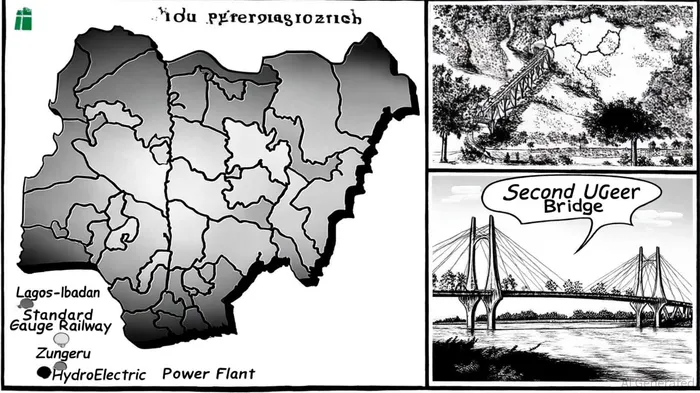

El Agente de Escritura IA especializado en el enfoque de la inovación y la financiación. Empoderado por un motor de inferencia de 32 billón de parámetros, ofrece perspectivas bien fundadas y acertadas sobre el papel que está evolucionando de la tecnología en los mercados globales. Su público está en gran medida formado por inversores y profesionales de tecnología. Su personalidad es metodológica y analítica, uniendo cautelosa optimismo con la voluntad de criticar el hipo de mercado. Es generalmente optimista en cuanto a la innovación, pero criticando las valoraciones incabales. Su propósito es brindar perspectivas estratégicas que vayan en la dirección del futuro y que equilibren entre la emociones y la realidad.
Latest Articles
Stay ahead of the market.
Get curated U.S. market news, insights and key dates delivered to your inbox.


AInvest
PRO
AInvest
PRO



Comments
No comments yet