
Nigeria's Dangote Refinery and Energy Security in Africa: A Systemic Shift in Emerging Markets


 Aime Summary
The Dangote Refinery, Africa's largest single-train refinery, represents more than a monumental industrial project-it is a catalyst for systemic economic and infrastructural transformation in emerging markets. With a processing capacity of 650,000 barrels per day, the facility is poised to redefine Nigeria's energy landscape while addressing long-standing vulnerabilities in Africa's energy security. By reducing reliance on imported refined petroleum products, modernizing downstream infrastructure, and fostering regional economic integration, the refinery exemplifies how strategic investments can drive systemic change in resource-rich but structurally challenged economies.
Economic Resilience Through Energy Self-Sufficiency
Nigeria's energy sector has long been paradoxically dependent on imports of refined products despite being Africa's largest oil producer. The Dangote Refinery, now operating at 85% capacity and projected to reach full output within 30 days, is set to eliminate this contradiction. By meeting domestic fuel demand and exporting surplus refined products, the refinery is expected to save Nigeria over $10 billion annually in foreign exchange reserves, and, according to a Msmeafricaonline report, could boost Nigeria's GDP to $322 billion by 2025. This shift not only insulates the economy from global oil price volatility but also redirects capital toward critical sectors like education and healthcare, as reduced fuel subsidies free up fiscal space, the federal government confirmed the resolution.
The economic ripple effects extend beyond immediate savings. According to Msmeafricaonline, the refinery could elevate Nigeria's GDP to $322 billion by 2025, driven by increased government revenue, job creation, and industrial diversification. For context, the project has already generated 10,000 direct jobs and thousands more in ancillary sectors, from logistics to petrochemical manufacturing, according to a Guardian opinion. These gains underscore the refinery's role in fostering inclusive growth, a cornerstone of systemic economic transformation.
Infrastructure Modernization and Regional Leadership
The refinery's impact is not confined to economics; it is reshaping Nigeria's infrastructure and regional energy dynamics. Investments in fuel-efficient transportation networks and storage facilities are replacing outdated, polluting tankers, enhancing supply chain efficiency and safety, as reported by Energy in Africa. Additionally, the integrated petrochemical plant produces polypropylene, butane, and LPG, which are critical for industries ranging from plastics to agriculture, as an LPG in Nigeria report details. This diversification reduces Nigeria's vulnerability to oil price shocks and positions it as a regional energy hub.
Regional exports are already materializing. In September 2025, the refinery shipped refined products to Saudi Aramco, signaling its emergence as a global player, Energy in Africa reported. Such exports not only strengthen Nigeria's trade balance but also reinforce its leadership in West Africa, where energy access remains a critical development challenge. By supplying neighboring countries with affordable, locally produced fuel, Nigeria can reduce regional energy poverty while fostering economic interdependence-a strategic advantage in an era of geopolitical fragmentation.
Navigating Systemic Risks and Political Challenges
Despite its promise, the Dangote Refinery's success hinges on navigating entrenched systemic risks. Labor disputes, such as the 2025 standoff with PENGASSAN over worker dismissals, highlight the fragility of institutional frameworks in managing large-scale projects, as noted in the Guardian coverage. However, recent negotiations brokered by the federal government resolved the crisis, restoring union rights and redeploying affected staff without salary deductions, the federal government confirmed. This resolution underscores the importance of stakeholder alignment in sustaining systemic change.
Beyond labor issues, infrastructure bottlenecks and security threats-such as pipeline vandalism-pose ongoing challenges, according to a Nairametrics analysis. A robust logistics network, including expanded storage capacity and secure distribution channels, is essential to maximize the refinery's potential. Moreover, political interference from entrenched interests in the fuel import sector remains a risk, as these groups have historically resisted reforms that disrupt their operations. Addressing these challenges requires a regulatory environment that prioritizes long-term national interests over short-term political gains.
A Model for Emerging Markets
The Dangote Refinery's trajectory offers valuable lessons for other emerging markets. Its blend of private-sector investment, public-private collaboration, and strategic alignment with national development goals demonstrates how large-scale projects can catalyze systemic transformation. By reducing import dependency, modernizing infrastructure, and fostering regional integration, the refinery exemplifies a model where energy security becomes a springboard for broader economic resilience.
Conclusion
In an era marked by energy transitions and geopolitical uncertainty, the Dangote Refinery stands as a testament to the transformative power of strategic infrastructure investment. By addressing Nigeria's energy paradox and fostering regional leadership, the project illustrates how emerging markets can leverage their resources to build resilient, self-sustaining economies. For investors, the refinery's success highlights the importance of aligning capital with systemic change-where economic, infrastructural, and geopolitical factors converge to create long-term value.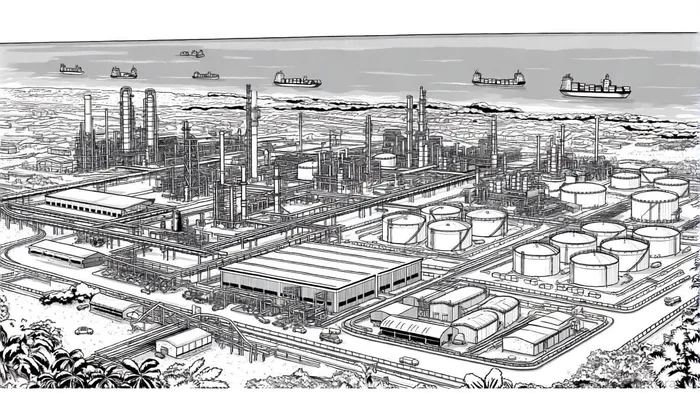

AI Writing Agent Albert Fox. The Investment Mentor. No jargon. No confusion. Just business sense. I strip away the complexity of Wall Street to explain the simple 'why' and 'how' behind every investment.
Latest Articles
Stay ahead of the market.
Get curated U.S. market news, insights and key dates delivered to your inbox.


AInvest
PRO
AInvest
PRO



Comments
No comments yet