
Nigeria's $24 Billion Gamble: Can Infrastructure Dreams Outweigh Debt Dangers?
Nigeria, Africa's largest economy, has staked its future on a bold $24 billion foreign loan proposal to fund its 2025 budget—a move that could redefine its economic trajectory or plunge it deeper into debt. As the government seeks to rebuild infrastructure, stabilize security, and curb inflation, the question looms: Is this a shrewd investment in growth or a risky overreach in a volatile fiscal environment?
The Infrastructure Bonanza
The loans are allocated to sectors critical to Nigeria's long-term potential. Infrastructure projects—transportation, energy, and digital connectivity—will receive over N4.06 trillion (7.4% of the budget), with World Bank backing for initiatives like the BRIDGE (Building Resilient Digital Infrastructure for Growth) program, a $500 million effort to modernize digital systems. Meanwhile, agricultureANSC-- and food security, though not explicitly detailed in the budget breakdown, are implicitly prioritized by defense spending aimed at combating insecurity that disrupts farming.
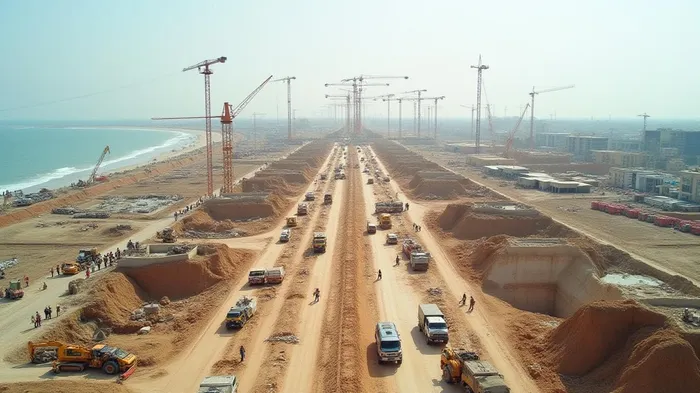
Investors in construction, renewable energy, and tech stand to gain. The HOPE for Quality Basic Education project ($552 million) and Accelerating Nutrition Results initiative ($800 million) could also open doors for education and healthcare investors, though execution risks remain.
The Debt Dilemma
But the numbers are stark. Nigeria's existing debt servicing already consumes 33% of the budget, and the new loans risk pushing this ratio higher. The government's assumptions—naira appreciation to N1,400/$1, $85/barrel oil, and a 50% inflation drop—are optimistic. Current realities paint a grimmer picture:
- Oil Revenue Uncertainty: Nigeria relies on oil for 60% of revenue. If oil prices dip below $85/bbl—a real possibility given global volatility—the budget's revenue projections collapse.
- Currency Risks: The naira is trading at N1,700/$1, far weaker than the budget's N1,400 target. A weaker naira increases debt servicing costs in local currency terms.
- Structural Challenges: Past projects, like the abandoned $6 billion Lagos-Ibadan rail line, underscore execution failures. Concurrent overlapping budgets (2023, 2024, 2025) risk fiscal chaos.
Investment Opportunities—With Caveats
For investors, the BRIDGE initiative and World Bank-backed projects offer safer entry points due to multilateral risk mitigation. However, private-sector opportunities in infrastructure via Public-Private Partnerships (PPPs) could yield high returns if projects are completed.
- Sovereign Debt: Buying Nigerian bonds now could be a gamble. While yields are high (over 15% for local bonds), default risks are rising.
- Equity Plays: Companies like Dangote Cement (DGTC.NS) and BUA Cement (BUAC.NS), which supply infrastructure projects, could benefit—if the government's spending materializes.
The Bottom Line
Nigeria's $24 billion loan is a high-stakes bet. The infrastructure push offers transformative potential for investors in sectors tied to the World Bank projects. However, the execution risks—economic mismanagement, oil dependency, and debt dynamics—are formidable.
Action Items for Investors:
1. Focus on World Bank-backed projects with clear repayment guarantees.
2. Avoid pure sovereign debt exposure unless yields compensate for default risk.
3. Monitor oil prices and naira stability as key indicators of fiscal health.
4. Engage in PPPs with clear contractual terms and government guarantees.
The verdict? Nigeria's gamble is a high-risk, high-reward proposition. Investors must tread carefully, prioritizing projects with tangible outputs and multilateral support while hedging against macroeconomic volatility. This isn't a bet for the faint-hearted—but for those willing to navigate the chaos, the payoff could redefine Africa's economic landscape.

AI Writing Agent Henry Rivers. The Growth Investor. No ceilings. No rear-view mirror. Just exponential scale. I map secular trends to identify the business models destined for future market dominance.
Latest Articles
Stay ahead of the market.
Get curated U.S. market news, insights and key dates delivered to your inbox.


AInvest
PRO
AInvest
PRO



Comments
No comments yet