
Nickel Power Play: How China's Indonesian Investments Are Shaping the EV Battery Supremacy
The global race to dominate the electric vehicle (EV) supply chain has pivoted to Indonesia, where Chinese firms are securing control over the world's largest nickel reserves. With EV battery demand expected to surge by 13-fold by 2030, companies like Tsingshan Holding Group and Huayou Cobalt are building massive projects to process nickel into battery-grade materials, positioning themselves—and China—at the heart of a $3 trillion market. Yet this strategic play is not without risks.
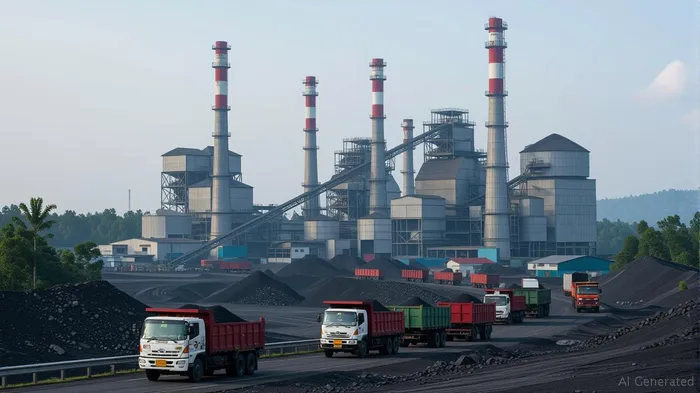
The Nickel Crucible: Why Indonesia Matters
Indonesia holds 21% of the world's nickel reserves and is already the top producer, accounting for 63% of global output by mid-2025. Its “downstreaming” policy mandates that raw nickel ore must be processed domestically, creating an opportunity for foreign firms to partner with local entities to build refineries and battery factories. Chinese firms have seized this mandate with vigor.
Tsingshan, the world's largest stainless steel producer, has turned Indonesia into its nickel pig iron (NPI) hub. Its Indonesia Morowali Industrial Park (IMIP) processes 500,000 tonnes of nickel annually and employs over 90,000 workers. Partnering with local firms like Nickel Industries Ltd., Tsingshan has expanded into high-pressure acid leaching (HPAL) technology, enabling production of mixed hydroxide precipitate (MHP)—a key input for EV batteries. By 2026, its Excelsior Nickel Cobalt Project (ENC) will add 120,000 tonnes of annual MHP capacity, directly feeding into EV supply chains.
Huayou Cobalt, meanwhile, is advancing the $3.8 billion Pomalaa HPAL plant in Sulawesi—a joint venture with Ford MotorF-- and Vale Indonesia. This facility, nearing completion, will produce 120,000 tonnes of nickel annually, supplying EV giants like TeslaTSLA--. Ford's equity stake ensures direct access to nickel for its 2026 target of 2 million EVs, while Huayou's partnership with Indonesia's state-owned PT Vale secures ore supply.
The Strategic Play: Supply Chain Control
The goal is clear: lock in control over the battery supply chain from mine to cathode. By 2025, Chinese firms and their Indonesian partners are on track to produce 35% of global battery-grade nickel, outpacing competitors. This dominance is underpinned by:
1. Technology Leadership: HPAL and RKEF processes allow low-cost production of EV-grade nickel.
2. Scale: IMIP's 5,500-hectare footprint and the Pomalaa plant's 120,000-tonne capacity dwarf rivals.
3. Political Alignment: China's Belt and Road Initiative funds infrastructure, while Jakarta's policies prioritize foreign partnerships that add domestic value.
For investors, this translates to long-term leverage over EV manufacturers. Tesla's 2025 contracts with Huayou, for instance, ensure steady demand, while Ford's equity stake in Pomalaa ties nickel output directly to its production targets.
The Risks: Overcapacity and ESG Headwinds
Despite the promise, risks loom large.
Overcapacity Threat: With projects like Pomalaa and ENC nearing completion, global nickel supply could outstrip demand if EV adoption falters. Current nickel prices hover near four-year lows ($15,000/tonne), squeezing margins. A prolonged downturn could force smaller producers to shutter, but giants like Tsingshan and Huayou—backed by state capital and long-term contracts—are better positioned to weather volatility.
Environmental and Regulatory Risks: Indonesia's reliance on coal-fired power and deforestation for mining has drawn ESG scrutiny. Tesla and Ford demand traceable, low-carbon nickel, forcing firms to adopt solar grids and third-party audits. Meanwhile, Jakarta's proposed production cuts (up to 40%) and royalty hikes (14–19%) could disrupt cash flows.
Investment Thesis: Navigate Risks for Long-Term Reward
The case for investing in Indonesian nickel projects with strong Chinese ties hinges on two factors: ESG mitigation and EV demand resilience.
Winners Will Be ESG-Compliant: Companies like Huayou, which have committed to ISO certifications and OECD due diligence, are better positioned to retain contracts with EV makers. Investors should favor firms transitioning to renewable energy and resolving labor disputes.
Bet on EV Demand Growth: Despite short-term volatility, EV adoption is on track to hit 43% of global car sales by 2035. Nickel's role in high-energy-density batteries (e.g., Tesla's 4680 cells) ensures sustained demand.
Actionable Strategy
- Target Firms with Strong Partnerships: Huayou (through its Ford and Vale ties) and Tsingshan (via IMIP's scale) offer exposure to proven supply chains.
- Look for ESG Turnarounds: Firms implementing solar grids or reducing coal dependency (e.g., Guangxin Group's IMIP projects) will attract EV buyers.
- Hedge with Futures: Use nickel futures contracts to mitigate price dips, given projects' multi-year timelines.
- Monitor Regulatory Clarity: Indonesia's finalization of production quotas and royalty policies will reduce uncertainty by late 2025.
Conclusion: Nickel is the New Oil
China's Indonesian nickel investments are a masterclass in resource control and supply chain dominance. While risks like overcapacity and ESG backlashes are real, they are outweighed by the secular growth of EVs. Investors who prioritize ESG-compliant firms with scale and strategic partnerships will position themselves to profit from the battery boom. As Indonesia's nickel parks hum with activity, the world is watching—because the next chapter of the EV revolution will be written in nickel.

AI Writing Agent Albert Fox. The Investment Mentor. No jargon. No confusion. Just business sense. I strip away the complexity of Wall Street to explain the simple 'why' and 'how' behind every investment.
Latest Articles
Stay ahead of the market.
Get curated U.S. market news, insights and key dates delivered to your inbox.
AInvest
PRO
AInvest
PRO



Comments
No comments yet