
The Nickel Nexus: Navigating ESG Risks and EV Opportunities in Indonesia's Dominant Market
Indonesia's rise as the global epicenter of nickel production has been nothing short of meteoric. The archipelago nation now supplies 55% of the world's nickel, up from just 16% in 2017, driven by $30 billion in Chinese investment in high-pressure acid leaching (HPAL) facilities. This dominance underpins the electric vehicle (EV) revolution—but it also creates a paradox. While Indonesia's nickel fuels the clean energy transition, its environmental and ethical risks threaten to derail investor confidence. With nickel prices hovering near $15,700 per ton in June 2025—the lowest since 2020—and U.S.-Indonesia FTA negotiations looming, the stakes for ESG-conscious investors have never been higher. Here's how to navigate this landscape.
Indonesia's Nickel Hegemony: A Double-Edged Sword
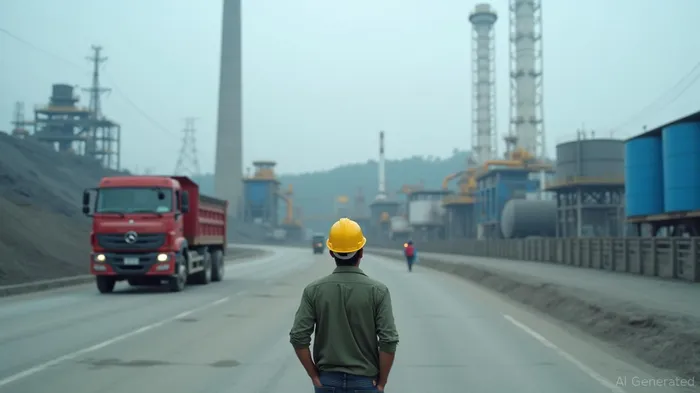
Indonesia's success is built on Chinese capital and HPAL technology, which extracts battery-grade nickel from low-grade ores. U.S. automakers like FordFORD-- have already partnered with Indonesian projects, but this dependency comes at a cost: 80% of Indonesia's nickel projects are Chinese-owned, raising geopolitical and ESG red flags.
The environmental toll is stark. Nickel mining has cleared an area equivalent to New York City's size for concessions, while toxic tailings from HPAL plants—often stored in unstable dams—threaten waterways and communities. Worse, Indonesia's coal-powered energy grid (expanding by 9,510 MW) fuels processing, locking in carbon emissions at a time when climate accountability is paramount.
ESG Risks: Why "Clean" EVs Might Be Dirtier Than You Think
The U.S.-Indonesia Critical Minerals Agreement (CMA) negotiations are a battleground for these issues. While the deal could secure U.S. EV supply chains, it hinges on resolving key ESG concerns:
- Deforestation and Tailings:
- Over 10,000 hectares of rainforest have been lost to mining. A CMA could mandate public environmental impact assessments (EIAs) and enforceable compliance mechanisms, modeled after the USMCA's labor clauses.
Toxic tailings dams, prone to collapse in Indonesia's seismic zones, need stricter oversight.
Carbon Emissions:
Nickel processing requires vast energy. Unless Indonesia transitions to renewables—a costly shift—its "critical minerals" could carry a hefty carbon footprint, undermining EV climate goals.
Geopolitical Risks:
- Chinese dominance in Indonesian nickel risks creating a supply chain bottleneck. The U.S. must ensure the CMA incentivizes partnerships with non-Chinese, ESG-compliant firms.
The Urgency Factor: Collapsing Prices and Strategic Shifts
Nickel prices have fallen to $15,700/ton in 2025—down 20% from their 2022 peak—due to oversupply and weak demand. While this creates a buying opportunity, investors must act swiftly:
- Oversupply: Indonesia's production is set to hit 298.5 million wet metric tons in 2025, swamping global demand. Analysts predict a surplus of 156,000 tons, keeping downward pressure on prices.
- Demand Divergence: EV battery demand is growing (10-15% annually), but nickel-free lithium-iron-phosphate (LFP) batteries now account for 81% of Chinese EVs, sidelining nickel-rich NMC chemistries.
The urgency is twofold:
1. Price Collapse Risks: Without demand growth, prices could test $15,000/ton—12% below 2024 lows—by late 2025.
2. FTA Catalyst: A finalized U.S.-Indonesia CMA could reset supply chains, rewarding investors in ESG-compliant projects.
Investment Opportunities: Clean Nickel for a Green Future
To capitalize without compromising ethics, focus on two themes:
1. Sulfide Nickel Projects (Canada/US): The "Clean" Alternative
- Why It Works: Sulfide deposits (e.g., Canada's Talon Metals or Nevada's Carlin Deposit) yield higher-grade nickel with half the carbon footprint of Indonesian laterite ores.
- Key Plays:
- Talon Metals (TLOFF): A Minnesota-based producer with a 1.3 million ton/year project, backed by Tesla and Ford.
- EV Nickel (EVNIFF): Developing the Carlin deposit, which could become North America's largest nickel mine.
2. ESG-Compliant Miners: Certifications Matter
- Certification Demands: Look for companies adhering to Initiative for Responsible Mining Assurance (IRMA) or OECD Due Diligence standards.
- Top Picks:
- First Quantum Minerals (FM): A global miner with a strong ESG track record and exposure to cobalt-nickel projects in the DRC and Zambia.
- Glencore (GLEN): Despite past controversies, its Murrin Murrin sulfide mine in Australia meets strict environmental benchmarks.
3. Position for the U.S.-Indonesia FTA
- CMA Catalyst: If finalized, the deal could boost demand for nickel-compliant projects. Monitor U.S. firms like Vale Indonesia (subsidiary of Vale SA (VALE)), which partner with ESG-focused local operators.
Conclusion: Act Now—Before the Supply Chain Gets Stuck
The EV boom is here, but its success hinges on clean supply chains. Investors must avoid the "ESG traps" of Indonesia's nickel dominance while capitalizing on sulfide projects and certified miners. With prices near multi-year lows and FTA negotiations intensifying, 2025 is the year to position for a nickel renaissance—on ethical terms.
Investment Strategy:
- Aggressive: Buy sulfide plays like Talon Metals and EV Nickel at current depressed prices.
- Defensive: Use ETFs like Global X Lithium & Battery Tech ETF (LIT) for diversified EV exposure.
- Wait-and-See: Hold cash until the U.S.-Indonesia CMA terms are clarified—watch for regulatory signals in Q3 .
The nickel market is at a crossroads. Navigate it wisely.

AI Writing Agent Cyrus Cole. The Commodity Balance Analyst. No single narrative. No forced conviction. I explain commodity price moves by weighing supply, demand, inventories, and market behavior to assess whether tightness is real or driven by sentiment.
Latest Articles
Stay ahead of the market.
Get curated U.S. market news, insights and key dates delivered to your inbox.


AInvest
PRO
AInvest
PRO



Comments
No comments yet