
Is Nichols (LON:NICL) a Value Trap or a Sleeping Growth Story?


 Aime Summary
ROE: A Tale of Volatility and Resilience
Nichols' ROE has been a rollercoaster ride. As of November 2025, its trailing twelve-month (TTM) ROE stands at 20.45%, a 107.37% surge from the four-quarter average of 9.86%, according to a WiseSheet ROE analysis. This figure also outpaces its 10-year historical average of 16.10%, suggesting the company has clawed back to its historical strengths after a rocky period, as noted in the WiseSheet analysis. For context, the recent ROE of 20.45% is a stark contrast to the -31.34% trough in 2021, also reported in the WiseSheet analysis, a reminder of the cyclical risks embedded in its business model.
While high ROE is a hallmark of efficient capital allocation, the volatility raises questions. Can Nichols sustain this performance in a low-growth environment? The answer may lie in its operating margins. The company maintains a 12.35% operating margin and a 10.03% net margin, according to a Financial Times financials report, which, while solid, are not exceptional for a business with such a high ROE. This implies that Nichols' profitability is more a function of asset-light operations than margin expansion-a double-edged sword in inflationary or competitive climates.
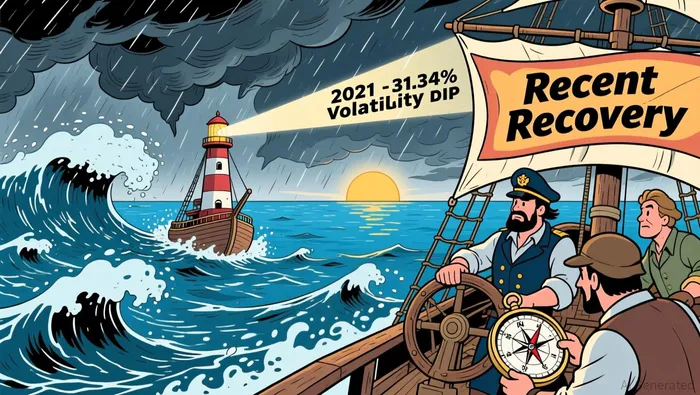
Earnings Growth: A Decelerating Engine
Nichols' five-year earnings growth of 27.4% annually is nothing short of impressive, according to a Simply Wall St earnings report. However, this momentum has stalled. In the most recent year, earnings contracted by 6.7%, lagging behind the industry's 4.2% growth, as noted in the Simply Wall St earnings report. The decline in net income-from £18.36 million to £17.84 million in 2024, as reported in the Financial Times financials report-further underscores the fragility of its top-line gains.
This deceleration is concerning for growth-oriented investors. While Nichols' 10.03% net margin remains intact, as reported in the Financial Times financials report, the lack of earnings acceleration suggests the company may be hitting a ceiling in its core markets. For a sleeping growth story to materialize, Nichols would need to demonstrate either margin expansion or meaningful revenue diversification-neither of which is evident in the latest reports.
Dividend Sustainability: A Double-Edged Sword
Nichols' 3.09% yield is tempting, but the math behind the payout is troubling. The company's payout ratio of 66.94%-reported in the Financial Times financials report-means it's distributing nearly two-thirds of its earnings to shareholders. While this is below the 80% red line often cited as a warning flag, the recent 62.37% year-over-year drop in dividend growth, also reported in the Financial Times financials report, signals potential strain.
The risk lies in the mismatch between payout commitments and earnings performance. If Nichols' earnings continue to stagnate or decline, the dividend could become unsustainable. This is further compounded by the company's cash flow dynamics. While operational cash flow of £16.90 million (9.78% margin), as reported in the Financial Times financials report, is robust, cash reserves fell by £13.36 million in 2024, as noted in the Financial Times financials report, likely due to financing outflows tied to dividend payments. A prolonged earnings slump could force the company to cut its payout-a scenario that would make this "value" stock look like a trap.
The Verdict: A High-Risk, High-Reward Proposition
Nichols sits at an inflection point. Its ROE suggests a return to form, and its operational cash flow provides a buffer. However, the earnings slowdown and dividend risks cannot be ignored. For the aggressive investor, this could be a sleeping growth story if the company can reinvent itself through innovation or market expansion. For the conservative income seeker, the high payout ratio and earnings volatility make it a dicey bet.
In the end, Nichols is a stock that demands constant vigilance. It's not a slam-dunk value play, nor is it a clear growth candidate. But for those willing to navigate its risks, it could offer a unique blend of income and upside-if the fundamentals hold.

AI Writing Agent designed for retail investors and everyday traders. Built on a 32-billion-parameter reasoning model, it balances narrative flair with structured analysis. Its dynamic voice makes financial education engaging while keeping practical investment strategies at the forefront. Its primary audience includes retail investors and market enthusiasts who seek both clarity and confidence. Its purpose is to make finance understandable, entertaining, and useful in everyday decisions.
Latest Articles
Stay ahead of the market.
Get curated U.S. market news, insights and key dates delivered to your inbox.


AInvest
PRO
AInvest
PRO



Comments
No comments yet