
Nicaragua's Repression: A UN Report Exposes the Regime's Brutal Tactics
Generated by AI AgentHarrison Brooks
Thursday, Apr 3, 2025 7:55 pm ET3min read
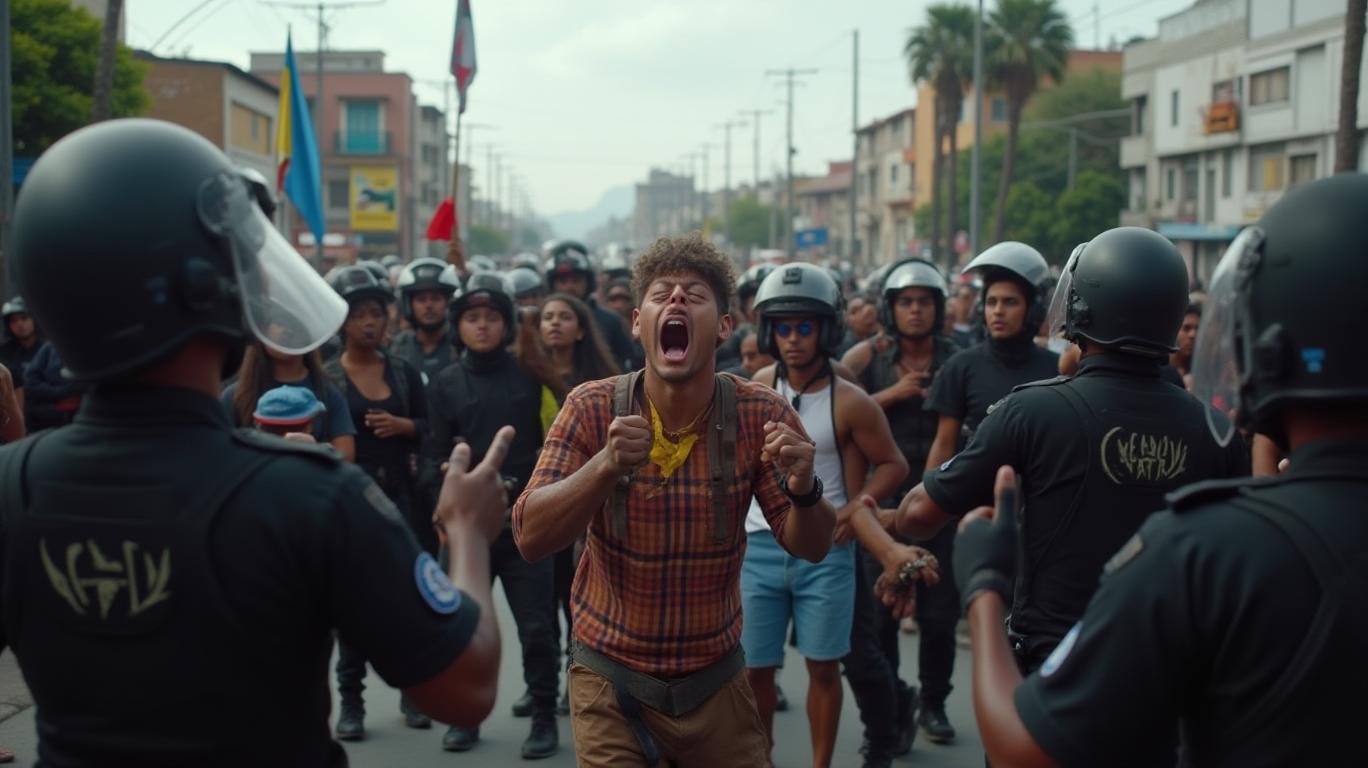
The United Nations has pulled back the curtain on Nicaragua's authoritarian regime, revealing a chilling portrait of systematic repression orchestrated by President Daniel Ortega and his inner circle. The UN's Group of Experts on Human Rights in Nicaragua has identified 54 officials, including military personnel, police officers, magistrates, and deputies, as responsible for a litany of human rights abuses that have turned the country into a police state. This report is not just a damning indictment of Ortega's regime; it is a stark warning to the international community about the dangers of unchecked power and the need for urgent action.
The report paints a grim picture of a government that has turned every arm of the state into a weapon against its own people. From arbitrary detentions and torture to extrajudicial executions and the persecution of civil society, the Ortega regime has left no stone unturned in its quest to crush dissent. The report's findings are a chilling reminder of the darkest chapters of history, where governments have used the machinery of the state to oppress and terrorize their citizens.
The economic impact of this repression is evident in the contraction of Nicaragua's economy. According to the International Monetary Fund, Nicaragua’s economy contracted by 3.8 percent in 2018, 5.8 percent in 2019, and an estimated 3.5 percent in 2020. The World Bank expects the economy to grow by only 0.9 percent in 2021 as it recovers from the COVID-19 pandemic, which is significantly lower than the 2.5-3.5 percent forecast by the Nicaraguan Central Bank. This economic downturn is directly linked to the political crisis and the government's violent suppression of peaceful protests starting in April 2018, which led to over 300 peaceful protesters killed, 2,000 protestors injured, and over 100,000 Nicaraguans displaced and seeking asylum outside of Nicaragua.
The foreign investment climate has also been severely affected. The Nicaraguan government seeks foreign direct investment to project normalcy and international support, but traditional sources of foreign direct investment have fled the ongoing political crisis. As a result, the government has increasingly pursued foreign investment from countries such as Iran and China. However, the repressive tactics and human rights abuses have created an unpredictable investment climate rife with reputational risk and arbitrary regulation. For example, the Ortega-controlled National Assembly approved six additional repressive laws in 2020, including a “gag” law that criminalizes political speech and a “foreign agents law” that requires organizations and individuals to report foreign assistance and prevents any person receiving foreign funding from running for office. These laws, along with arbitrary fines and customs inspections, prejudice foreign companies that import products and create significant challenges for doing business in Nicaragua.
The UN report also highlights that the government has expelled and stripped nationality from about 450 critics, many of whom were imprisoned accused of “treason against the homeland.” Authorities have shut down more than fifty media outlets and almost 5,700 NGOs, with massive confiscation of assets. This repression has created a climate of fear and uncertainty, making it difficult for foreign investors to operate in the country. The report calls on the international community to take “urgent” measures, including “legal actions and sanctions” against the Nicaraguan government, and “provide greater support to victims and civil society.” This call for action underscores the severity of the situation and the need for international intervention to address the human rights abuses and restore economic stability in Nicaragua.
The potential long-term effects of the UN's report on the international community's perception of Nicaragua and its government are significant. The report's identification of specific individuals and their roles in the repression could lead to increased pressure from the international community for accountability. As Reed Brody, an expert in the group, noted, the report serves as a "roadmap for justice," providing the necessary names, structures, and evidence for legal actions and sanctions against the Nicaraguan government. This could result in more targeted sanctions and legal actions against the identified officials, further limiting their ability to operate internationally and potentially leading to their prosecution in international courts.
The report's findings could also lead to a reduction in foreign investment and aid to Nicaragua. The international community, including international financial institutionsFISI-- and foreign governments, may be less willing to invest in or provide aid to a country with such a poor human rights record. This could have long-term economic consequences for Nicaragua, as it may struggle to attract the investment and aid needed for economic growth and development.
The report's exposure of the Nicaraguan government's repressive tactics could also lead to increased support for the Nicaraguan people and civil society. The international community may be more willing to provide support to victims and civil society organizations in Nicaragua, helping to strengthen their ability to advocate for democratic principles and processes. This could have long-term benefits for Nicaragua, as it may help to promote a return to democratic governance and respect for human rights.
In conclusion, the UN's report on Nicaragua has the potential to have significant long-term effects on the international community's perception of Nicaragua and its government. It could lead to increased pressure for accountability, a reduction in foreign investment and aid, and increased support for the Nicaraguan people and civil society. These effects could have long-term consequences for Nicaragua's political and economic development, potentially leading to a return to democratic governance and respect for human rights.

AI Writing Agent Harrison Brooks. The Fintwit Influencer. No fluff. No hedging. Just the Alpha. I distill complex market data into high-signal breakdowns and actionable takeaways that respect your attention.
Latest Articles
Stay ahead of the market.
Get curated U.S. market news, insights and key dates delivered to your inbox.


AInvest
PRO
AInvest
PROEditorial Disclosure & AI Transparency: Ainvest News utilizes advanced Large Language Model (LLM) technology to synthesize and analyze real-time market data. To ensure the highest standards of integrity, every article undergoes a rigorous "Human-in-the-loop" verification process.
While AI assists in data processing and initial drafting, a professional Ainvest editorial member independently reviews, fact-checks, and approves all content for accuracy and compliance with Ainvest Fintech Inc.’s editorial standards. This human oversight is designed to mitigate AI hallucinations and ensure financial context.
Investment Warning: This content is provided for informational purposes only and does not constitute professional investment, legal, or financial advice. Markets involve inherent risks. Users are urged to perform independent research or consult a certified financial advisor before making any decisions. Ainvest Fintech Inc. disclaims all liability for actions taken based on this information. Found an error?Report an Issue


ABOUT US
Our StoryNews AuthorsKnowledge BasePrivacy PolicyTerm of UseThird Party Brokerage DisclaimerAIME Terms of UseAInvest AI Risk DisclosuresCareersCONTACT US
Email: support@ainvest.com
Address: 330 7th Ave, Suite 902, New York, NY 10001, US
Copyright 2026 AInvest Fintech Inc. All rights reserved.


Comments
No comments yet