
NFTs: The New Frontier of Brand Engagement in the Metaverse
The rise of NFTs has redefined how brands interact with consumers, transforming digital ownership into a tool for building direct, profitable relationships. Nowhere is this clearer than in Nike's partnership with RTFKT, a project that exemplified NFTs' potential to fuse culture, technology, and commerce—before its abrupt closure in early 2025. This case study reveals both the promise and perils of NFT-driven engagement in the metaverse.
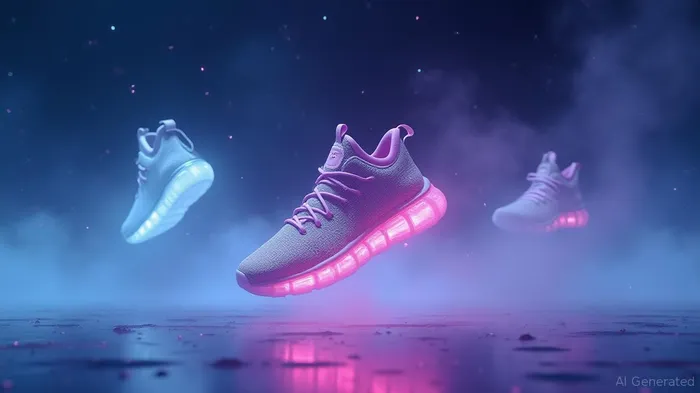
The RTFKT Experiment: Successes and Lessons
Nike's acquisition of RTFKT in 2021 marked a bold foray into Web3, leveraging NFTs to create immersive brand experiences. The partnership generated $50 million in earnings since its launch, with $45 million in royalties alone—placing RTFKT among the top 10 NFT projects globally. Key collections like MNLTH ($16.4M in royalties) and CloneX Mintvial ($13.9M) thrived during the 2021–2022 NFT boom, driven by strategic engagement tactics:
- Dynamic Reveal Technology: RTFKT's MNLTH collection required holders to solve puzzles to unlock digital “monoliths,” generating 2.3 million Twitter views and sustained hype.
- Scarcity & Customization: Limited-edition drops (e.g., 20,000 NikeNKE-- Dunk CRYPTOKICKS) and “skin vials” allowing color changes created a sense of exclusivity and ongoing interaction.
- Metaverse Integration: NFTs like CloneX granted access to virtual worlds like Decentraland, blending digital assets with real-world perks (e.g., physical merchandise).
These strategies not only boosted sales but also fostered a loyal community—a hallmark of successful Web3 engagement.
The Metaverse Marketplace: Growth Amid Turbulence
The broader NFT ecosystem reflects this duality. While total NFT sales hit $9.9 billion in 2024, they remain far below 2022's peak of $23.7 billion. However, niche markets are thriving:
- Utility-driven NFTs: Projects offering real-world benefits (e.g., event access, merchandise) outperform pure speculative assets.
- Cross-platform adoption: Metaverse platforms like The Sandbox and Decentraland are integrating NFTs as foundational assets, creating network effects for brands.
Nike's stock rose 25% from 2020–2024, outpacing the NFT market's volatility. This underscores the need for brands to balance Web3 experimentation with core business stability.
Risks: Regulatory Uncertainty and Market Volatility
RTFKT's abrupt shutdown in 2025—and the subsequent class-action lawsuit alleging misrepresentation—highlight critical risks:
1. Regulatory Hurdles: The SEC's scrutiny of NFTs as unregistered securities could stifle innovation unless frameworks for compliance emerge.
2. Environmental Costs: Ethereum's energy-intensive Proof-of-Work model drew criticism, with RTFKT's CRYPTOKICKS alone generating 7,437 metric tons of CO2—equivalent to 1,602 cars annually.
3. Market Fatigue: By 2024, 98% of NFT collections showed no trading activity, and even RTFKT's flagship CloneX NFTs plummeted from $60K to $300.
Investment Opportunities in Web3 Branding
Despite these challenges, NFTs remain a transformative tool for brands willing to navigate the landscape strategically:
- Focus on Utility: Invest in NFTs tied to tangible benefits (e.g., exclusive products, metaverse access) rather than pure speculation.
- Sustainability First: Prioritize projects on eco-friendly blockchains like Tezos or Solana to mitigate regulatory and reputational risks.
- Community-Centric Models: Gamification (e.g., RTFKT's MNLTH quests) and creator empowerment can build lasting engagement.
While NFT valuations have collapsed from their 2021 highs, long-term investors should view the dip as a buying opportunity for high-utility projects with strong community ties.
Conclusion: Navigating the Web3 Wave
Nike's RTFKT experiment proves that NFTs can redefine brand-consumer relationships—but success demands a balance of innovation, sustainability, and risk management. For investors, the metaverse's growth hinges on two questions: Can brands sustain engagement beyond hype cycles? And will regulatory clarity arrive before another market crash?
The answer lies in backing companies that treat NFTs as extensions of their core identity, not just digital gimmicks. As the metaverse evolves, those who align utility, culture, and ethics will capture value in this digital frontier.
Investment Takeaway:
- Hold: Established brands (e.g., Nike, Adidas) with Web3 footholds but diversified revenue streams.
- Avoid: Pure-play NFT projects without clear utility or regulatory compliance plans.
- Watch: Regulatory developments and energy-efficient blockchain adoption in 2025.
The metaverse is here to stay—NFTs will either be its backbone or its cautionary tale. The choice is in the hands of brands and investors alike.

Stay ahead of the market.
Get curated U.S. market news, insights and key dates delivered to your inbox.
AInvest
PRO
AInvest
PRO



Comments
No comments yet