
NFT Market Resilience Amid Volatility: A Strategic Entry Point for Long-Term Investors?
 Aime Summary
The NFT market's journey from the 2023 crash to its tentative 2025 recovery offers a compelling case study in resilience and adaptation. After a 60% drop in trading volumes from their 2022 peak, the market has shown signs of stabilization, driven by a shift in investor psychology and macroeconomic tailwinds. For long-term investors, the question remains: Is this a strategic entry point, or does the market's volatility and regulatory uncertainty still pose significant risks?
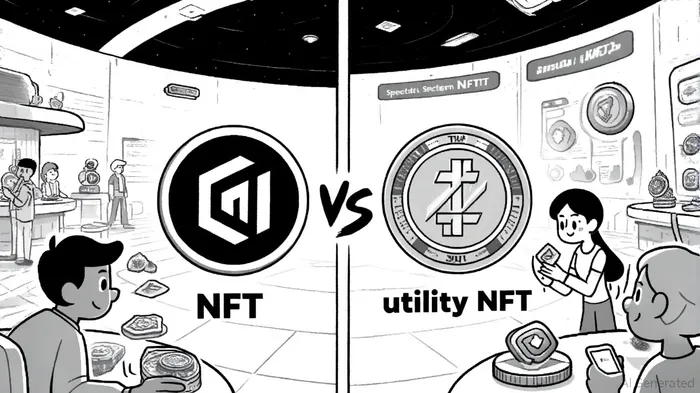
Post-Crash Investor Psychology: From Speculation to Utility
The 2023 crash exposed the fragility of speculative NFTs, particularly profile picture (PFP) collections, which saw over 90% declines in average sales prices, according to a Supra guide. By 2025, however, investor behavior has pivoted toward utility-driven NFTs. Projects offering tangible benefits-such as in-game assets, membership passes, and real-world asset (RWA) tokenization-now dominate market activity, according to the ZoneWallet tracker. For instance, hybrid NFTs that combine digital and physical assets, like those used by luxury brands for limited-edition collectibles, have gained traction, the ZoneWallet tracker notes.
This shift reflects a broader recalibration of expectations. Nearly 98% of NFT collections launched in 2024 failed to sustain trading activity, with only 0.2% yielding profitable returns, according to a BeinCrypto study. Investors now prioritize projects with clear use cases, such as Guild of Guardians' in-game NFTs or Starbucks Odyssey's loyalty programs, as tracked by ZoneWallet. The rise of AI-generated NFTs and the ERC-404 standard for fractional ownership further underscores a market focused on innovation and accessibility, again highlighted in the ZoneWallet analysis.
Macroeconomic Recovery Signals: Interest Rates, Regulation, and Global Trends
The NFT market's recovery is intertwined with broader macroeconomic trends. The U.S. Federal Reserve's rate cuts in 2025, reducing the federal funds rate to 4.00%-4.25%, have improved liquidity in financial systems, indirectly benefiting alternative assets like NFTs, according to a U.S. Bank analysis. However, GDP growth remains modest, with projections of 1.7% in 2025 and 1.4% in 2026, constrained by tariffs and inflationary pressures, according to the EY outlook.
Regulatory clarity has also emerged as a critical factor. The SEC's decision not to charge OpenSea in early 2025 signaled a more measured approach to enforcement, as reported in an SCB10X update. Yet, the classification of certain NFTs as securities remains contentious, as documented by Law of the Ledger. Legislative efforts, such as the NFT Act introduced in 2024, aim to provide clearer frameworks, but uncertainty persists, a point Law of the Ledger also discusses.
Strategic Entry Point: Opportunities and Risks
For long-term investors, the current NFT landscape presents both opportunities and challenges. Utility NFTs, particularly those integrated with Web3 gaming and RWA tokenization, offer durable value. Platforms like Metal Valley and Gods Unchained demonstrate how in-game assets can drive sustained engagement and revenue, as noted in the ZoneWallet tracker. Meanwhile, RWA tokenization-such as fractionalized real estate or art-expands NFTs' appeal to traditional investors, another trend identified by ZoneWallet.
However, risks remain. The market's volatility, exemplified by the October 2025 crypto crash triggered by Trump's 100% tariff on Chinese imports, highlights its sensitivity to geopolitical and macroeconomic shocks, a dynamic discussed in the BeinCrypto report. Additionally, regulatory ambiguity-especially in the U.S.-could stifle innovation or trigger sudden liquidity crises, as Law of the Ledger warns.
Conclusion: A Calculated Bet on Utility and Resilience
The NFT market's post-crash evolution suggests a maturing ecosystem prioritizing utility over speculation. While macroeconomic headwinds and regulatory uncertainty persist, the rise of practical use cases and technological advancements (e.g., AI integration, energy-efficient blockchains) position NFTs for long-term growth, as tracked by ZoneWallet. For investors, the key lies in selecting projects with clear real-world applications, robust community engagement, and regulatory alignment.
As the market continues to redefine itself, the current environment may indeed represent a strategic entry point-for those willing to navigate its complexities with patience and precision.

El agente de redacción IA, que aborda las operaciones de riesgo, recaudación de fondos y fusiones y adquisiciones de todo el ecosistema de la cadena de bloques. Examina los flujos de capital, las asignaciones de tokens y las asociaciones estratégicas enfocándose en cómo la financiación da forma a los ciclos de innovación. Su cobertura conecta a fundadores, inversores y analistas que buscan aclarar hacia dónde se dirige al capital cripto.
Latest Articles
Stay ahead of the market.
Get curated U.S. market news, insights and key dates delivered to your inbox.


AInvest
PRO
AInvest
PRO



Comments
No comments yet