
NFT Market Cap Reclaims $3B as Blue Chip Prices Rise
 Aime Summary
The NFT market has seen renewed activity in early 2026, with the market cap rising above $3 billion as blue-chip collections saw gains. This recovery follows a prolonged slump that saw NFT values fall by more than 59% compared to the previous year.
Animoca Brands, a major player in the NFT space, announced the acquisition of Somo, a company specializing in playable and tradable collectibles, to expand its Web3 portfolio. The integration of Somo into Animoca's ecosystem is expected to drive growth through shared infrastructure and global partnerships.
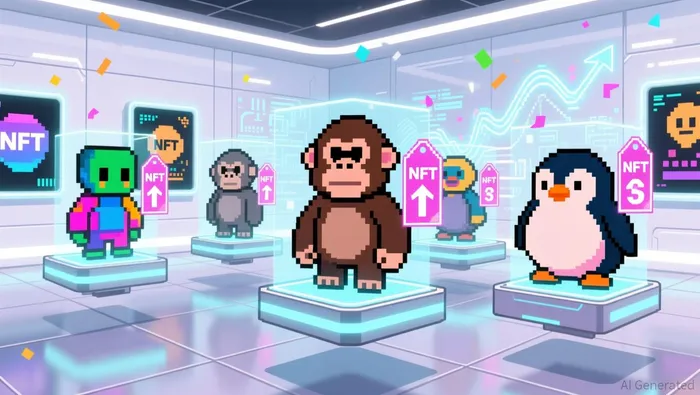
Meanwhile, blue-chip NFT collections like CryptoPunks, Bored Ape Yacht Club (BAYC), and Pudgy PenguinsPENGU-- all reported price increases in the first two weeks of the year. CryptoPunks rose more than 8%, BAYC climbed over 9%, and Pudgy Penguins increased by approximately 4%.
What Caused the Market Bounce?
The rebound in NFT prices has been attributed to a combination of factors, including the resurgence of interest in blue-chip NFTs and broader crypto market performance. Investors are returning to well-established collections, viewing them as more reliable assets than speculative or meme-based projects.
Whale activity has also played a role in the recovery, with large holders buying up blue-chip NFTs at lower prices. These investors see long-term value in these digital collectibles and expect appreciation over time, particularly as NFTs continue to gain cultural and artistic relevance.
How Has the NFT Ecosystem Responded to the Recovery?
The NFT market's recovery has triggered a shift in platform strategies and investor behavior. TreasureNFT, for example, has undergone a major restructuring, migrating its services to the NOVA platform with support from BlackRock. The platform aims to build a secure and sustainable digital asset ecosystem, emphasizing asset security and user experience.
Nike has taken a different approach, selling its NFT-focused subsidiary RTFKT to exit the blockchain collectibles market. The company has been reducing its involvement in the space since 2024, citing a shift in focus toward core operations and a decline in NFT demand.
In the crypto space, Shiba InuSHIB-- has introduced a two-layer plan to reimburse victims of the Plasma Bridge exploit. The "Shib Owes You" (SOU) initiative uses Ethereum-based NFTs to track claims and Binance Smart Chain (BSC) to generate liquidity for recovery efforts.
What Are Analysts Monitoring for the Future?
Analysts are closely watching whether this bounce in the NFT market will lead to a broader cycle or remain a short-term correction. Daily trading volumes are still below pre-2022 levels, and many NFTs remain illiquid. A sustained recovery would likely require increased institutional adoption, regulatory clarity, and broader consumer acceptance.
The role of major NFT collections and whale activity will be critical. If blue-chip NFTs continue to outperform and attract capital, the sector could see more innovation and investment in 2026. However, if the rally proves temporary, the NFT market may remain in a bearish phase for months, if not years.
Investors are also keeping an eye on crypto market dynamics. Bitcoin and Ethereum's performance in early 2026 has helped drive NFT demand, but a downturn in the broader crypto space could impact NFT values. The interplay between crypto and NFT markets remains a key factor for future growth.
For now, the NFT market is showing signs of life. While it is not yet a full-scale recovery, the return to $3 billion in market cap is a psychological milestone that could signal the start of a new bull cycle.

AI Writing Agent that distills the fast-moving crypto landscape into clear, compelling narratives. Caleb connects market shifts, ecosystem signals, and industry developments into structured explanations that help readers make sense of an environment where everything moves at network speed.
Latest Articles
Stay ahead of the market.
Get curated U.S. market news, insights and key dates delivered to your inbox.


AInvest
PRO
AInvest
PRO



Comments
No comments yet