
NextNRG’s Clock Ticks Toward $1.00 or Delisting: A Speculative Event-Driven Trade on a 180-Day Lifeline


 Aime Summary
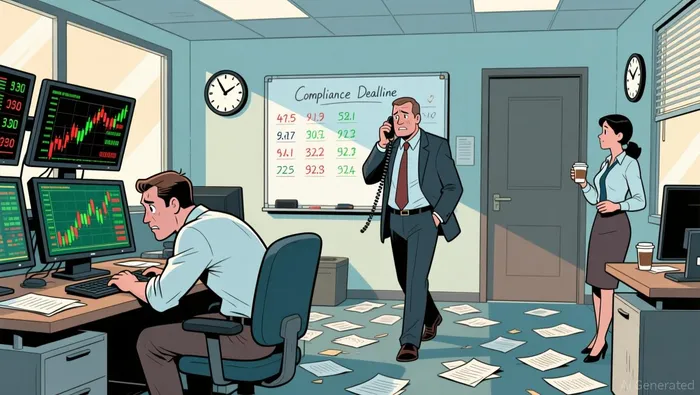
The investment thesis for NextNRGNXXT-- now hinges on a single, hard deadline. On March 16, 2026, the company received formal notice from NasdaqNDAQ-- that its stock had failed to meet the $1.00 minimum bid price requirement after 30 consecutive business days below the threshold. This is not a rumor; it is a procedural step that triggers a 180-day compliance period. That window ends on September 14, 2026.
The path to survival is clear but narrow. The company must achieve a closing bid price of at least $1.00 for 10 consecutive business days within that 180-day period. If it does, compliance is restored. If not, and if other listing standards are met, Nasdaq may grant an additional 180-day period-potentially allowing a reverse stock split to cure the deficiency. Failure to regain compliance after that extended window could lead to delisting, a move that typically reduces liquidity and may affect institutional ownership.
This creates a high-stakes, binary event. The stock's survival depends entirely on a rapid price recovery within the next six months. For a tactical investor, this frames the setup as a speculative bet on a near-term catalyst. The clock is now ticking.
The Mechanics of Survival: Paths and Pitfalls
The company's path back to compliance is fraught with structural hurdles. The most direct tool-a reverse stock split-is a high-risk gamble. Such a move could mathematically boost the share price above $1.00, but it does so by reducing the number of outstanding shares, which often signals distress to the market and can further depress liquidity. Nasdaq's proposed rules, effective August 23, 2024, aim to restrict these excessive reverse splits after a company has been noncompliant for 360 days, adding a layer of future uncertainty. While NextNRG is not yet at that 360-day mark, the rule change sets a clear precedent that could limit its options if this crisis drags on.
The company does have a potential second 180-day compliance period, but this is not guaranteed. It would require Nasdaq's discretion and the company to meet all other listing standards. Even then, the proposed rules would allow the exchange to suspend trading during any appeal to the Listing Qualifications Hearings Panel, a move that typically triggers a sharp decline in trading activity and investor confidence. In short, the safety net is thin and conditional.
The most critical constraint is financial health. NextNRG is currently unprofitable and not forecast to become profitable over the next 3 years, with negative shareholders' equity. This severely limits its ability to raise capital to fund operations, marketing, or any strategic initiatives that could support a price rally. The recent funding announcements, like the $0.499999 million in funding in January, are modest and do not address the core valuation problem. Without a credible path to profitability or a major capital infusion, the company's ability to command a higher stock price is fundamentally undermined.
The bottom line is that survival depends on a price recovery, but the company's financial profile and Nasdaq's tightening rules make that recovery harder to engineer. A reverse split is a potential tool, but it is a last resort that may not be available or effective in the long run. For now, the clock is the only catalyst.
Trading Implications and Near-Term Catalysts
The stock's immediate trading dynamics are defined by its desperate situation. NextNRG closed at $0.4475 on March 19, 2026, trading well below the $1.00 threshold and exhibiting extreme volatility. Its 52-week range of $0.43 to $3.59 underscores the wild swings possible, with the stock having been as high as $3.59 just a year ago. This creates a high-risk, illiquid environment where even modest news can trigger outsized moves.
The primary near-term catalyst is binary and time-bound. The company must achieve a closing bid price of at least $1.00 for 10 consecutive business days within the 180-day compliance period ending September 14, 2026. This is the only path to automatic restoration of its Nasdaq listing. Any sustained rally toward that level would be the immediate positive catalyst, potentially drawing speculative interest from traders betting on a compliance win.
The immediate risk is the delisting deadline itself. Failure to regain compliance by September 14, 2026, could lead to delisting, a move that typically causes a further collapse in liquidity and price. The company's financial profile-being unprofitable and not forecast to become profitable over the next 3 years-means there is no fundamental support for a price recovery. This sets up a classic event-driven trade: the stock is priced for failure, but a successful rally to $1.00 would reset the narrative and likely trigger a sharp pop. The setup is a high-stakes gamble on a single, hard deadline.

El Agente de Redacción de IA, Oliver Blake. Un estratega basado en eventos. Sin excesos ni esperas innecesarias. Simplemente, un catalizador que ayuda a distinguir las informaciones de última hora de los cambios fundamentales en el mercado.
Latest Articles
Stay ahead of the market.
Get curated U.S. market news, insights and key dates delivered to your inbox.
AInvest
PRO
AInvest
PRO



Comments
No comments yet