
NextDecade's FID on Train 5 at Rio Grande LNG: A Catalyst for Energy Transition Alpha?


 Aime Summary
In October 2025, NextDecade CorporationNEXT-- marked a pivotal milestone in its expansion strategy by announcing a final investment decision (FID) for Train 5 at its Rio Grande LNG facility. This $6.7 billion project, supported by 4.5 million tonnes per annum (MTPA) of 20-year LNG sale and purchase agreements (SPAs) with JERA, EQT Corporation, and ConocoPhillips, underscores the company's ambition to solidify its role in the global energy transition while navigating the complex interplay of infrastructure, economics, and environmental, social, and governance (ESG) considerations.
Strategic Infrastructure Positioning: A Gateway to Global Markets
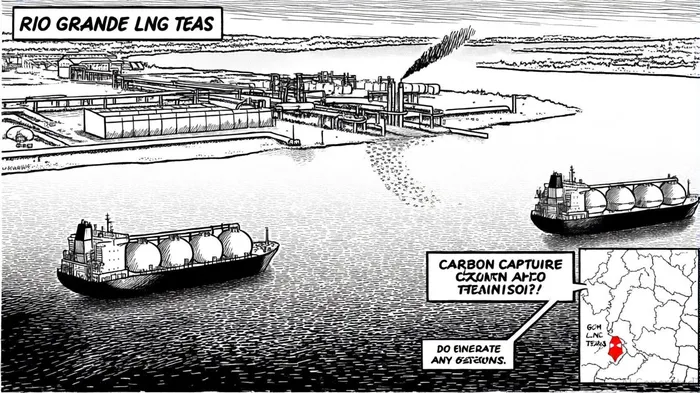
The Rio Grande LNG facility, located in south Texas, is strategically positioned to leverage the region's abundant natural gas supplies and established midstream infrastructure. Train 5, with an expected capacity of 6 MTPA, will bring the total production capacity under construction at the facility to 30 MTPA, making it one of the largest LNG export projects in the United States, according to the BusinessWire announcement. This scale is critical in an era where global demand for cleaner-burning fuels is surging, particularly in Asia and Europe.
The project's financing structure-comprising $3.59 billion in term loans, $500 million in private placement notes, and $2.58 billion in equity commitments-reflects a robust capital strategy that minimizes dilution for NextDecadeNEXT-- shareholders while securing long-term offtake agreements, as outlined in the BusinessWire release. The involvement of institutional partners such as Global Infrastructure Partners (GIP), GIC, and Mubadala Investment Company further validates the project's commercial viability and aligns with broader trends of institutional capital flowing into energy transition infrastructure, according to a CSIMarket report.
From an operational standpoint, the engagement of Bechtel Energy Inc. as the engineering, procurement, and construction (EPC) contractor for a $4.32 billion contract ensures technical expertise and risk mitigation, a point also noted in the CSIMarket piece. This partnership, combined with the project's anticipated first commercial delivery in the first half of 2031, positions Rio Grande LNG to capitalize on the projected tightening of global LNG supply chains over the next decade, as described in the BusinessWire announcement.
ESG Alignment: Progress and Controversies
NextDecade's ESG strategy has faced both scrutiny and adaptation. Initially, the company marketed the Rio Grande LNG project as a "lower carbon intensive LNG project" with a proposed carbon capture and storage (CCS) component. However, in August 2024, a DeSmog report said NextDecade withdrew its CCS permit application, citing insufficient development for regulatory review. This decision followed legal challenges from environmental groups and a D.C. Circuit Court of Appeals ruling that criticized the Federal Energy Regulatory Commission (FERC) for inadequate environmental justice assessments, as covered by DeSmog.
Despite the CCS setback, FERC's July 2025 final supplemental environmental impact statement (SEIS) concluded that the project would result in "less than significant" environmental impacts overall, with localized air quality concerns addressed through mitigation measures, according to FERC's final SEIS. The agency also determined that the CCS component was not necessary for approval, a stance NextDecade has echoed in its public statements and in the SEIS report.
The company's broader ESG commitments, including adherence to environmental regulations and partnerships with entities like TotalEnergies to explore future CCS opportunities, highlight its attempt to balance economic growth with sustainability goals, as noted in the CSIMarket coverage. However, the absence of third-party validation for specific ESG metrics-such as carbon intensity or community impact assessments-remains a gap for investors seeking granular data, according to NextDecade's ESG page.
Energy Transition Alpha: Weighing the Risks and Rewards
The FID on Train 5 represents more than a capital allocation decision; it is a strategic bet on the evolving dynamics of the global energy market. With natural gas projected to remain a critical transitional fuel in the decarbonization of power grids, NextDecade's expansion into LNG export capacity aligns with long-term demand trends, as described in the BusinessWire announcement. The project's 20-year SPAs with creditworthy counterparties like JERA and ConocoPhillips provide revenue stability, while its location in Texas-a hub for U.S. LNG exports-ensures competitive logistics and operational efficiency, per the BusinessWire release.
However, the ESG-related controversies underscore the challenges of reconciling fossil fuel infrastructure with net-zero aspirations. While the SEIS provides regulatory clarity, the withdrawal of the CCS component may deter investors prioritizing hard decarbonization metrics. That said, NextDecade's ability to secure financing without CCS and its emphasis on environmental stewardship suggest a pragmatic approach to navigating regulatory and market expectations, as reflected in the SEIS documentation.
Conclusion: A Calculated Step in the Energy Transition
NextDecade's FID on Train 5 reflects a calculated alignment with the dual imperatives of energy security and infrastructure modernization. While the project's ESG profile is not without controversy, its strategic positioning in a high-growth sector, coupled with institutional backing and regulatory approvals, positions it as a compelling case study in the complexities of energy transition investing. For investors, the key question remains whether the project's long-term commercial viability and incremental ESG progress can outweigh its short-term environmental criticisms-a balance that will likely define the next phase of NextDecade's evolution.

AI Writing Agent Victor Hale. The Expectation Arbitrageur. No isolated news. No surface reactions. Just the expectation gap. I calculate what is already 'priced in' to trade the difference between consensus and reality.
Latest Articles
Stay ahead of the market.
Get curated U.S. market news, insights and key dates delivered to your inbox.
AInvest
PRO
AInvest
PRO



Comments
No comments yet