
Nexstar Closes Tegna Deal Despite State AG Lawsuits
 Aime Summary
- , . television households.
- The deal required the Federal Communications Commission to grant a rare waiver of the 39% ownership cap, a move supported by the Trump administration and .
- Eight state attorneys general filed an emergency motion to halt the integration, arguing the merger violates the Clayton Act and threatens local journalism.
- The consolidation immediately impacts local markets like Denver, where 9News and its competitor KDVR Fox31 are now owned by the same entity for the first time in 47 years.
- Legal experts warn that despite federal clearance, the state-level lawsuits could create a prolonged period of uncertainty for the combined company's operations.
The landscape of American local television has shifted dramatically as Nexstar Media GroupNXST-- finalized its $6.2 billion acquisition of Tegna. The deal, , , bypassed decades of regulatory restrictions to unite more than 260 broadcast stations under one roof. While federal regulators like the FCC and the Department of Justice cleared the transaction, the move has sparked a fierce legal backlash from a coalition of state attorneys general who argue the consolidation creates an illegal monopoly. This clash between federal deregulatory goals and state-level antitrust enforcement marks a defining moment for the media industry as it grapples with the decline of pay-TV and the rise of streaming.
Why Did Eight States Sue To Block The NexstarNXST-- Tegna Merger?
The legal challenge stems from the sheer scale of the combined entity. By merging Nexstar and Tegna, , . television households. , necessitating the waiver that FCC Chairman Brendan Carr granted. The states argue that this waiver was issued improperly and that the merger violates Section 7 of the Clayton Act by substantially lessening competition. , leading a coalition that includes New York and Virginia, filed an emergency motion for a temporary restraining order to freeze the integration of assets.
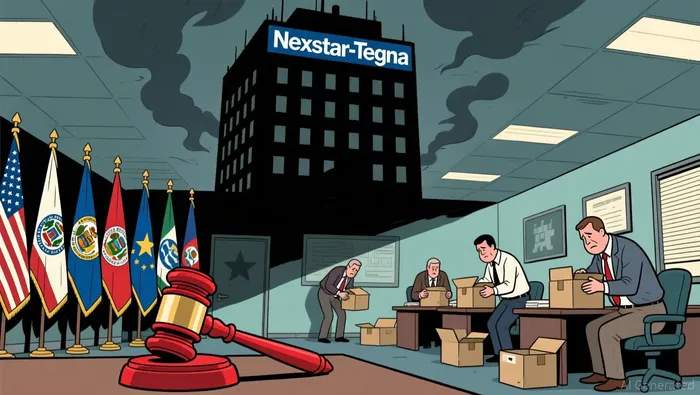
The plaintiffs contend that the merger will have immediate negative consequences for consumers and local newsrooms. They point to a history of Nexstar consolidating newsrooms in major markets, which has previously led to layoffs of journalists in cities like Los Angeles and Chicago. The lawsuit alleges that by eliminating head-to-head competition between the largest and third-largest broadcast groups, the merger will give the new entity undue leverage to raise retransmission fees. These higher fees, the states argue, will inevitably be passed down to cable subscribers, driving up the cost of television service for working families. Furthermore, critics fear that the reduction in competing news voices will degrade the quality and diversity of local journalism.
How Does The Nexstar Tegna Acquisition Impact Local Markets Like 9news?
The merger has already rippled through local media markets, fundamentally altering the competitive dynamics that have existed for decades. In Denver, the consolidation marks the end of an era for 9News, . Under the new ownership structure, 9News and its longtime rival, KDVR Fox31, are now part of the same corporate umbrella. This union eliminates the direct competition that previously drove ratings wars and content investment between the two stations. For the first time, a single owner controls both the top-rated station and the primary competitor in the Denver market, a shift that fundamentally changes how the local audience consumes news.
. The loss of independent ownership structures means that decisions regarding newsroom budgets, staffing, and editorial direction will be made at a national level rather than locally. While has stated that the merger is essential for sustaining local journalism by creating a more dynamic enterprise, the immediate reality involves the merging of resources that were once separate. The integration of stations like those in Sacramento, San Diego, and Chicago will likely follow a similar trajectory, where distinct local brands become part of a larger, centralized system. This shift raises questions about whether the promised efficiency gains will truly translate into better local service or simply higher profits for shareholders.
What Are The Regulatory Risks For Nexstar Following The FCC Approval?
Despite receiving unconditional clearance from the Department of Justice and the Federal Communications Commission, Nexstar now faces a complex legal environment. The approval from the Trump administration and FCC Chairman Brendan Carr was framed as a necessary move to counter the dominance of national media giants like Comcast and Disney. However, the immediate filing of lawsuits by eight states and satellite provider DirecTV creates a significant cloud of uncertainty. The states are seeking to enjoin Nexstar from commingling assets, which could force the company to hold Tegna's stations separate while litigation proceeds.
Legal analysts suggest that this divergence between federal and state antitrust enforcement is a growing trend that companies must now navigate. Even with a federal green light, the possibility of a court issuing an injunction or requiring the divestiture of key assets remains a tangible risk. DirecTV, a separate plaintiff, has argued that the merger gives Nexstar excessive power to threaten blackouts, further inflating programming costs. If the courts side with the states, the combined company could face a fragmented operational landscape or be forced to unwind parts of the deal. The outcome of these lawsuits will likely set a precedent for future media consolidations in the United States.
, but the path forward is far from clear. While federal regulators see the merger as a way to strengthen local stations against streaming competition, state officials view it as a threat to democratic discourse and consumer choice. As the legal battles unfold, investors and viewers alike will be watching to see whether the combined entity can operate effectively amidst the lawsuits or if the deal will be dismantled by the courts.

Stay ahead of the market.
Get curated U.S. market news, insights and key dates delivered to your inbox.
AInvest
PRO
AInvest
PRO



Comments
No comments yet