
Nexamp's Self-Performance Approach Delivers Success in Three Pilot Projects, Proving Future of Interconnection
ByAinvest
Thursday, Jul 24, 2025 11:10 am ET2min read
NGG--
The first three projects under the self-performance initiative are Hartland Solar, a 1.2 MW DC solar farm in Hartland, Maine; Barre Road Solar, a 1.3 MW DC solar farm in New Braintree, Massachusetts; and Summit Farm Solar, a 2.6 MW DC solar farm also in New Braintree, Massachusetts. Daniel Passarello, Lead Consulting Engineer, Grid Integration at Nexamp, noted that this approach provides greater control over interconnection procurement and construction, enabling projects to be brought online faster and closer to budget. By leveraging existing construction contractor relationships, Nexamp can move interconnection work in parallel with the build-out of the solar farm, reducing the number of mobilizations [1].
During the self-performance process, Nexamp directly negotiates better pricing and delivery times with its long-standing supplier relationships. This results in greater visibility, control, and certainty, driving shorter interconnection timelines, cost savings, and reduced burden on utilities. This forward-thinking approach makes the deployment of clean energy more efficient, leading to lower costs for consumers and increased energy supply to meet the nation's growing demand [1].
Historically, utilities have maintained responsibility for the construction required to connect distributed solar projects to the grid. However, with the rapid increase in solar generating capacity, sharing some of this work with private developers is proving beneficial. The Solar Energy Industries Association (SEIA) estimates that nearly 8 Gigawatts of community solar have been installed in the U.S. through the end of 2024, with this number expected to almost double in the next five years. Ensuring that these projects are deployed quickly and efficiently is critical, and self-performance is a key approach to achieving this [1].
Sara Birmingham, Vice President of State Affairs at SEIA, noted that modernizing and streamlining the interconnection process is essential to keep pace with the fast-growing demand for energy. Self-performance is one of several innovative approaches that can accelerate project timelines and lower costs, benefiting all ratepayers. SEIA congratulates Nexamp for taking this leap and looks forward to collaborating across the industry on solutions to deploy solar faster, strengthen grid reliability, and improve energy affordability for all Americans [1].
In addition to demonstrating the promise of a self-performance program, Nexamp has also worked with the Solar and Storage Industries Institute (SI2) on a report detailing the important role flexible interconnection plays in getting projects connected more quickly and with fewer required grid upgrades. Flexible interconnection allows distributed solar projects to interconnect to the grid and accommodate grid capacity dynamics, rather than requiring the developer to spend significant sums of money to build additional capacity. Together, these two shifts can significantly improve two of the biggest hurdles to swift deployment: interconnection timelines and costs [1].
The opportunity to lead some of the very first self-performance projects is significant, and Nexamp is proud to see the results. CMP and National Grid are each showing the market how adaptability and process improvements make a difference in getting more renewable energy resources onto the grid. Customers in Maine and Massachusetts are the real beneficiaries of these three projects, now able to join tens of thousands of other Nexamp community solar subscribers in saving money and supporting the expansion of clean energy [1].
References:
[1] https://www.globenewswire.com/news-release/2025/07/24/3121250/0/en/Proving-the-Future-of-Interconnection-Nexamp-s-Self-Performance-Approach-Delivers-Results-in-Three-Pilot-Projects.html
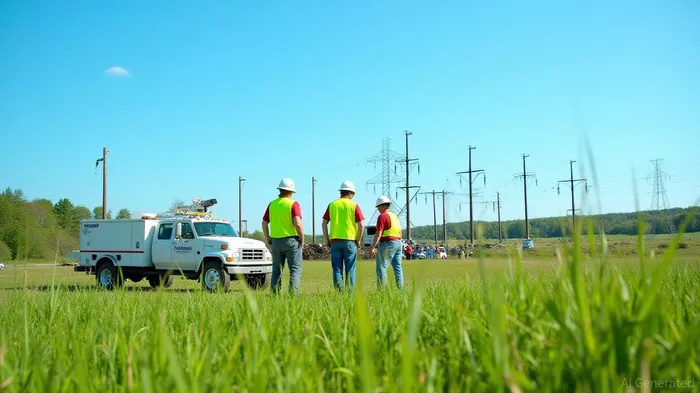
Nexamp has successfully completed three self-performance projects, including the scope of work typically performed by electric utilities. The concept allows developers to perform grid modifications and infrastructure upgrades, reducing time and cost to connect their projects to the grid. Nexamp worked with Central Maine Power and National Grid, taking responsibility for procuring equipment and construction, resulting in faster project completion and cost savings.
Nexamp has successfully completed three self-performance projects, including the scope of work typically performed by electric utilities. This innovative approach, which allows developers to handle grid modifications and infrastructure upgrades, has significantly reduced both the time and cost required to connect their projects to the grid. Nexamp worked closely with Central Maine Power (CMP) in Maine and National Grid in Massachusetts, taking responsibility for procuring equipment and construction. As a result, these projects were completed faster and at a lower cost [1].The first three projects under the self-performance initiative are Hartland Solar, a 1.2 MW DC solar farm in Hartland, Maine; Barre Road Solar, a 1.3 MW DC solar farm in New Braintree, Massachusetts; and Summit Farm Solar, a 2.6 MW DC solar farm also in New Braintree, Massachusetts. Daniel Passarello, Lead Consulting Engineer, Grid Integration at Nexamp, noted that this approach provides greater control over interconnection procurement and construction, enabling projects to be brought online faster and closer to budget. By leveraging existing construction contractor relationships, Nexamp can move interconnection work in parallel with the build-out of the solar farm, reducing the number of mobilizations [1].
During the self-performance process, Nexamp directly negotiates better pricing and delivery times with its long-standing supplier relationships. This results in greater visibility, control, and certainty, driving shorter interconnection timelines, cost savings, and reduced burden on utilities. This forward-thinking approach makes the deployment of clean energy more efficient, leading to lower costs for consumers and increased energy supply to meet the nation's growing demand [1].
Historically, utilities have maintained responsibility for the construction required to connect distributed solar projects to the grid. However, with the rapid increase in solar generating capacity, sharing some of this work with private developers is proving beneficial. The Solar Energy Industries Association (SEIA) estimates that nearly 8 Gigawatts of community solar have been installed in the U.S. through the end of 2024, with this number expected to almost double in the next five years. Ensuring that these projects are deployed quickly and efficiently is critical, and self-performance is a key approach to achieving this [1].
Sara Birmingham, Vice President of State Affairs at SEIA, noted that modernizing and streamlining the interconnection process is essential to keep pace with the fast-growing demand for energy. Self-performance is one of several innovative approaches that can accelerate project timelines and lower costs, benefiting all ratepayers. SEIA congratulates Nexamp for taking this leap and looks forward to collaborating across the industry on solutions to deploy solar faster, strengthen grid reliability, and improve energy affordability for all Americans [1].
In addition to demonstrating the promise of a self-performance program, Nexamp has also worked with the Solar and Storage Industries Institute (SI2) on a report detailing the important role flexible interconnection plays in getting projects connected more quickly and with fewer required grid upgrades. Flexible interconnection allows distributed solar projects to interconnect to the grid and accommodate grid capacity dynamics, rather than requiring the developer to spend significant sums of money to build additional capacity. Together, these two shifts can significantly improve two of the biggest hurdles to swift deployment: interconnection timelines and costs [1].
The opportunity to lead some of the very first self-performance projects is significant, and Nexamp is proud to see the results. CMP and National Grid are each showing the market how adaptability and process improvements make a difference in getting more renewable energy resources onto the grid. Customers in Maine and Massachusetts are the real beneficiaries of these three projects, now able to join tens of thousands of other Nexamp community solar subscribers in saving money and supporting the expansion of clean energy [1].
References:
[1] https://www.globenewswire.com/news-release/2025/07/24/3121250/0/en/Proving-the-Future-of-Interconnection-Nexamp-s-Self-Performance-Approach-Delivers-Results-in-Three-Pilot-Projects.html
Stay ahead of the market.
Get curated U.S. market news, insights and key dates delivered to your inbox.
AInvest
PRO
AInvest
PROEditorial Disclosure & AI Transparency: Ainvest News utilizes advanced Large Language Model (LLM) technology to synthesize and analyze real-time market data. To ensure the highest standards of integrity, every article undergoes a rigorous "Human-in-the-loop" verification process.
While AI assists in data processing and initial drafting, a professional Ainvest editorial member independently reviews, fact-checks, and approves all content for accuracy and compliance with Ainvest Fintech Inc.’s editorial standards. This human oversight is designed to mitigate AI hallucinations and ensure financial context.
Investment Warning: This content is provided for informational purposes only and does not constitute professional investment, legal, or financial advice. Markets involve inherent risks. Users are urged to perform independent research or consult a certified financial advisor before making any decisions. Ainvest Fintech Inc. disclaims all liability for actions taken based on this information. Found an error?Report an Issue




Comments
No comments yet