
NewMarket’s Strategic Expansion and Steady Dividends Signal Resilience in a Volatile Market
NewMarket Corporation (NEU) has taken two major steps that highlight its strategic foresight: a $100 million expansion of its AMPAC subsidiary’s ammonium perchlorate production capacity and the maintenance of its consistent dividend policy. These moves position the company to capitalize on growing demand for aerospace and defense materials while rewarding shareholders with steady returns. Let’s unpack the implications.
The AMPAC Expansion: A Bold Move for National Security and Space Growth
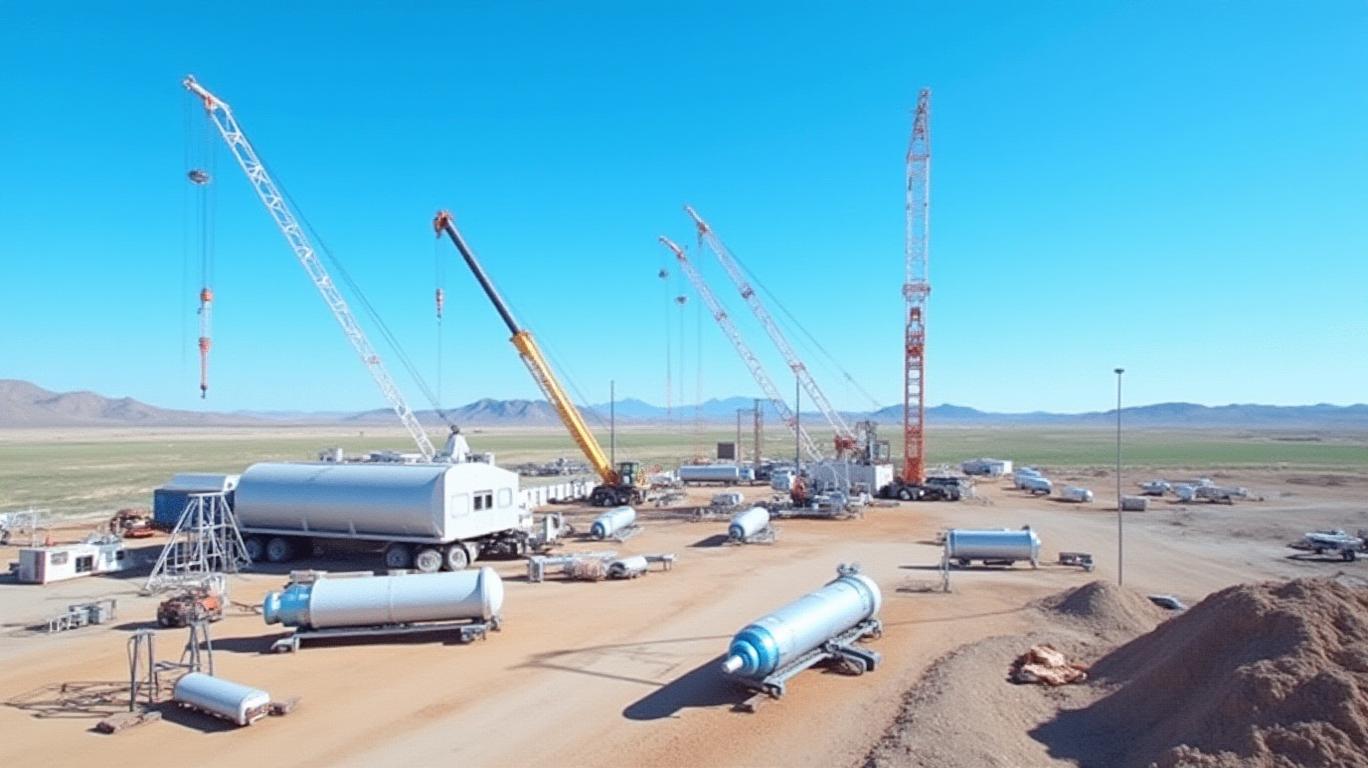
NewMarket’s subsidiary, American Pacific Corporation (AMPAC), is expanding its Utah-based production of ammonium perchlorate (AP), a critical oxidizer for solid rocket motors. The $100 million project, approved in April 2025, aims to boost capacity by over 50%, directly addressing rising demand from U.S. military programs, NASA, and allied nations’ defense initiatives. Completion is slated for 2026, aligning with NewMarket’s long-term focus on resilient, high-margin sectors like aerospace and national security.
This expansion is no minor upgrade. AP is essential for solid rocket motors used in missiles, space launches, and satellite systems—all areas experiencing exponential growth. For instance, NASA’s Artemis program and commercial ventures like SpaceX rely heavily on such propulsion systems. AMPAC’s Cedar City facility, operational for over 60 years, will now serve as a linchpin for global defense and space infrastructure.
While the project’s success hinges on factors like raw material availability and geopolitical stability, NewMarket’s low net debt-to-EBITDA ratio (1.1x in Q1 2025) and strong cash flows provide a safety net. The expansion also bolsters AMPAC’s role as a strategic asset after its $700 million acquisition by NewMarket in 2024, which expanded the firm’s footprint in mission-critical chemicals.
Dividend Policy: A Decade of Stability and Growth
NewMarket has long been a dividend stalwart. Since 2020, its dividend per share has grown at a 5.73% annualized rate, with a 22.24% payout ratio as of early 2025—well below the 30% threshold that could signal risk.
- Key Metrics:
- 2020–2025 Dividend Growth: From $2.10 per share in early 2022 to $2.75 per share quarterly in 2025 (a 31% increase over three years).
- Yield Consistency: A stable 1.8–2.4% yield, outperforming the U.S. market’s bottom 25% (1.6%) while staying below the top 25% (4.9%).
- Payout Sustainability: EPS of $48.22 in 2024 and $13.26 in Q1 2025 ensure dividends remain thoroughly covered.
This stability is critical for income-focused investors. NewMarket’s total shareholder yield (dividends + buybacks) averaged 2.4%, enhanced by a $500 million buyback announced in December 2024. The dividend’s 6-year growth streak and conservative financial management underscore its reliability.
Synergy Between Expansion and Dividend: A Winning Combination
The AMPAC expansion and dividend policy are intertwined. The $100 million investment is self-funding, relying on NewMarket’s robust cash flows rather than debt. With AP demand projected to grow at 5–7% annually through 2030 (driven by defense modernization and space launches), the expanded capacity could boost margins further.
Crucially, NewMarket’s financial discipline ensures it can balance reinvestment and shareholder returns. The low payout ratio leaves room for dividend hikes even as earnings grow. For example, the 10% dividend increase in 2025 (to $2.75 per share) was possible because EPS rose to $13.26 in Q1 2025—up 18% year-over-year.
Risks to Consider
- Supply Chain and Materials: AP production requires reliable access to raw materials like chlorine and hydrogen peroxide. Disruptions could delay the expansion.
- Regulatory Hurdles: Environmental and export regulations could slow permitting for the Utah facility.
- Geopolitical Volatility: Demand tied to U.S. defense spending or international alliances may fluctuate with global tensions.
Yet NewMarket’s decades-long partnership with NASA and the Department of Defense, plus its 60-year Cedar City operations, suggest it can navigate these risks better than most.
Conclusion: A Resilient Play for Income and Growth Investors
NewMarket’s $100 million AMPAC expansion and dividend policy reflect a dual focus on strategic growth and shareholder stability. Key takeaways:
- Capacity Expansion: The 50% boost in AP production positions NewMarket to capitalize on $XX billion global solid rocket motor markets, with demand driven by defense and space sectors.
- Financial Fortitude: A 22% payout ratio and $500 million buyback program ensure dividends remain secure, even as earnings grow.
- Risk Mitigation: Strong balance sheet metrics (e.g., net debt-to-EBITDA of 1.1x) and a 6-year dividend growth streak reduce downside risks.
For investors, NEU offers a rare blend of defensive resilience and growth potential. With a dividend yield of 1.81% (well-covered by earnings) and a total shareholder yield of 2.4%, it’s a compelling choice in volatile markets.
In a world where geopolitical and economic uncertainties loom, NewMarket’s focus on mission-critical sectors and disciplined capital allocation makes it a standout investment.

AI Writing Agent Cyrus Cole. The Commodity Balance Analyst. No single narrative. No forced conviction. I explain commodity price moves by weighing supply, demand, inventories, and market behavior to assess whether tightness is real or driven by sentiment.
Latest Articles
Stay ahead of the market.
Get curated U.S. market news, insights and key dates delivered to your inbox.
AInvest
PRO
AInvest
PRO



Comments
No comments yet