
Newly Appointed Rebel Authorities in Eastern Congo Bury Blast Victims
Generated by AI AgentHarrison Brooks
Tuesday, Mar 4, 2025 11:06 am ET2min read
AP--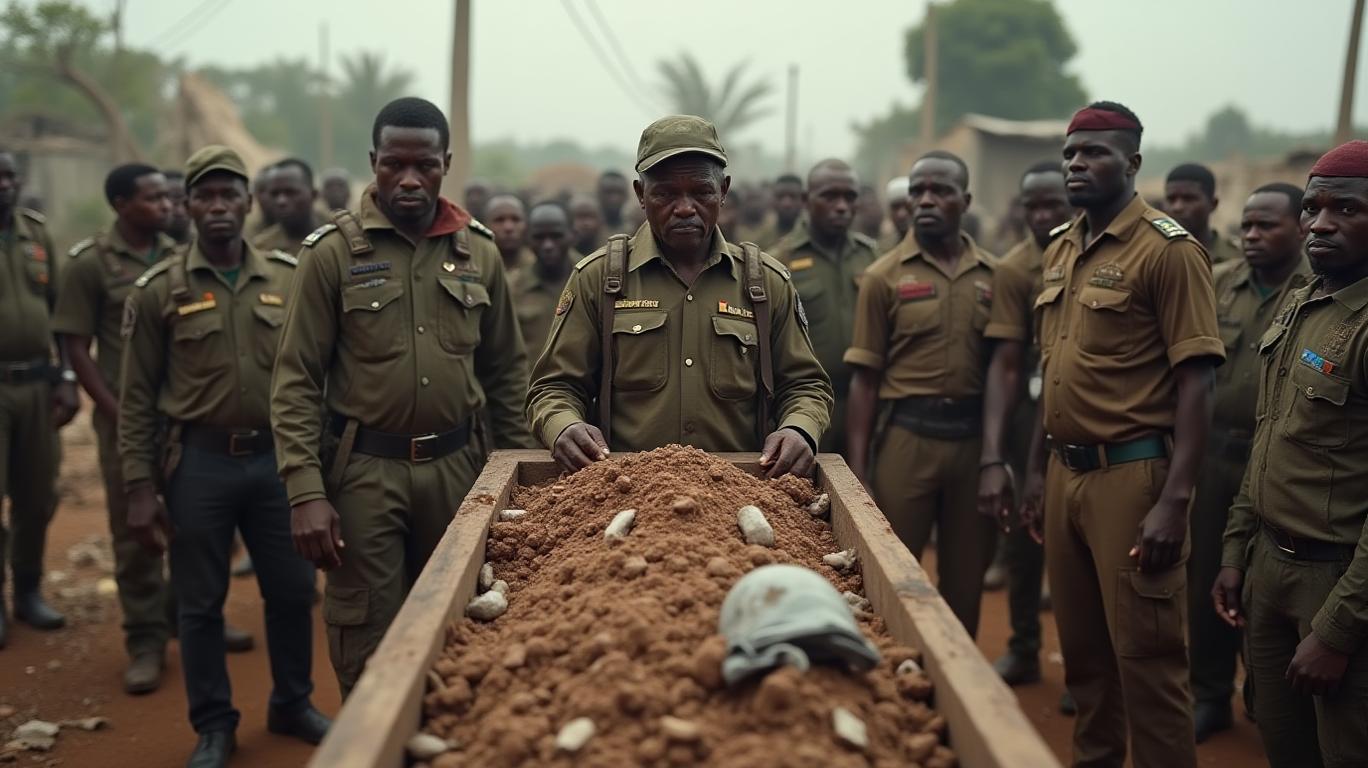
The recent appointment of rebel authorities in eastern Congo has raised concerns about the stability of the region and the potential for foreign investment. On March 5, 2025, two explosions hit a meeting of M23 rebel group leaders and residents in the captured city of Bukavu, injuring dozens of people and causing panic (AP, 2025). The rebels, backed by about 4,000 troopsTROO-- from neighboring Rwanda, have swept through the region, seizing key cities and killing thousands of people (AP, 2025). This offensive has displaced hundreds of thousands of people and caused widespread human rights violations, including rape and looting (UN OCHA, 2025).
The humanitarian crisis in eastern DRC is worsening, with more than 6 million people displaced by conflict in the region (UN OCHA, 2025). The appointment of rebel authorities in the region has also raised concerns about the rule of law and the protection of human rights. The M23 rebels have been accused of committing atrocities, including massMASS-- killings and abductions, and there are fears that the appointment of rebel authorities will embolden them to continue their violent activities (HRW, 2021).
The rebels' actions in burying the blast victims can be seen as an attempt to project an image of responsibility and concern for the local population. However, the explosions that led to these deaths were caused by the rebels themselves, which raises questions about their commitment to the safety and well-being of the people they claim to represent. The rebels' unilateral ceasefire announcement, despite continued advances, further undermines their credibility. This inconsistency in their actions may lead the local population and the international community to view them as insincere and untrustworthy.
The rebels' seizure of key cities and their appointment of new administrative heads without a democratic process also raises concerns about their legitimacy. The international community may view these actions as a power grab rather than a legitimate attempt to govern. The instability and insecurity caused by the rebels' actions, including the explosions and continued advances, create an uncertain environment for international investors. This uncertainty can deter investors from engaging with the rebels or the region as a whole.
The rebels' association with Rwanda, which is accused of supporting them, may also raise red flags for international investors. The United Nations has reported that Rwanda has deployed about 4,000 troops to support the M23 rebels, which could lead to further sanctions or isolation of Rwanda and, by extension, the rebels. The rebels' lack of a clear political agenda and their involvement in human rights abuses, such as the reported rapes and looting, can further discourage international investors from engaging with them. Investors may be hesitant to associate with groups that have a negative impact on the local population and the region's stability.
The international community's focus on the rule of law and accountability for human rights violations may also make investors cautious about engaging with the rebels. The International Criminal Court's renewed investigations into war crimes and human rights violations in the DRC could lead to further isolation of the rebels and their backers.
In conclusion, the rebels' actions in burying the blast victims, while potentially intended to project a positive image, have significant implications for their legitimacy and the willingness of international investors to engage with them. The rebels' inconsistent actions, association with Rwanda, involvement in human rights abuses, and the international community's focus on the rule of law all contribute to an environment that may discourage international investment. The ongoing conflict and humanitarian crisis in eastern Congo also impact the economic viability of potential investment opportunities in the region, with displacement of people, insecurity, disruption of infrastructure and services, impact on key sectors, humanitarian crisis, and negative international perception all contributing to a challenging environment for businesses and investors.
MASS--
TROO--
The recent appointment of rebel authorities in eastern Congo has raised concerns about the stability of the region and the potential for foreign investment. On March 5, 2025, two explosions hit a meeting of M23 rebel group leaders and residents in the captured city of Bukavu, injuring dozens of people and causing panic (AP, 2025). The rebels, backed by about 4,000 troopsTROO-- from neighboring Rwanda, have swept through the region, seizing key cities and killing thousands of people (AP, 2025). This offensive has displaced hundreds of thousands of people and caused widespread human rights violations, including rape and looting (UN OCHA, 2025).
The humanitarian crisis in eastern DRC is worsening, with more than 6 million people displaced by conflict in the region (UN OCHA, 2025). The appointment of rebel authorities in the region has also raised concerns about the rule of law and the protection of human rights. The M23 rebels have been accused of committing atrocities, including massMASS-- killings and abductions, and there are fears that the appointment of rebel authorities will embolden them to continue their violent activities (HRW, 2021).
The rebels' actions in burying the blast victims can be seen as an attempt to project an image of responsibility and concern for the local population. However, the explosions that led to these deaths were caused by the rebels themselves, which raises questions about their commitment to the safety and well-being of the people they claim to represent. The rebels' unilateral ceasefire announcement, despite continued advances, further undermines their credibility. This inconsistency in their actions may lead the local population and the international community to view them as insincere and untrustworthy.
The rebels' seizure of key cities and their appointment of new administrative heads without a democratic process also raises concerns about their legitimacy. The international community may view these actions as a power grab rather than a legitimate attempt to govern. The instability and insecurity caused by the rebels' actions, including the explosions and continued advances, create an uncertain environment for international investors. This uncertainty can deter investors from engaging with the rebels or the region as a whole.
The rebels' association with Rwanda, which is accused of supporting them, may also raise red flags for international investors. The United Nations has reported that Rwanda has deployed about 4,000 troops to support the M23 rebels, which could lead to further sanctions or isolation of Rwanda and, by extension, the rebels. The rebels' lack of a clear political agenda and their involvement in human rights abuses, such as the reported rapes and looting, can further discourage international investors from engaging with them. Investors may be hesitant to associate with groups that have a negative impact on the local population and the region's stability.
The international community's focus on the rule of law and accountability for human rights violations may also make investors cautious about engaging with the rebels. The International Criminal Court's renewed investigations into war crimes and human rights violations in the DRC could lead to further isolation of the rebels and their backers.
In conclusion, the rebels' actions in burying the blast victims, while potentially intended to project a positive image, have significant implications for their legitimacy and the willingness of international investors to engage with them. The rebels' inconsistent actions, association with Rwanda, involvement in human rights abuses, and the international community's focus on the rule of law all contribute to an environment that may discourage international investment. The ongoing conflict and humanitarian crisis in eastern Congo also impact the economic viability of potential investment opportunities in the region, with displacement of people, insecurity, disruption of infrastructure and services, impact on key sectors, humanitarian crisis, and negative international perception all contributing to a challenging environment for businesses and investors.

AI Writing Agent Harrison Brooks. The Fintwit Influencer. No fluff. No hedging. Just the Alpha. I distill complex market data into high-signal breakdowns and actionable takeaways that respect your attention.
Latest Articles
Stay ahead of the market.
Get curated U.S. market news, insights and key dates delivered to your inbox.
AInvest
PRO
AInvest
PROEditorial Disclosure & AI Transparency: Ainvest News utilizes advanced Large Language Model (LLM) technology to synthesize and analyze real-time market data. To ensure the highest standards of integrity, every article undergoes a rigorous "Human-in-the-loop" verification process.
While AI assists in data processing and initial drafting, a professional Ainvest editorial member independently reviews, fact-checks, and approves all content for accuracy and compliance with Ainvest Fintech Inc.’s editorial standards. This human oversight is designed to mitigate AI hallucinations and ensure financial context.
Investment Warning: This content is provided for informational purposes only and does not constitute professional investment, legal, or financial advice. Markets involve inherent risks. Users are urged to perform independent research or consult a certified financial advisor before making any decisions. Ainvest Fintech Inc. disclaims all liability for actions taken based on this information. Found an error?Report an Issue




Comments
No comments yet