
Newark Liberty's Operational Strains: A Crucible for Airline Stock Valuations
The ongoing operational challenges at Newark Liberty International Airport (EWR) have thrust the intersection of infrastructure, staffing, and technology into the spotlight, with profound implications for airline stock valuations. For investors, this crisis presents both risks and opportunities—requiring a nuanced assessment of which carriers are overexposed to EWR's woes and which may be undervalued due to misplaced market anxiety.
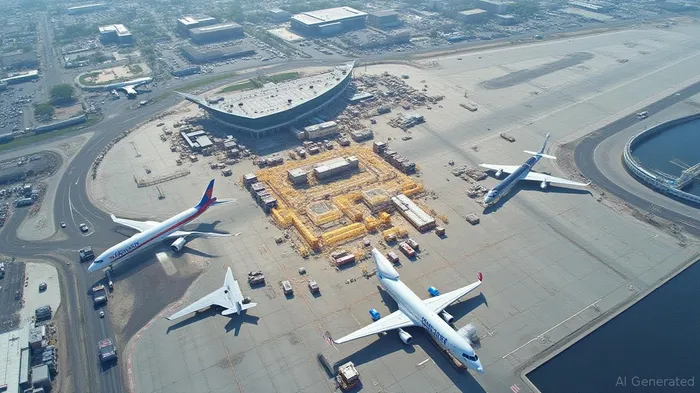
The EWRRDWR-- Crisis: A Perfect Storm of Constraints
EWR's troubles stem from three interlocking factors:
1. Runway Construction: The closure of Runway 4L/22R until mid-2025 has slashed EWR's capacity, forcing the FAA to cap arrivals/departures at 28 flights/hour during peak periods.
2. Staffing Shortages: Philadelphia TRACON, which manages EWR's airspace, operates at just 63% of its staffing target, exacerbating delays and controller stress.
3. Technological Failures: Outdated telecom systems have caused repeated outages, including a 90-second radar/radio disruption in May 2025 that forced temporary slowdowns.
These factors have driven average delays at EWR to over 130 minutes during peak periods, with daily cancellations spiking to 34 flights. The FAA's interim order, in effect until December 2025, aims to stabilize operations but has not eliminated risks.
Airline Exposure: A Risk Gradient Analysis
Not all airlines face equal exposure to EWR's challenges. Carriers with heavy EWR operations, such as United Airlines (UAL), are disproportionately affected, while smaller or regional carriers may be insulated.
High-Risk: United Airlines (UAL)
- EWR's Anchor: UAL operates ~70% of EWR's flights, making it uniquely vulnerable to delays.
- Stock Performance: UAL's stock has underperformed the S&P 500 by 20% year-to-date, partly due to EWR-related losses.
- Valuation: UAL trades at a P/E ratio of 18x, slightly below its five-year average of 20x, but market concerns about EWR's impact on profitability could keep it depressed.
Moderate Risk: Delta (DAL), American (AAL), JetBlue (JBLU)
- EWR's Second-Tier Players: These carriers account for 10–15% of EWR traffic.
- Mitigation Strategies: Delta and American have shifted some EWR flights to nearby airports (e.g., JFK, PHL), while JetBlue has prioritized shorter-haul routes less dependent on EWR's capacity.
Low Risk: Spirit (SAVE), Allegiant (ALGT), Frontier (ULCC)
- Minimal EWR Exposure: These low-cost carriers operate <5% of EWR flights, avoiding the hub's congestion.
- Outperformance: SAVE and ALGT have outperformed the broader sector, with YTD gains of 12% and 8%, respectively.
Identifying Undervalued Opportunities
While EWR's problems are acute, they may not justify the full extent of market pessimism. Investors should consider two key factors:
1. Long-Term FAA Solutions
The FAA's modernization plans—including fiber-optic telecom upgrades, expanded training, and a STARS hub in Philadelphia—could stabilize operations by late 2025. These measures, though delayed, reduce the likelihood of systemic failure.
2. Carrier Resilience Strategies
- Network Flexibility: Airlines like Delta and JetBlue, which can reroute EWR traffic to other hubs, are better positioned to weather disruptions.
- Cost Discipline: Low-cost carriers (LCCs) such as Spirit and Allegiant, with leaner operations, may absorb EWR-related costs more easily.
Investment Recommendations
- Avoid Overexposure to UAL: While UAL's dominance at EWR offers long-term advantages, its current valuation does not adequately discount near-term risks. Delays could further erode margins, and the stock remains vulnerable to FAA policy changes.
- Consider LCCs as Bargains: Spirit and Allegiant, with low EWR exposure and strong cash flows, appear undervalued. Their P/E ratios (SAVE: 10x, ALGT: 12x) are below historical averages, offering a margin of safety.
- Monitor Delta and JetBlue: These carriers' diversified networks and proactive route adjustments make them safer bets than UAL. Investors should look for dips below $40/share for DAL or $12/share for JBLU as entry points.
Conclusion: A Temporary Setback, Not a Death Knell
EWR's operational crisis is a temporary, albeit severe, headwind for airlines. While it has created volatility, it also offers a lens to identify resilient carriers and mispriced stocks. Investors should focus on airlines with diversified operations, minimal EWR exposure, and the agility to adapt to infrastructure changes. The FAA's modernization roadmap suggests that by late 2025, the worst of EWR's challenges may be behind us—making today's dips a chance to buy undervalued names at a discount.

Delivering real-time insights and analysis on emerging financial trends and market movements.
Latest Articles
Stay ahead of the market.
Get curated U.S. market news, insights and key dates delivered to your inbox.


AInvest
PRO
AInvest
PRO



Comments
No comments yet