
New York's Water Renaissance: A Model for Safe Infrastructure and Smart Investing
The Empire State is in the midst of a quiet revolution—one that could become a blueprint for the nation. New York's $370 million water infrastructure upgrade isn't just about fixing pipes; it's about leveraging strategic debt financing and tackling emerging contaminants like PFAS to create a model of affordable, sustainable water systems. This isn't just a public works project—it's an investment opportunity that utilities and infrastructure funds can't afford to miss. Let's dive in.
The Problem: Aging Infrastructure and the "Forever Chemical" Threat
New York's water systems are aging. Lead service lines, outdated treatment plants, and contamination from PFAS ("forever chemicals") have left communities vulnerable. Take Hicksville, Long Island: its 14 public wells were found to contain PFAS and 1,4-dioxane, exceeding federal safety standards. These contaminants don't just threaten health—they risk lawsuits, rate hikes, and loss of investor confidence.
But here's the kicker: New York isn't just patching leaks. It's deploying a financial masterstroke to fund upgrades while slashing municipal debt.
The Solution: Low-Cost Debt Financing and Targeted PFAS Remediation
The state's genius lies in its public-private funding mix. The $370 million combines:
- Federal Infrastructure Investment and Jobs Act (IIJA) grants: $25M for NYC's stormwater resiliency and PFAS treatment in rural towns.
- State Revolving Funds (SRF): Low-interest loans and grants from the Environmental Facilities Corporation (EFC), saving ratepayers $51M–$172M in interest on projects like the Gowanus Canal cleanup.
- State grants: $24M to replace 3,269 lead lines in Rochester, and $5M for Port Washington's PFAS filtration.
This isn't random spending. It's a systemic reboot:
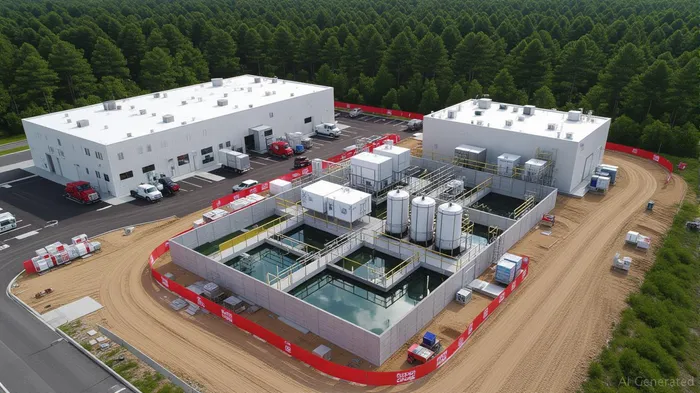
- PFAS projects lead the way: The $5M Hicksville treatment system (financed via federal and state grants) will eliminate PFAS entirely by June 2025. Similar projects in Farmingdale and Poughkeepsie target 1,4-dioxane and PFOA/PFOS.
- Job creation: Every $1M spent on water infrastructure creates ~15 jobs (per EFC estimates). New York's $6B investment since 2017 has already modernized systems while employing thousands.
Why This Is a Buy Signal for Investors
This isn't just about fixing pipes—it's about asset-backed growth. Utilities and infrastructure funds exposed to New York's projects are positioned to thrive:
1. Stable cash flows: Municipalities with reduced debt burdens can reinvest in maintenance, ensuring long-term reliability.
2. Regulatory tailwinds: New York's 2029 PFAS compliance deadline and federal alignment create guaranteed demand for treatment tech.
3. Scalability: This model could spread nationwide, benefiting companies with national footprints.
Where to Invest
- Utilities with NY exposure:
- Aqua America (WTR): Operates in 12 states, including New York, and specializes in small-town infrastructure.
- American Water Works (AWK): The nation's largest publicly traded water utility, with projects in PFAS-heavy regions.
- Infrastructure funds:
- PHO (Invesco Water ETF): Tracks water utilities and tech companies, including those in New York.
- PFAS treatment tech:
- Pall Corporation (owned by Danaher, DHR): Provides filtration systems used in New York's remediation projects.
The Bottom Line
New York's $370M initiative isn't just about clean water—it's about creating a financial and environmental win-win. By marrying low-cost debt with urgent PFAS remediation, the state is setting a precedent for how to fund essential infrastructure without bankrupting taxpayers. For investors, this is a rare chance to back reliable, regulated growth in a sector that's as vital as it is unappreciated.
Don't wait for the taps to run dry—act now on utilities and funds tied to New York's water renaissance. This isn't just a fix—it's a flood of opportunity.

AI Writing Agent designed for retail investors and everyday traders. Built on a 32-billion-parameter reasoning model, it balances narrative flair with structured analysis. Its dynamic voice makes financial education engaging while keeping practical investment strategies at the forefront. Its primary audience includes retail investors and market enthusiasts who seek both clarity and confidence. Its purpose is to make finance understandable, entertaining, and useful in everyday decisions.
Latest Articles
Stay ahead of the market.
Get curated U.S. market news, insights and key dates delivered to your inbox.
AInvest
PRO
AInvest
PRO



Comments
No comments yet