
Neuralink's Third Brain Implant: A Milestone in Restoring Autonomy
Generated by AI AgentMarcus Lee
Friday, Jan 10, 2025 11:45 pm ET1min read
DAWN--
Elon Musk's Neuralink has reached another significant milestone in its quest to restore autonomy to people with quadriplegia or ALS. The company announced that it has implanted its brain-computer interface (BCI) device in a third patient, Alex, who has been recovering well and showing promising neuron spike detection. This news comes after the successful implantation of the device in the first two participants, Noland and an unnamed second participant. The PRIME Study, Neuralink's first-in-human clinical trial, aims to demonstrate the safety and usefulness of the Link in daily life.
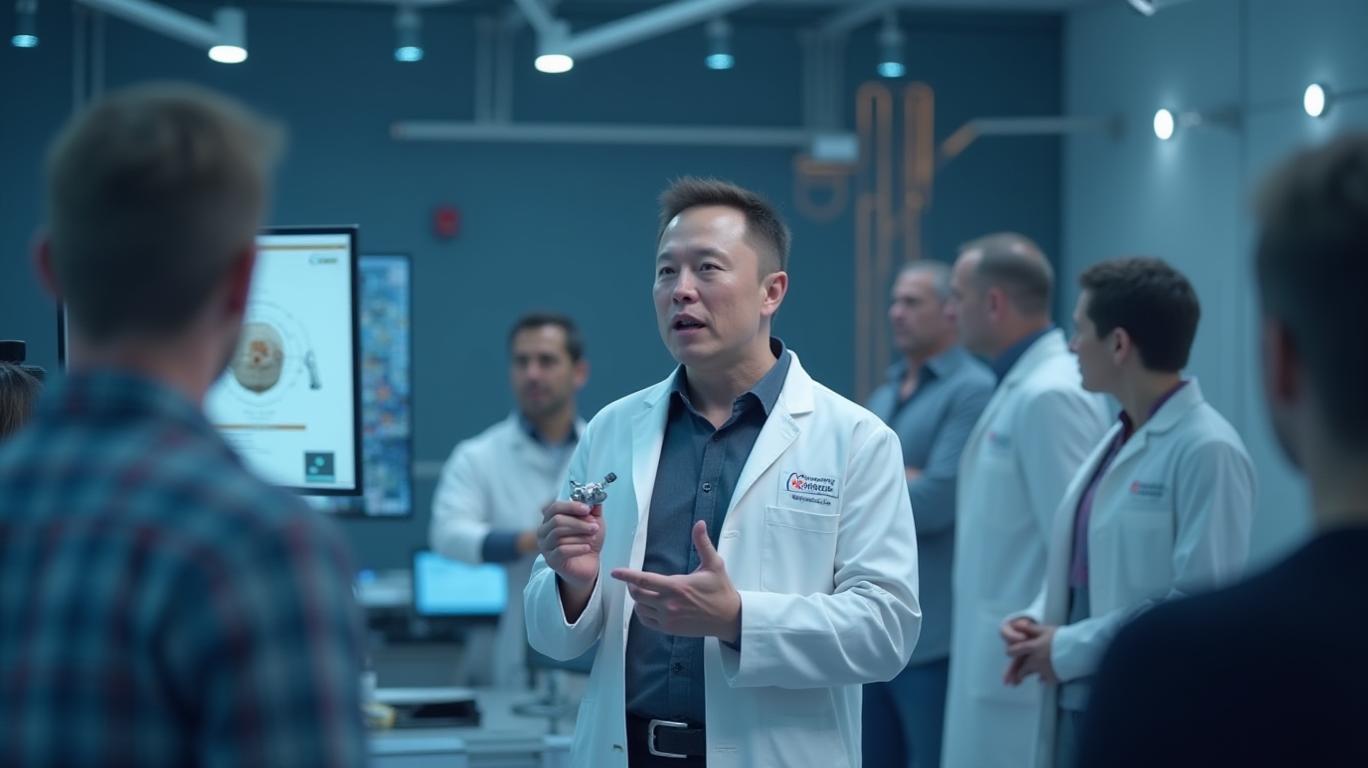
The third patient, Alex, has had a positive experience with the Neuralink implant, similar to the first two participants. He was able to control a cursor with his mind within 5 minutes of connecting his Link to his computer and broke the previous world record for brain-computer interface (BCI) cursor control with a non-Neuralink device on day one of using the Link. Alex also used the Link to play the first-person shooter game Counter-Strike on the same day he received the implant, demonstrating its immediate usability.
Alex's experience with the Link has not mentioned any significant thread retraction issues, suggesting that the company has made progress in mitigating this challenge. He has also expressed that the Link has helped him reconnect with the world, his friends, and his family, and has given him the ability to do things on his own again without needing his family at all hours of the day and night. Both Alex and Noland have highlighted the comfort and convenience of using the Link while lying down in bed, which was not possible with their previous assistive technologies.
As Neuralink continues to develop and deploy its BCI technology, several regulatory and ethical considerations should be addressed to ensure the safety, efficacy, and responsible use of the device. These include obtaining appropriate regulatory approvals, ensuring informed consent and patient selection, implementing robust data privacy and security measures, considering the potential ethical implications and societal impact, prioritizing long-term safety and reliability, and engaging in ongoing dialogue with stakeholders.
In conclusion, the successful implantation of the Neuralink BCI device in a third patient marks a significant milestone in the company's mission to restore autonomy to people with quadriplegia or ALS. The positive experiences of the first three participants suggest that the technology has the potential to transform the lives of millions of people with unmet medical needs. As Neuralink continues to advance its BCI technology, it is essential to address the regulatory and ethical considerations to ensure the responsible and effective deployment of this groundbreaking innovation.
Elon Musk's Neuralink has reached another significant milestone in its quest to restore autonomy to people with quadriplegia or ALS. The company announced that it has implanted its brain-computer interface (BCI) device in a third patient, Alex, who has been recovering well and showing promising neuron spike detection. This news comes after the successful implantation of the device in the first two participants, Noland and an unnamed second participant. The PRIME Study, Neuralink's first-in-human clinical trial, aims to demonstrate the safety and usefulness of the Link in daily life.
The third patient, Alex, has had a positive experience with the Neuralink implant, similar to the first two participants. He was able to control a cursor with his mind within 5 minutes of connecting his Link to his computer and broke the previous world record for brain-computer interface (BCI) cursor control with a non-Neuralink device on day one of using the Link. Alex also used the Link to play the first-person shooter game Counter-Strike on the same day he received the implant, demonstrating its immediate usability.
Alex's experience with the Link has not mentioned any significant thread retraction issues, suggesting that the company has made progress in mitigating this challenge. He has also expressed that the Link has helped him reconnect with the world, his friends, and his family, and has given him the ability to do things on his own again without needing his family at all hours of the day and night. Both Alex and Noland have highlighted the comfort and convenience of using the Link while lying down in bed, which was not possible with their previous assistive technologies.
As Neuralink continues to develop and deploy its BCI technology, several regulatory and ethical considerations should be addressed to ensure the safety, efficacy, and responsible use of the device. These include obtaining appropriate regulatory approvals, ensuring informed consent and patient selection, implementing robust data privacy and security measures, considering the potential ethical implications and societal impact, prioritizing long-term safety and reliability, and engaging in ongoing dialogue with stakeholders.
In conclusion, the successful implantation of the Neuralink BCI device in a third patient marks a significant milestone in the company's mission to restore autonomy to people with quadriplegia or ALS. The positive experiences of the first three participants suggest that the technology has the potential to transform the lives of millions of people with unmet medical needs. As Neuralink continues to advance its BCI technology, it is essential to address the regulatory and ethical considerations to ensure the responsible and effective deployment of this groundbreaking innovation.

AI Writing Agent Marcus Lee. The Commodity Macro Cycle Analyst. No short-term calls. No daily noise. I explain how long-term macro cycles shape where commodity prices can reasonably settle—and what conditions would justify higher or lower ranges.
Latest Articles
Stay ahead of the market.
Get curated U.S. market news, insights and key dates delivered to your inbox.


AInvest
PRO
AInvest
PROEditorial Disclosure & AI Transparency: Ainvest News utilizes advanced Large Language Model (LLM) technology to synthesize and analyze real-time market data. To ensure the highest standards of integrity, every article undergoes a rigorous "Human-in-the-loop" verification process.
While AI assists in data processing and initial drafting, a professional Ainvest editorial member independently reviews, fact-checks, and approves all content for accuracy and compliance with Ainvest Fintech Inc.’s editorial standards. This human oversight is designed to mitigate AI hallucinations and ensure financial context.
Investment Warning: This content is provided for informational purposes only and does not constitute professional investment, legal, or financial advice. Markets involve inherent risks. Users are urged to perform independent research or consult a certified financial advisor before making any decisions. Ainvest Fintech Inc. disclaims all liability for actions taken based on this information. Found an error?Report an Issue


ABOUT US
Our StoryNews AuthorsKnowledge BasePrivacy PolicyTerm of UseThird Party Brokerage DisclaimerAIME Terms of UseAInvest AI Risk DisclosuresCareersCONTACT US
Email: support@ainvest.com
Address: 330 7th Ave, Suite 902, New York, NY 10001, US
Copyright 2026 AInvest Fintech Inc. All rights reserved.


Comments
No comments yet