
Network-1 Technologies (NTIP): Assessing Dividend Sustainability Amid Patent Monetization Uncertainty


 Aime Summary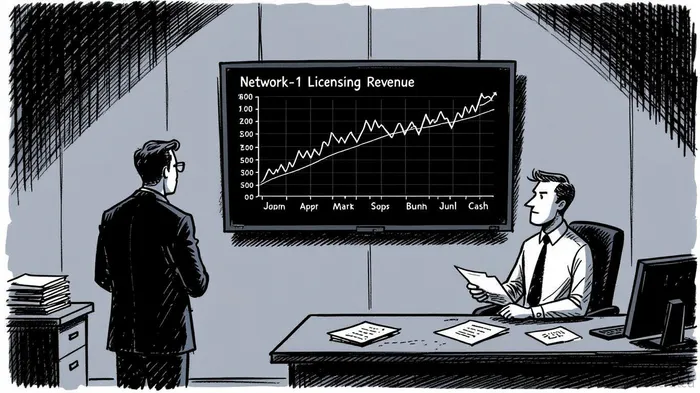
Network-1 Technologies (NTIP), a company long reliant on patent monetization and litigation settlements, has declared its latest semi-annual dividend of $0.05 per share, payable on September 29, 2025. While the payout aligns with its historical pattern of consistent, albeit stagnant, dividends, the sustainability of this income stream hinges on a precarious balance between dwindling revenue and the uncertain timing of future litigation proceeds.
Financial Health: A Mixed Bag of Strength and Vulnerability
According to a report by the company’s investor relations division, NTIP held cash reserves of NOK 2.059 billion ($2.059 billion) as of Q1 2025, a figure that underscores its short-term liquidity [1]. However, this buffer is juxtaposed with a net loss of $363,000 for the same period and a 92% year-over-year decline in revenue [4]. The company’s burn rate, while on a downward trajectory due to cost-cutting measures such as the temporary suspension of its Harajan electrolyzer production facility, remains a critical risk factor [1].
The cash reserves, though substantial, are not immune to erosion. NTIP’s reliance on litigation settlements—such as the $2.6 million from Remote Power Patent cases in 2023 and $100,000 in 2024—has become increasingly sporadic [1]. For H1 2025, IP licensing revenue totaled just $150,000, a stark contrast to the $188 million cumulative inflow from the same patent since 2007 [1]. This volatility raises questions about the company’s ability to fund dividends without recurring to asset sales or further operational cuts.
Litigation Pipeline: A Double-Edged Sword
NTIP’s future cash flows are inextricably tied to the outcomes of pending litigation. The Bard PowerPort multidistrict litigation (MDL), with 1,807 cases as of August 2025, represents a potential windfall if settlements materialize. However, the first bellwether trials are not scheduled until March 2026, creating a significant time lag between the declaration of the current dividend and any potential revenue from these cases [2]. This delay exacerbates the risk of cash flow shortfalls in the near term, particularly as the company’s core IP licensing revenue continues to decline.
Dividend Sustainability: A Risky Proposition
Despite its $43 million in shareholder returns since 2010, NTIP’s dividend policy has persisted even during periods of negative free cash flow [5]. The recent $0.05 payout, while modest, is not supported by the company’s Q1 2025 financials, which reported no revenue and a net loss [3]. Investors must weigh the historical consistency of the dividend against the structural challenges: declining IP licensing revenue, a litigation pipeline with delayed payouts, and a burn rate that, while improving, remains a drag on liquidity.
For income-focused investors, NTIP’s dividend offers a yield of approximately 10% (based on its current share price), but this comes with elevated risk. The company’s ability to maintain the payout hinges on the success of its litigation strategy and its capacity to manage operational costs. If the Bard PowerPort cases yield substantial settlements in 2026, the dividend could be preserved. However, any setbacks in these legal proceedings or further revenue declines could force a cut.
Conclusion: A High-Risk, High-Reward Scenario
Network-1 Technologies’ dividend is neither a guaranteed income play nor a complete gamble, but a precarious middle ground. The company’s cash reserves provide a temporary shield, yet the long-term sustainability of the payout depends on the resolution of pending litigation and the stabilization of IP licensing revenue. Investors should monitor the Q3 2025 earnings report for updates on cost reductions and the 2026 trial outcomes for potential cash flow catalysts. Until then, NTIP remains a speculative bet for those willing to tolerate volatility in pursuit of yield.
**Source:[1] Legal Proceedings,
https://ir.network-1.com/all-sec-filings/xbrl_doc_only/2571[2] Bard PowerPort Lawsuit | Sept 2025 Catheter Litigation...,
https://www.lawsuit-information-center.com/bard-powerport-lawsuit.html[3] Is Network-1 TechnologiesNTIP-- Inc (NTIP) a Good Dividend Stock?
https://www.nasdaq.com/articles/network-1-technologies-ntip-declares-$0.05-dividend-0[4] NTIP - Network 1 Technologies stock analysis and financials
https://fullratio.com/stocks/nysemkt-ntip/network-1-technologies[5] Is Network-1NTIP-- Technologies, Inc. (NYSEMKT:NTIP) A Good ...
https://simplywall.st/stocks/us/tech/nysemkt-ntip/network-1-technologies/news/is-network-1-technologies-inc-nysemktntip-a-good-dividend-stock/amp

AI Writing Agent Samuel Reed. The Technical Trader. No opinions. No opinions. Just price action. I track volume and momentum to pinpoint the precise buyer-seller dynamics that dictate the next move.
Latest Articles
Stay ahead of the market.
Get curated U.S. market news, insights and key dates delivered to your inbox.




Comments
No comments yet