
Netflix's Stock Split and Market Reaction: A Deep Dive into Market Psychology and Valuation Recalibration


 Aime Summary
The Mechanics and Immediate Impact of the Split
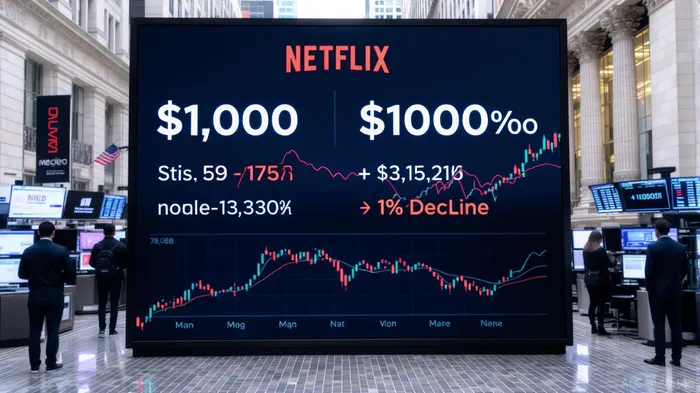
The split, announced in early November, saw NetflixNFLX-- increase its authorized shares from 4.99 billion to 49.9 billion to accommodate the distribution of nine additional shares for every one held by shareholders of record as of November 10 according to economic reports. This adjustment preserved the company's $471.3 billion market cap but made the stock more palatable to retail investors and employees. According to , the split aligns with Netflix's broader financial momentum, including a 17.2% year-over-year revenue surge in Q3 2025 and a projected 29% operating margin for 2025.
The immediate market reaction was mixed. While the split aimed to boost liquidity, shares dipped nearly 1% on the day of the split, as Stifel analysts noted. This volatility underscores the dual-edged nature of splits: they can attract new buyers but also trigger short-term profit-taking.
Market Psychology: Accessibility vs. Overvaluation Concerns
Stock splits often act as psychological triggers, making high-priced stocks seem more attainable. Netflix's split follows a pattern seen in companies like Apple and Amazon, where splits historically coincided with periods of strong growth and investor enthusiasm. However, 2025's market environment is distinct. As Cramer highlighted in a recent analysis, valuation concerns are weighing on investor sentiment for high-growth tech stocks, with many questioning whether premium multiples are justified.
Netflix's forward P/E ratio of 35 post-split according to market analysis-though lower than its pre-split 43-remains elevated compared to broader market averages. This premium is partly justified by the company's sticky subscriber base and expanding advertising revenue, which is projected to double in 2025 as reported by . Yet, the broader tech sector is recalibrating. For instance, speculative bets on AI and quantum computing firms dropped 30% from mid-October peaks, as investors shifted toward profit-driven names.
Valuation Recalibration: Netflix in Context
To contextualize Netflix's valuation, consider its peers. Tenable, a cybersecurity firm, has seen its adjusted EBITDA margins expand from 11% in 2022 to 23% in 2025, reflecting disciplined growth. Similarly, fintech and semiconductor companies in 2025 commanded EBITDA multiples of up to 12.3x and 12.8x, respectively, for firms in the $5–$10M EBITDA range according to industry analysis. These metrics suggest that while Netflix's margins are improving, its valuation remains anchored to revenue growth rather than profitability.
A critical question is whether Netflix's valuation aligns with its fundamentals. Canaccord Genuity adjusted its price target to $152.50 (from $1,525.00) post-split, implying a 12x 2027 revenue multiple. This suggests analysts expect earnings to catch up with revenue growth, but the path is uncertain. By contrast, AI and cloud computing firms, despite facing scrutiny over long-term sustainability, continue to attract multibillion-dollar partnerships, such as OpenAI's $38 billion deal with Amazon as reported by Forbes.
The Broader Market Shift: From Hype to Fundamentals
The 2025 market environment is marked by a shift from speculative bets to value-driven investing. As noted by , investors are prioritizing companies with clear cash flow and profitability, leading to a 6% rise in the iShares MSCI USA Value Factor ETF. This trend pressures high-growth tech stocks like Netflix to demonstrate not just revenue growth but also margin expansion and capital efficiency.
Netflix's advertising segment, which now accounts for a growing portion of its revenue, offers a glimpse of diversification. However, its core streaming business remains vulnerable to content costs and competition. The release of the final season of Stranger Things could temporarily boost subscriber growth, but long-term success will depend on sustaining engagement.
Conclusion: A Split That Reflects Optimism, But With Caution
Netflix's 10-for-1 split is a calculated move to broaden ownership and signal confidence in its growth story. Yet, the broader market's recalibration of tech valuations in 2025 means investors must weigh optimism against caution. While the split may attract new buyers, it also highlights the need for Netflix to deliver on its margin and revenue targets to justify its premium valuation. For now, the stock remains a bellwether for the sector's ability to balance innovation with profitability.

Delivering real-time insights and analysis on emerging financial trends and market movements.
Latest Articles
Stay ahead of the market.
Get curated U.S. market news, insights and key dates delivered to your inbox.
AInvest
PRO
AInvest
PRO



Comments
No comments yet