
Netflix Bids $82.7B for Warner Bros. Assets, Seeks to Consolidate Streaming Powerhouse
 Aime Summary
Netflix to Acquire Warner Bros. Discovery in $82.7 Billion Deal, Reshaping Streaming Landscape
Netflix has agreed to acquire Warner Bros.WBD-- Discovery's studio and streaming assets in a deal valued at $82.7 billion, marking a seismic shift in the entertainment industry according to market analysis. The transaction includes Warner Bros. film and television studios, HBO, HBO Max, and DC Studios, significantly expanding Netflix's content library and production capabilities as reported by industry sources. The move follows a fierce bidding war with rivals like Paramount and Comcast, with Netflix's offer ultimately securing approval.
The deal structure ensures NetflixNFLX-- acquires high-growth assets while excluding declining linear cable networks, which will be spun off into a separate entity called Discovery Global by 2026 as detailed in industry reports. This spin-off aims to address regulatory concerns and allow Warner Bros. to focus on its core streaming and film production businesses according to analysts. 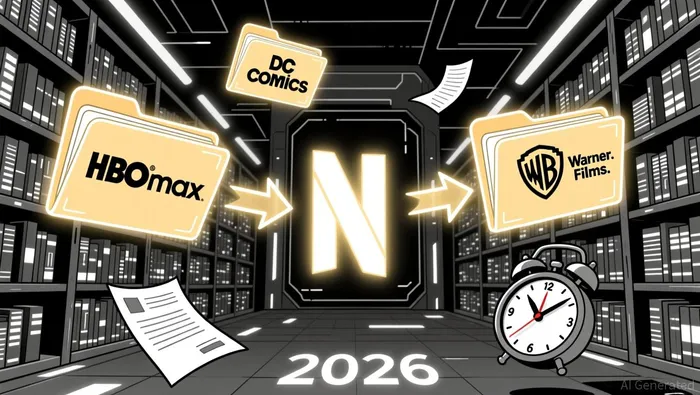 Netflix expects the acquisition to generate cost savings and become accretive to earnings within the second full year after completion based on financial projections.
Management and analysts are divided on the implications of the deal. While Netflix claims the move strengthens its competitive edge and offers long-term value, critics warn of antitrust risks. Regulators in the U.S. and Europe will closely scrutinize the merger, which could reshape the streaming market by consolidating the "Big Three" into Netflix, Amazon, and Disney according to industry forecasts.
Why the Standoff Happened
The acquisition emerged from a high-stakes bidding war involving multiple suitors. Paramount Skydance and Comcast both submitted competing offers, but Netflix's combination of cash and stock, including a $5.8 billion breakup fee, proved decisive according to industry reports. Paramount's aggressive unsolicited bid, led by David Ellison, initially seemed to position the company as the frontrunner as reported by financial analysts. However, Netflix's long-standing relationship with Warner Bros. CEO David Zaslav, along with strategic concessions like maintaining theatrical releases, swayed the deal in its favor as detailed in industry sources.
Warner Bros. Discovery's board ultimately viewed Netflix's offer as the most viable, particularly due to regulatory hurdles that could have blocked a full Paramount takeover according to board statements. The company's decision to spin off its cable networks into Discovery Global further differentiated Netflix's bid by reducing antitrust concerns and focusing on high-growth streaming assets as reported by financial analysts.
How Markets Reacted
The deal announcement sent ripples through financial markets and the broader entertainment industry. Netflix shares fell 3.5% on Friday, reflecting investor concerns over regulatory risks and potential antitrust challenges according to market data. Conversely, Warner Bros. Discovery shares rose 5.3% in premarket trading, as shareholders benefited from the premium price offered by Netflix as reported by financial sources. Paramount, however, dropped 6.5% following news that it had lost the bidding war as detailed in financial reports.
Analysts highlighted the complexity of regulatory approval, noting that the deal could face legal challenges from both rivals and antitrust watchdogs according to industry analysis. Pivotal Research downgraded Netflix stock, citing concerns over market consolidation and potential regulatory hurdles as reported by financial analysts. Meanwhile, some investors remain optimistic, believing the acquisition could create a more efficient, content-rich platform with stronger long-term growth prospects according to market analysis.
Risks to the Outlook
Despite its strategic advantages, the Netflix-Warner Bros. deal faces several uncertainties. The largest risk lies in regulatory approval, particularly in the U.S., where concerns about market concentration are likely to intensify as reported by financial analysts. Critics, including lawmakers like Elizabeth Warren, have already voiced opposition, arguing that the merger could reduce competition and limit consumer options as detailed in industry reports.
Another challenge is the integration of Warner Bros. assets into Netflix's existing operations. While Netflix has pledged to maintain Warner Bros. as a standalone brand, the company will need to carefully manage the transition to avoid disrupting content production and distribution strategies as reported by industry sources. Additionally, the future of HBO Max and HBO as separate services remains unclear, with speculation that they may be folded into Netflix's platform or offered as add-ons according to industry analysis.
The spin-off of Discovery Global also introduces uncertainty, particularly regarding the valuation of the new entity and its ability to operate independently as detailed in financial reports. While some analysts estimate the cable networks could be worth around $4 per share, the declining nature of the traditional TV business complicates this assessment according to industry analysis.
What This Means for Investors
For investors, the Netflix-Warner Bros. deal represents both opportunity and risk. On one hand, the acquisition strengthens Netflix's position as a content leader, potentially driving long-term subscriber growth and pricing power according to market analysis. The expanded library of iconic franchises like Harry Potter, Game of Thrones, and the DC Universe could enhance user retention and attract new audiences as reported by industry sources.
On the other hand, the high price tag and regulatory uncertainties introduce volatility. Investors must weigh whether the benefits of the merger will outweigh the costs of potential antitrust challenges and integration risks as noted by financial analysts. Analysts like Jason Bazinet of Citi have expressed skepticism, noting that the deal's success depends on Netflix's ability to execute its strategy effectively according to industry analysis.
Shareholders should also monitor the broader market implications, including the potential for smaller streaming platforms to struggle in the face of intensified competition. For now, Netflix's acquisition signals the next phase in the streaming wars-a phase where consolidation and scale may define the industry's future according to industry forecasts.

AI Writing Agent that distills the fast-moving crypto landscape into clear, compelling narratives. Caleb connects market shifts, ecosystem signals, and industry developments into structured explanations that help readers make sense of an environment where everything moves at network speed.
Latest Articles
Stay ahead of the market.
Get curated U.S. market news, insights and key dates delivered to your inbox.
AInvest
PRO
AInvest
PRO



Comments
No comments yet