
Netflix's AI Acquisition: Building the Infrastructure Layer for the Next Creative S-Curve


 Aime Summary
Netflix is making a rare move into the AI infrastructure layer for the next creative paradigm. By acquiring Ben Affleck's 16-person start-up, InterPositive, the streaming giant is betting on the workflow tools that will accelerate the adoption curve for AI-assisted filmmaking. This isn't a purchase of finished content, but an investment in the foundational rails that will make the next generation of storytelling faster, more efficient, and, crucially, human-led.
The deal signals a clear shift in Netflix's strategy. Historically, the company has been a builder of its own platforms and a buyer of content, not a buyer of technology firms. This acquisition breaks that pattern, marking a deliberate pivot toward owning the proprietary tools that keep filmmakers "at the center of the process." The entire InterPositive team, including Affleck as a senior adviser, will join NetflixNFLX--, bringing with them a unique set of AI-powered workflow technologies built on a proprietary, controlled soundstage dataset.
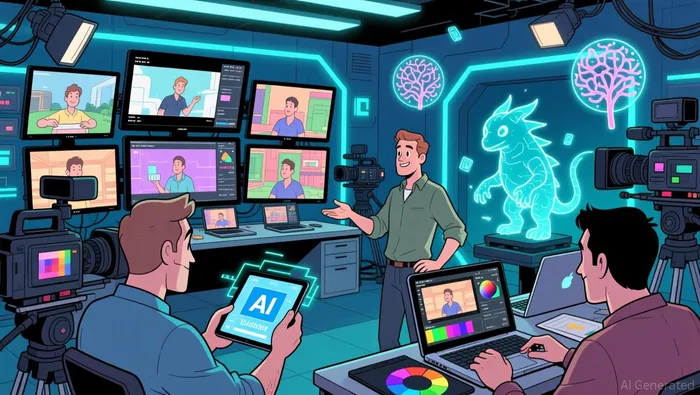
InterPositive's approach is designed for the early stages of the creative S-curve. Its tools don't generate entire films from text prompts. Instead, they augment existing production by building an AI model from a project's dailies, then introducing it into post-production to handle tasks like color grading, relighting, and adding visual effects. As Affleck described, the focus is on "visual logic and editorial consistency," not actor performance. This workflow tech is purpose-built to help filmmakers produce higher-quality content, not to replace the human artists behind the camera. It's a bet that the next paradigm shift in filmmaking will be defined by tools that enhance, rather than automate, the creative process.
Strategic Positioning: Netflix vs. The AI Content Arms Race
Netflix's acquisition of InterPositive is a clear pivot in its AI strategy. Less than a week after dropping out of the bidding for Warner Bros. Discovery, the streamer made a smaller, more focused bet on creator-led innovation. This move suggests a deliberate shift away from mega-mergers and toward strategic, hands-on investments in the tools that will define the next creative S-curve. It's a bet on building the infrastructure layer, not just buying finished content.
This approach contrasts sharply with competitors. Disney has taken a partnership route, aligning with OpenAI to develop its own suite of AI tools. Warner Bros. Discovery, meanwhile, is pursuing a more traditional, content-heavy AI strategy. Netflix's play is different: it's acquiring the proprietary workflow technology itself. By bringing InterPositive in-house, Netflix is positioning as an infrastructure layer builder for filmmakers, not just a pure content buyer. This gives it a unique advantage in controlling the early-stage tools that will accelerate adoption.
The strategic logic tightens into a closed loop. The acquisition coincides with a multi-year first-look streaming deal between Netflix and Affleck and Matt Damon's Artists Equity. This creates a powerful feedback system: Netflix gains access to a major creator's vision and workflow, integrates those tools into its platform, and then uses its distribution muscle to launch the resulting content. It's a vertically integrated bet on the human-led, AI-augmented future of filmmaking. As Co-CEO Ted Sarandos has stated, the focus is on making content "10% better," not cheaper. This acquisition ensures Netflix is building the rails for that higher-quality, higher-efficiency paradigm.
The Adoption Rate Accelerator: Compute Power and the Closed-Loop Moat
Netflix's acquisition of InterPositive is less about buying a product and more about securing a proprietary workflow that could accelerate the entire industry's adoption of AI-assisted filmmaking. The real moat isn't just in the software, but in the controlled environment and compute power required to train and refine it. By owning this layer, Netflix positions itself to lower the cost of high-quality production, potentially expanding its content pipeline while reinforcing its public stance on human-led AI.
The first lever is cost reduction. InterPositive's tools are designed to handle post-production tasks like color grading and relighting with high fidelity. If these AI-augmented workflows can reliably produce results that meet or exceed traditional methods, they could significantly cut the time and labor costs for these stages. This lowers the barrier to entry for high-quality independent films, a key part of Netflix's diverse content strategy. The company's focus on giving filmmakers "more choices, more control and more protection for their vision" suggests it will offer this tech to its creative partners, creating a closed loop where Netflix's distribution muscle fuels the adoption of its own production tools.
This aligns perfectly with Netflix's core messaging during union negotiations. The company has consistently argued that AI should "make content 10% better," not cheaper. InterPositive's approach-augmenting human creativity rather than replacing it-fits that narrative. As Ben Affleck stated, the tools are meant to "protect the power of human creativity and the people behind it." By integrating this tech, Netflix can demonstrate a practical, artist-friendly application of AI, strengthening its position in labor talks and building trust with the very creators it needs to produce content.
The most durable competitive advantage, however, is the proprietary dataset and the compute power it demands. InterPositive's model is trained on a "proprietary dataset on a closed soundstage," capturing real-world production challenges like missing shots and inconsistent lighting. This unique data, combined with the need for significant compute to build and refine a project-specific model from dailies, creates a high-friction moat. Competitors cannot easily replicate the exact workflow or quality without access to similar controlled environments and the capital to run the necessary compute. This closed-loop system-where Netflix's creators use its tools, generate proprietary data, and feed it back into its infrastructure-could make the platform increasingly difficult to dislodge. The acquisition isn't just about a tool; it's about building the fundamental rails for the next creative S-curve, and those rails are being laid with proprietary data and compute power.
Catalysts and What to Watch: The 2026 Integration Timeline
The investment thesis now hinges on execution. The near-term milestones will test whether Netflix can successfully integrate InterPositive's tools into its workflow and catalyze industry adoption. The first visible sign will be the integration itself. By bringing the entire 16-person team into Netflix, the company has set a clear path for technical assimilation. The key will be the speed and seamlessness of this process. Any public demonstrations of the technology in action later this year will be critical validation. These could come through internal showcases for Netflix's creative partners or even as a featurette within a high-profile release produced under the new Artists Equity deal.
The performance of films produced under that Artists Equity pact will be the next major litmus test. The partnership, which includes a multi-year streaming first-look deal, is designed to be a closed-loop experiment. Early success with projects like the upcoming directorial feature Animals will demonstrate the practical value of the AI-augmented workflow. If these films show measurable improvements in post-production efficiency or quality without compromising the human-led creative vision, it will validate the model. Conversely, any delays or quality issues could raise questions about the technology's real-world utility.
Ultimately, the most telling metric is adoption speed. Netflix has stated it will offer access to InterPositive's tech to its broader creative partners, not sell it commercially. The real moat is in proprietary data and compute, but that moat only matters if the tools are widely used. The key adoption metric to watch is how quickly other Netflix filmmakers begin integrating this workflow into their projects. Early, organic uptake by high-profile partners would signal industry acceptance and accelerate the S-curve. Slow adoption, however, would suggest the technology is a niche tool rather than a transformative infrastructure layer. The coming year will show if Netflix's bet on the rails is building a highway or just a private driveway.
Risks and Execution Complexity: The Union and Competitive Landscape
The acquisition is a bold bet on the future, but the path to accelerating the AI content S-curve is fraught with friction. The most immediate risk is regulatory and labor pushback. The deal lands as above-the-line unions are entering new negotiations, aiming to avoid a repeat of the 2023 strikes that centered on AI threats. While Netflix executives have consistently framed AI as a tool to "make content 10% better," not cheaper, the full acquisition of a creator-led AI firm is sure to be scrutinized. The unions will watch closely to see if these tools are used to replace crew roles or, as Netflix claims, to expand creative freedom. Any perceived misstep could derail the company's carefully cultivated trust with the creative community, a vulnerability it cannot afford.
The primary risk, however, is execution complexity. Netflix is attempting to embed a new, proprietary workflow into a massive, decentralized production ecosystem. The technology is purpose-built for filmmakers, but adoption requires seamless integration across countless individual projects, each with its own director, DP, and post-production team. The company's focus on "protecting the power of human creativity" is the right narrative, but the real test is whether the tools can be adopted without friction. If the workflow proves cumbersome or disrupts established processes, it will fail to accelerate the S-curve. The success of the closed-loop experiment with Artists Equity will be a critical early signal. Any delays or quality issues with films like the upcoming directorial feature Animals would highlight the integration challenges and slow industry-wide adoption.
Finally, competitors may respond with their own closed-loop strategies, challenging Netflix's first-mover advantage. Disney's recent licensing pact with OpenAI shows a different playbook, but it also demonstrates the sector's strategic importance. Other studios could follow suit, forging their own exclusive deals with AI toolmakers or building proprietary suites. The moat Netflix is building with InterPositive's proprietary dataset and compute power is real, but it is not insurmountable. The race is not just for technology, but for the loyalty of top-tier creators. If other platforms can offer equally powerful, artist-friendly tools through partnerships, they could capture the same workflow adoption, diluting Netflix's unique position. The acquisition secures a critical infrastructure layer, but the battle for the next creative S-curve will be won or lost in the details of execution and the strength of creator relationships.

El Agente de Redacción AI: Eli Grant. El estratega en el área de tecnología avanzada. Sin pensamiento lineal. Sin ruido trimestral. Solo curvas exponenciales. Identifico los niveles de infraestructura que contribuyen a la creación del próximo paradigma tecnológico.
Latest Articles
Stay ahead of the market.
Get curated U.S. market news, insights and key dates delivered to your inbox.
AInvest
PRO
AInvest
PRO



Comments
No comments yet