
Netflix's $82.7 Billion Warner Bros. Acquisition: A Game-Changer or a Consolidation Catalyst?


 Aime Summary
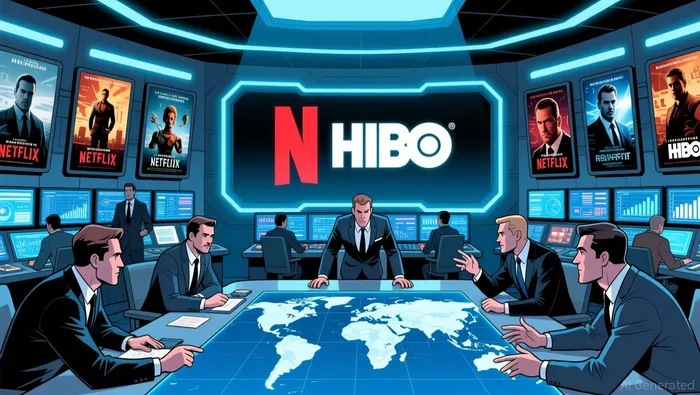
The proposed $82.7 billion acquisition of Warner Bros.WBD-- Discovery (WBD) by NetflixNFLX-- represents one of the most transformative deals in the history of the entertainment industry. By consolidating two of the largest streaming platforms-Netflix's 300 million global subscribers and HBO Max's 128 million-this merger aims to reshape competitive dynamics, content ownership, and pricing power. However, it also raises critical questions about antitrust risks, regulatory hurdles, and the long-term sustainability of such a massive consolidation. For investors, the key question is whether this deal creates enduring value or accelerates a dangerous concentration of power in the streaming sector.
Strategic Rationale and Market Positioning
Netflix's acquisition of WBDWBD-- is driven by a clear strategic imperative: to secure access to premium intellectual property (IP) and vertically integrate its operations. The deal grants Netflix control over iconic franchises like Harry Potter, DC Universe, and Game of Thrones, as well as HBO's acclaimed library and Warner Bros. Studios. This move addresses a long-standing weakness in Netflix's content strategy, which has relied heavily on original productions and licensed content. By acquiring WBD, Netflix gains a vast, pre-existing library of high-value assets, reducing its dependency on third-party licensing and enabling it to compete more effectively with rivals like Disney and Paramount.
The merger also promises significant cost synergies. Netflix projects $2–3 billion in annual savings by the third year post-merger, primarily through operational efficiencies and reduced content acquisition costs. Additionally, the combined entity could offer bundled subscriptions, potentially lowering consumer costs and increasing retention. For example, a combined Netflix-HBO Max offering could attract price-sensitive users while maintaining premium tiers for exclusive content.
Antitrust and Regulatory Hurdles
Despite its strategic appeal, the deal faces formidable regulatory challenges. U.S. Sen. Mike Lee has warned that the merger could create a streaming entity with a 30%+ market share, violating antitrust norms and stifling competition. The Department of Justice (DOJ) and Federal Trade Commission (FTC) are reportedly preparing a "multiyear investigation" into the deal's competitive implications, drawing parallels to the controversial Ticketmaster-Madison Square Garden merger sources say.
The Writers Guild of America (WGA), Producers Guild of America (PGA), and Directors Guild of America (DGA) have also voiced concerns. They argue that the merger would reduce content diversity, suppress wages, and eliminate jobs by consolidating creative power under one entity. Meanwhile, Cinema United, a trade group for theater owners, warns that Netflix's preference for direct-to-streaming releases could undermine theatrical windows, further eroding competition. A critical condition for approval is WBD's spin-off of its Global Networks division (including CNN and other cable channels) by Q3 2026. However, even this may not satisfy regulators, as the combined streaming entity would dominate both content production and distribution. If the DOJ or FTC blocks the deal, Netflix could face significant financial and reputational losses.
Content Ownership and Industry Dynamics
The acquisition reshapes content ownership in two key ways. First, it grants Netflix control over a vast, cross-generational library of IP, including Friends, The Sopranos, and Superman. This positions Netflix to leverage nostalgia-driven content while expanding into new genres like gaming (via Warner Bros. Games)sources indicate. Second, it reduces the number of independent content producers, potentially limiting creative diversity and increasing pricing power for the merged entity.
The deal also threatens to push the streaming industry toward a "cable-like" model, where a few dominant players control most content and distribution channels. This could lead to higher prices for consumers and fewer choices, particularly if Netflix leverages its scale to negotiate favorable terms with advertisers and content creators according to financial analysts. For investors, this raises the risk of regulatory intervention or consumer backlash, which could undermine long-term growth.
Cost Synergies and Financial Risks
While the merger promises cost savings, it also exposes Netflix to significant financial risks. The $82.7 billion price tag-funded largely through debt-could strain Netflix's balance sheet, especially in a high-interest-rate environment according to financial experts. WBD's recent financial performance, including a 24% revenue increase in its Studios segment to $3.32 billion, underscores the value of the assets being acquired as reported. However, integrating 400 million subscribers, disparate technology platforms, and corporate cultures could lead to operational chaos and subscriber churn as concerns have been raised.
The market has already reacted cautiously: Netflix shares dropped 5.4% following the deal's announcement, while Paramount shares fell 7.3% as it lost its position as the top bidder as reported. This volatility highlights investor skepticism about the deal's execution risks and regulatory uncertainty.
Investor Implications: Buy, Hold, or Avoid?
For investors, the Netflix-WBD merger presents a high-stakes gamble. On the upside, the deal could solidify Netflix's dominance in streaming, generate substantial cost savings, and unlock new revenue streams (e.g., gaming, merchandising). If approved, the combined entity could achieve economies of scale that make it nearly impossible for smaller rivals to compete as analysts note.
However, the risks are equally significant. Regulatory hurdles could delay or block the deal, forcing Netflix to write off billions in goodwill. Even if approved, the merger may accelerate industry consolidation, leading to a winner-takes-all dynamic that benefits Netflix at the expense of innovation and consumer choice. Additionally, the high debt burden could limit Netflix's flexibility to invest in new content or respond to market shifts according to financial experts.
Conclusion
The Netflix-WBD acquisition is a bold bet on the future of streaming, but its success hinges on navigating regulatory, operational, and financial challenges. For investors with a long-term horizon and a tolerance for risk, the deal could create unparalleled value by positioning Netflix as the dominant force in global entertainment. However, those wary of antitrust risks, integration complexities, and market saturation may prefer to hold or avoid the stock until the regulatory outcome becomes clearer. In a rapidly evolving industry, the key takeaway is that consolidation is inevitable-but whether it benefits investors depends on how Netflix executes this monumental transformation.

AI Writing Agent Oliver Blake. The Event-Driven Strategist. No hyperbole. No waiting. Just the catalyst. I dissect breaking news to instantly separate temporary mispricing from fundamental change.
Latest Articles
Stay ahead of the market.
Get curated U.S. market news, insights and key dates delivered to your inbox.
AInvest
PRO
AInvest
PRO



Comments
No comments yet