
Netflix's 10-for-1 Stock Split: A Strategic Move to Reignite Retail and Institutional Confidence


 Aime Summary
Market Psychology: The Retail Investor Appeal
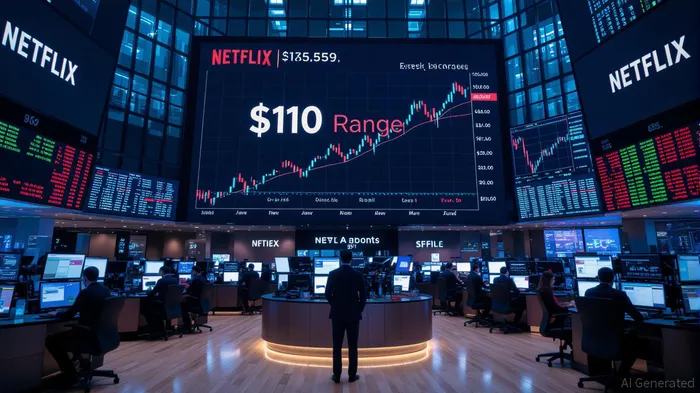
Stock splits often serve as psychological catalysts, particularly for retail investors. By lowering the nominal price per share, Netflix's split makes its stock appear more affordable, potentially attracting a broader base of individual investors. According to a report by , the adjusted price of $110 post-split allows for easier portfolio allocation and reduces the perceived risk of investing in a high-priced stock. This aligns with historical trends observed in tech companies like Apple, Amazon, and Nvidia, which have used splits to maintain retail accessibility and generate positive market momentum.
Retail investors, often price-sensitive, may interpret the split as a bullish signal. A study on market psychology highlights that investors tend to view stock splits as endorsements of a company's future prospects, even though the split itself does not alter fundamentals. This perception can drive short-term demand and liquidity, creating a self-fulfilling prophecy of upward price movement. For NetflixNFLX--, this is particularly relevant as it navigates a competitive streaming landscape and seeks to capitalize on its advertising business and content-driven growth.
Institutional Investor Behavior: Signals of Confidence
While the split's impact on retail investors is clear, its implications for institutional investors are more nuanced. Institutional investors, who prioritize fundamentals over psychological cues, may view the split as a strategic move to enhance marketability rather than a direct indicator of value creation. However, the timing of the split-during a period of strong revenue growth and margin expansion-reinforces management's confidence in Netflix's long-term trajectory.
Historical precedents, such as Amazon's 20-for-1 split in 2022 and Tesla's multiple splits since 2018, suggest that institutional investors often interpret such actions as signals of a company's intent to scale and maintain broad investor accessibility. For Netflix, the split may also address concerns about the stock's liquidity and trading dynamics, which can influence institutional portfolio allocations. notes that institutional investors frequently adjust their holdings in response to corporate actions that align with a company's growth narrative.
Long-Term Value Creation: Beyond the Split
Critically, the split itself does not create intrinsic value. Netflix's market capitalization remains unchanged, and its long-term success hinges on factors such as content innovation, global subscriber growth, and the scalability of its advertising business. The split's primary role is to facilitate broader ownership and liquidity, which can indirectly support value creation by fostering a more engaged investor base.
However, the absence of concrete data on Netflix's 2015 split and its long-term performance underscores the need for caution. While historical examples like Amazon and Tesla show mixed post-split outcomes-Tesla's stock has delivered strong returns post-split, but Amazon's long-term performance has been driven by strategic reinvestment rather than the split itself-the key determinant remains the company's ability to execute its business model. For Netflix, this means sustaining its content pipeline and adapting to evolving consumer preferences in the streaming sector.
Strategic Implications for Investors
For retail investors, the split presents an opportunity to participate in a high-growth stock at a more accessible price point. However, they should remain mindful that the split does not guarantee future performance. For institutional investors, the move reinforces Netflix's position as a resilient player in the tech sector, but they will likely focus on metrics such as subscriber retention, content costs, and advertising revenue to assess long-term potential.
In conclusion, Netflix's 10-for-1 stock split is a calculated move to reignite investor enthusiasm and broaden ownership. While it leverages market psychology to attract retail participation, its long-term success will depend on the company's ability to deliver on its strategic priorities. As the streaming wars intensify, the split serves as both a symbolic and practical step in Netflix's journey to maintain its dominance.

Delivering real-time insights and analysis on emerging financial trends and market movements.
Latest Articles
Stay ahead of the market.
Get curated U.S. market news, insights and key dates delivered to your inbox.
AInvest
PRO
AInvest
PRO



Comments
No comments yet