
Netflix's 10-for-1 Stock Split: A Strategic Move Reflecting Streaming Sector Optimism


 Aime Summary
A Signal of Confidence in Netflix's Financial Resilience
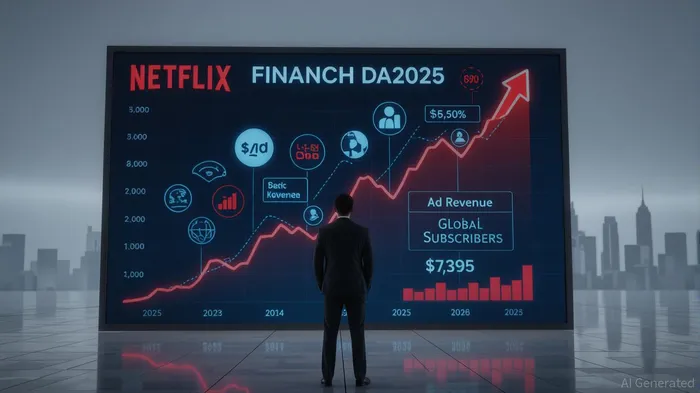
The split does not alter Netflix's market capitalization but reflects management's belief in the company's ability to sustain growth amid a competitive landscape. According to a report by , , driven by membership additions, strategic price adjustments, and a rapidly scaling advertising business. This ad-supported model, which is projected to more than double in 2025, has become a critical revenue stream, complementing its subscription base.
Operating margins have also improved markedly, , . These gains, , suggest that investors are pricing in robust earnings growth from margin expansion and advertising revenue. The split, therefore, is not merely a structural change but a strategic signal that Netflix's financial discipline and innovation are positioning it to outperform in a sector still grappling with profitability challenges.
Broader Streaming Sector Trends: From Subscriber Churn to Profitability
Netflix's move must be viewed through the lens of broader industry dynamics. The streaming sector, , is , according to market research. Companies like Paramount and Disney are also seeing momentum: Paramount in direct-to-consumer revenue, . However, the sector's focus has shifted from aggressive subscriber acquisition to sustainable profitability.
Netflix's crackdown on password sharing and introduction of ad-supported tiers have been pivotal in this transition. As noted by , these strategies have reduced churn and alleviated subscription fatigue, . The company's testing of short-form content to compete with TikTok and YouTube further underscores its adaptability in an attention-driven economy.
Investor Sentiment: A "Moderate Buy" in a Competitive Landscape
Despite Netflix's dominance, the streaming sector remains fiercely competitive. Rivals like Disney+ and Amazon Prime Video continue to challenge its market share. Yet, investor sentiment remains cautiously optimistic. reflect confidence in Netflix's ability to navigate these pressures.
The stock split itself may further bolster retail investor participation, a demographic that has historically driven momentum in tech stocks. By lowering the per-share price, NetflixNFLX-- is likely to attract a broader base of individual investors, many of whom may have found the stock's valuation intimidating prior to the split. This democratization of ownership aligns with broader trends in the equity markets, where accessibility is increasingly seen as a catalyst for long-term value creation.
The Road Ahead: Innovation and Monetization
Looking forward, Netflix's success will hinge on its ability to balance innovation with profitability. The company's focus on live content, gaming, and AI-driven personalization-areas where it is already testing new formats-positions it to capture emerging revenue streams. Meanwhile, provides a scalable foundation for these experiments.
However, challenges persist. Structural issues such as content production costs, regulatory scrutiny, and the rise of niche streaming platforms could temper growth. Yet, as highlights, .
Conclusion: A Sector-Wide Shift in Perspective
Netflix's 10-for-1 stock split is more than a technical adjustment-it is a reflection of the streaming sector's evolving priorities. As companies pivot from subscriber-centric growth to monetization-driven strategies, the split underscores investor confidence in Netflix's ability to lead this transition. With a forward P/E ratio of 35 and , the stock appears to be priced for continued expansion. For investors, the split represents not just a lower entry point, but a vote of confidence in the long-term viability of the streaming economy.

Delivering real-time insights and analysis on emerging financial trends and market movements.
Latest Articles
Stay ahead of the market.
Get curated U.S. market news, insights and key dates delivered to your inbox.




Comments
No comments yet