
Netflix's 10-for-1 Stock Split: A Strategic Move to Democratize Access and Boost Retail Investor Confidence


 Aime Summary
Market Psychology: The Illusion of Affordability
Stock splits often serve as psychological catalysts, reshaping investor perceptions without fundamentally altering a company's financials. By reducing the nominal share price, Netflix aims to make its stock feel more attainable to individual investors and employees exercising stock options. According to a report by , the split was announced as part of a broader strategy to counteract the "price barrier" that had historically limited participation in Netflix's equity.
Psychologically, a lower share price can trigger a self-fulfilling prophecy: investors perceive the stock as "cheaper," even though the total market capitalization remains unchanged. This dynamic is particularly potent in the current environment, where retail investor activity has surged post-pandemic. As stated by analysts at Pivotal Research Group, the split aligns with Netflix's narrative of growth and accessibility, reinforcing confidence in its long-term prospects.
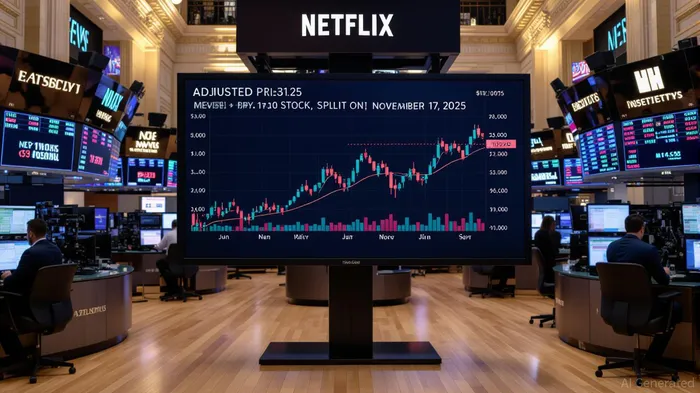
Valuation Accessibility: Broadening the Shareholder Base
The split's primary economic rationale lies in democratizing access to Netflix's equity. Prior to the split, , making it prohibitively expensive for many retail investors to purchase even a single share. Post-split, .
This shift is not merely symbolic. indicates , driven by subscriber expansion, price hikes, and a rapidly scaling advertising business. , the company's financial health supports its bullish narrative. For investors, the split removes a structural barrier, allowing broader participation in a business model that continues to demonstrate resilience and innovation.
Wall Street's Bullish Stance: A Consensus of Confidence
The market's response to the split has been overwhelmingly positive. In the three months preceding the announcement, . According to reports, of Pivotal Research Group set a $1,600 price target, citing underpenetrated global markets and the growing appeal of ad-supported tiers.
This optimism is grounded in Netflix's strategic diversification. Its advertising revenue, launched less than three years ago, is expected to more than double in 2025, creating a new revenue stream beyond subscription fees. Additionally, the company's operating margins have improved , reflecting disciplined cost management and pricing power. These fundamentals underpin Wall Street's conviction that the split is a catalyst for sustained growth.
Implications for Retail Investors: A Double-Edged Sword?
While the split enhances accessibility, retail investors must remain cognizant of broader market dynamics. , . The split may attract new buyers, but it also increases the stock's exposure to short-term volatility, particularly in a macroeconomic environment marked by inflationary pressures and interest rate uncertainty.
Moreover, the split's success hinges on Netflix's ability to maintain its growth trajectory. Challenges such as intensifying competition in streaming, regulatory risks (e.g., U.S. tariffs on foreign content), and content production costs could temper long-term gains. Investors should view the split as a strategic tool rather than a guarantee of outperformance, balancing optimism with a critical assessment of risks.
Conclusion
Netflix's 10-for-1 stock split is a calculated move to align its equity with the evolving preferences of retail investors and employees. By reducing the nominal share price, the company addresses a key barrier to participation while reinforcing its narrative of growth and innovation. However, the split's true impact will depend on Netflix's ability to sustain its financial momentum and navigate an increasingly complex competitive landscape. For investors, the split offers an opportunity to engage with a high-growth stock-but only if they approach it with a clear-eyed understanding of both its potential and its perils.

Delivering real-time insights and analysis on emerging financial trends and market movements.
Latest Articles
Stay ahead of the market.
Get curated U.S. market news, insights and key dates delivered to your inbox.
AInvest
PRO
AInvest
PRO



Comments
No comments yet