
Netflix's 10-for-1 Stock Split: A Strategic Move to Broaden Ownership and Fuel Long-Term Growth


 Aime Summary
Valuation Accessibility: Breaking Barriers for Retail Investors
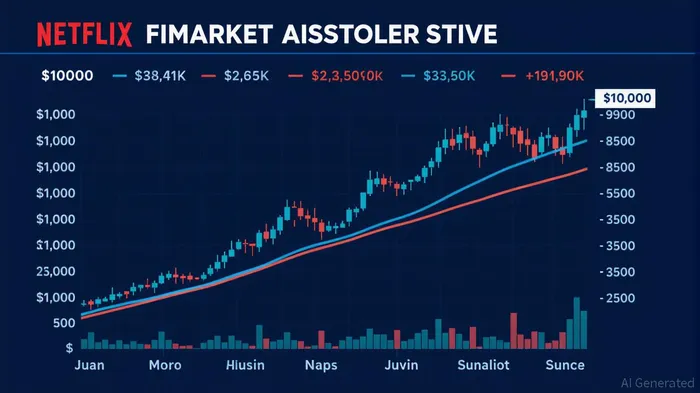
The primary rationale for Netflix's stock split lies in its mission to lower the barrier to entry for individual investors and employees. Prior to the split, the company's share price had surged past $1,000, a level that often deters smaller investors due to liquidity constraints and psychological thresholds. By distributing nine additional shares for every one held-after amending its authorized shares from 4.99 billion to 49.9 billion-Netflix has effectively made its stock more approachable without diluting the company's market value according to reports.
This move aligns with broader trends in retail investing, where platforms like Robinhood and Webull have amplified demand for affordable, high-growth assets. According to a report by Blockonomi, the split follows a year in which NetflixNFLX-- shares rose roughly 25%, driven by subscriber growth and the expansion of its ad-supported tier. By reducing the per-share price, the company is likely to attract a new cohort of investors who previously found the stock prohibitively expensive.
Institutional Investor Dynamics: A Signal of Confidence
While the split primarily targets retail accessibility, it also sends a strong signal to institutional investors about Netflix's confidence in its financial trajectory. The decision to execute the split coincided with Q3 2025 revenue growth of 17.2%, year-over-year, fueled by price increases, membership expansion, and a rapidly scaling advertising business. Analysts have interpreted this as a strategic move to capitalize on momentum, ensuring the stock remains attractive in a competitive landscape where valuation metrics are under constant scrutiny.
Institutional investors, who often prioritize liquidity and diversification, may view the split as a catalyst for increased trading activity. As noted by Economic Times, the expanded share count could enhance market depth, reducing bid-ask spreads and improving overall efficiency for large-volume trades. This, in turn, may attract passive funds and exchange-traded products (ETPs) seeking exposure to high-growth tech equities.
Long-Term Shareholder Strategy: Balancing Growth and Governance
Netflix's long-term strategy hinges on maintaining its dominance in global streaming while diversifying revenue streams. The stock split, while not altering the company's intrinsic value, underscores its commitment to shareholder inclusivity-a principle that has historically correlated with sustained institutional support. By aligning employee compensation with broader ownership, the split also reinforces retention incentives during a critical phase of expansion.
Moreover, the split reflects Netflix's proactive approach to governance. The company's forward P/E ratio of 35x, as highlighted by investor Daniel Sparks, is deemed reasonable given its projected earnings growth. This valuation metric, combined with a robust balance sheet and a content pipeline featuring high-budget originals, positions Netflix to weather macroeconomic headwinds while rewarding patient capital.
Conclusion: A Win-Win for Investors and the Company
Netflix's 10-for-1 stock split is more than a cosmetic adjustment-it is a calculated step to broaden ownership, enhance liquidity, and solidify its growth narrative. For retail investors, the split democratizes access to a stock that has long been a symbol of the tech boom. For institutions, it signals confidence in a business model that continues to adapt to shifting consumer preferences. As the company navigates the challenges of content saturation and global competition, this strategic move ensures that its shareholder base remains as dynamic and diverse as its subscriber network.

Delivering real-time insights and analysis on emerging financial trends and market movements.
Latest Articles
Stay ahead of the market.
Get curated U.S. market news, insights and key dates delivered to your inbox.
AInvest
PRO
AInvest
PRO



Comments
No comments yet