
Netflix's 10-for-1 Stock Split: A Retail Investor's Opportunity or a Mirage?


 Aime Summary
The Mechanics of the Split
The split , ensuring the transaction's feasibility. While the total market capitalization remains unchanged, the lower price per share is designed to attract smaller investors who previously found the stock prohibitively expensive. According to a report by , the adjustment reflects Netflix's strategic pivot to broaden ownership and liquidity.
Accessibility vs. Long-Term Value
At first glance, the split appears to benefit retail investors. , potentially boosting trading volume and participation. Historical splits for Netflix-such as the 2004 and 2015 events-showed mixed short-term results but eventually aligned with the company's long-term growth trajectory. For example, , and while it traded near that level initially, it later resumed its upward climb.
However, accessibility alone doesn't guarantee value creation. The split's success hinges on Netflix's ability to sustain its competitive edge. Analysts remain bullish, . This optimism is tied to Netflix's expansion into ad-supported tiers, gaming, and global subscriber growth, .
A Comparative Lens: Amazon and Disney
To contextualize Netflix's move, consider Amazon and Disney. Amazon's 1998–1999 splits (2:1, 3:1, and 2:1) catalyzed long-term gains, . Disney's 1986 and 1992 4:1 splits delivered robust returns, though its 1998 3:1 split underperformed over five years. These examples highlight that while splits can boost liquidity, long-term success depends on fundamentals.
Risks on the Horizon
. This valuation raises questions about whether the stock is overhyped. Additionally, high content costs and competition from Apple, Disney+, and new entrants could pressure margins. A report by notes that while the split may attract retail buyers, it doesn't address structural challenges.
The Bottom Line
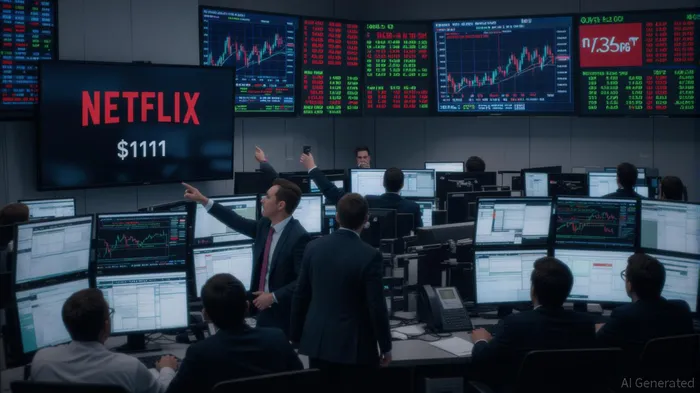
For retail investors, the split is a double-edged sword. On one hand, it lowers the barrier to entry and could drive short-term volatility as the stock adjusts to its new price range. According to market analysis, the split is seen as a strategic move to increase liquidity and accessibility. On the other, long-term value depends on Netflix's ability to innovate and maintain pricing power. If the company can navigate content costs and competition while expanding its ad-supported and gaming segments, the split could be a catalyst for broader ownership and sustained growth.
But investors must remain cautious. A stock split doesn't alter intrinsic value-it merely reshapes perception. As with any investment, due diligence on Netflix's fundamentals is non-negotiable.

Delivering real-time insights and analysis on emerging financial trends and market movements.
Latest Articles
Stay ahead of the market.
Get curated U.S. market news, insights and key dates delivered to your inbox.
AInvest
PRO
AInvest
PRO



Comments
No comments yet