
Netflix's 10-for-1 Stock Split: A Catalyst for Retail Investor Access and Long-Term Growth?


 Aime Summary
The Rationale Behind the Split: Accessibility and Growth Synergy
The stock split, Netflix's first since 2015, was driven by a dual objective: to lower the barrier to entry for retail investors and to align with the company's accelerating revenue growth. According to a report by , the split maintains Netflix's market capitalization at approximately $471.3 billion while increasing the number of shares outstanding. This maneuver mirrors historical precedents, such as Apple's 2014 7-for-1 split, which similarly aimed to broaden ownership and liquidity.
The timing of the split is noteworthy. Netflix's third-quarter 2025 revenue surged 17.2% year-over-year, fueled by membership expansion, strategic price adjustments, and the rapid scaling of its ad-supported subscription tier. highlight that the advertising segment, projected to more than double in 2025, is now a critical growth driver. By making shares more affordable, NetflixNFLX-- is positioning itself to capitalize on this momentum while attracting a broader investor base.
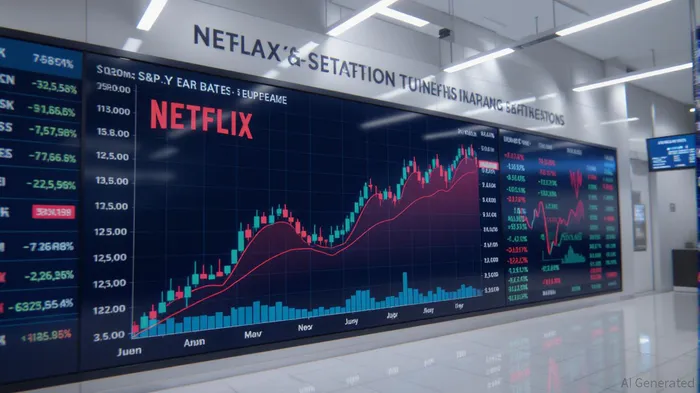
Investor Sentiment: A Surge in Confidence
The market's immediate reaction to the split was bullish. Shares of Netflix rose 1.7% in premarket trading, outperforming the S&P 500 by over 20% year-to-date. This surge reflects growing optimism about Netflix's ability to sustain its dominance in a crowded streaming market. Retail investors, in particular, have welcomed the split as a rare opportunity to participate in a high-growth stock that had previously been out of reach for many.
Data from GuruFocus underscores this sentiment, noting that investor confidence is bolstered by Netflix's financial resilience. Despite a $619 million tax dispute in Brazil, the company's operating margins have expanded from 16% in 2023 to 29% in 2025, outpacing competitors like Disney+ and Amazon Prime Video. This margin expansion, coupled with a 29.15% operating margin and 24.05% net margin, positions Netflix as a cash-flow generator in a sector often criticized for its high burn rates.
Wall Street's Revised Targets: A 22.3% Upside Potential
Analysts have responded to the split with cautious optimism, maintaining a "Moderate Buy" consensus rating for Netflix. The average 12-month price target, adjusted for the split, implies a 22.3% upside from current levels. Some bullish forecasts, such as those from Pivotal Research Group's Jeffrey Wlodarczak, suggest potential gains of up to 41%, citing Netflix's underpenetrated global market and its first-mover advantage in ad-supported streaming.
The revised targets are underpinned by Netflix's ability to monetize its expanding user base. With 285 million paid memberships as of Q3 2025, the company's pricing power-evidenced by a 12% average price increase across its tiers-has proven resilient. Furthermore, the ad-supported tier, now accounting for 15% of total subscribers, is projected to contribute $2.5 billion in revenue by year-end. This diversification of revenue streams reduces reliance on subscription growth alone, a critical factor in a sector prone to churn.
Long-Term Implications for Investors
For retail investors, the split democratizes access to a stock that had become prohibitively expensive. By reducing the per-share price, Netflix is likely to see increased trading volume and broader portfolio inclusion, particularly among younger investors and robo-advisory platforms. Institutional investors, meanwhile, may view the split as a signal of management's confidence in the company's long-term trajectory.
However, risks remain. Intense competition from regional players like Disney+ and YouTube, coupled with macroeconomic headwinds, could pressure margins. Yet, Netflix's content pipeline-featuring 100+ original films and series in 2025-provides a buffer against these challenges. The company's focus on AI-driven personalization and global content localization further strengthens its competitive moat.
Conclusion: A Strategic Move with Substantial Upside
Netflix's 10-for-1 stock split is more than a cosmetic adjustment; it is a calculated step to align with its growth ambitions and investor expectations. By lowering the cost of entry, the company is inviting a new wave of shareholders to participate in its journey. With Wall Street's price targets reflecting a 22.3% average upside and a robust financial foundation, the split could catalyze renewed interest in the streaming sector. For investors, the key question is not whether Netflix can sustain its growth, but how much of that growth they are willing to bet on.

Delivering real-time insights and analysis on emerging financial trends and market movements.
Latest Articles
Stay ahead of the market.
Get curated U.S. market news, insights and key dates delivered to your inbox.
AInvest
PRO
AInvest
PRO



Comments
No comments yet