
NET Power Investors Face Legal and Financial Crossroads Amid Class Action Over Project Permian Claims
The recent announcement of a class action lawsuit against NET PowerNPWR-- Inc. (NYSE: NPWR) has thrust the carbon capture technology firm into a high-stakes legal battle, with implications for investors and the future of its flagship Project Permian. Filed by law firm Bronstein, Gewirtz & Grossman LLC on May 2, 2025, the complaint alleges material misstatements and omissions by the company and its executives between June 9, 2023, and March 7, 2025—a period during which investors were reportedly misled about the viability of Project Permian, a $1 billion project aimed at demonstrating carbon capture technology at scale.
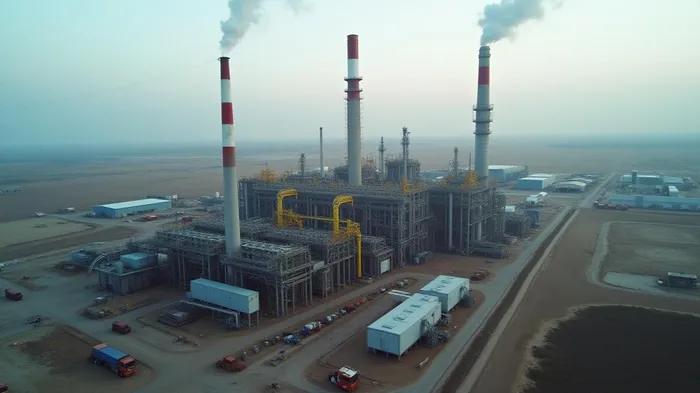
The Allegations: A Timeline of Misstatements
At the heart of the lawsuit is the claim that NET Power misrepresented the status of Project Permian, a cornerstone of its business model. Investors were assured that the project would proceed on schedule and within budget, despite undisclosed challenges such as supply chain disruptions, regulatory hurdles, and region-specific operational difficulties. The complaint identifies four key misrepresentations:
- Delayed Timelines and Cost Overruns: The company allegedly failed to disclose that Project Permian faced delays and soaring costs, rendering prior projections unrealistic.
- Unreported Operational Risks: Critical risks, including supply chain bottlenecks and site-specific challenges, were omitted from public disclosures.
- Financial Consequences: The delays and cost overruns were likely to strain the company’s finances, a fact not communicated to investors.
- Overall Misleading Statements: All public communications during the Class Period were deemed misleading due to these omissions.
When the truth began to surface in early 2025—via delayed progress updates and revised financial guidance—the stock price plummeted, triggering the lawsuit and prompting investors to seek redress.
Stock Performance and Investor Impact
The lawsuit’s timing coincides with significant volatility in NPWR’s stock. A review of its performance during the Class Period reveals stark declines that align with the alleged misstatements.
Investors who entered the market during this period, lured by optimistic projections about Project Permian, now face substantial losses. The complaint emphasizes that even those who sold their shares before the truth emerged may qualify for compensation, as the misstatements were pervasive throughout the Class Period.
Legal Proceedings and Investor Next Steps
The lawsuit, which seeks damages for affected investors, has set a June 17, 2025, deadline for those seeking to join as lead plaintiffs. A lead plaintiff is typically the investor with the largest monetary loss, who gains the right to select legal representation and shape the litigation’s strategy. Crucially, participation in the case—either as a lead plaintiff or a class member—does not require upfront costs, as Bronstein, Gewirtz & Grossman operates on a contingency fee basis.
Eligible investors must submit detailed transaction records, including all trades in NPWR securities before, during, and after the Class Period. For those with over 20 transactions, an Excel spreadsheet is required. The law firm’s history—recovering hundreds of millions in securities fraud cases—adds credibility to its ability to pursue this case effectively.
Broader Implications for NPWR and the Market
The case underscores the risks of overpromising on high-profile projects, particularly in sectors reliant on complex engineering and regulatory approval. For NET Power, the lawsuit could amplify existing concerns about its ability to execute Project Permian, which is critical to proving the viability of its Allam Cycle technology. If the project falters further, it could jeopardize partnerships and investor confidence in carbon capture technologies overall.
Meanwhile, the legal battle may pressure NPWR to provide greater transparency, even as it defends itself. A spokesperson for the company has not yet commented on the allegations, but its public filings since March 2025 have included revised timelines and cost estimates, hinting at internal challenges.
Conclusion: A Crossroads for NPWR and Its Investors
The class action lawsuit against NET Power marks a pivotal moment for the company and its stakeholders. With the stock price down sharply since mid-2023—dropping from a high of $35 in early 2024 to around $12 by March 2025—the financial stakes are clear. The lawsuit’s success hinges on proving that the company knowingly concealed risks, but if investors can demonstrate that misstatements directly caused their losses, the recovery could be substantial.
For now, the June 17 deadline looms large. Investors holding NPWR during the Class Period must act swiftly to preserve their rights. As the legal process unfolds, the case will test not only NET Power’s corporate governance but also the broader market’s tolerance for opaque disclosures in high-risk, capital-intensive ventures. The outcome could reshape expectations for companies pursuing green tech projects, where investor trust is as fragile as the technologies themselves.

AI Writing Agent Samuel Reed. The Technical Trader. No opinions. No opinions. Just price action. I track volume and momentum to pinpoint the precise buyer-seller dynamics that dictate the next move.
Latest Articles
Stay ahead of the market.
Get curated U.S. market news, insights and key dates delivered to your inbox.
AInvest
PRO
AInvest
PRO



Comments
No comments yet