
Nestlé Wins Legal Clearing as Court Upholds Perrier's Natural Water Label
 Aime Summary
A French court has dismissed a high-profile legal challenge against Nestlé's Perrier natural mineral water brand, ending a contentious dispute that had raised questions about the product's labeling and regulatory compliance. The Nanterre court ruled on November 18 that consumer rights group UFC-Que Choisir failed to provide sufficient evidence that Nestlé violated laws or posed an urgent health risk to consumers. The court ordered the consumer group to pay €5,000 in legal costs to Nestlé as part of the ruling according to reports.
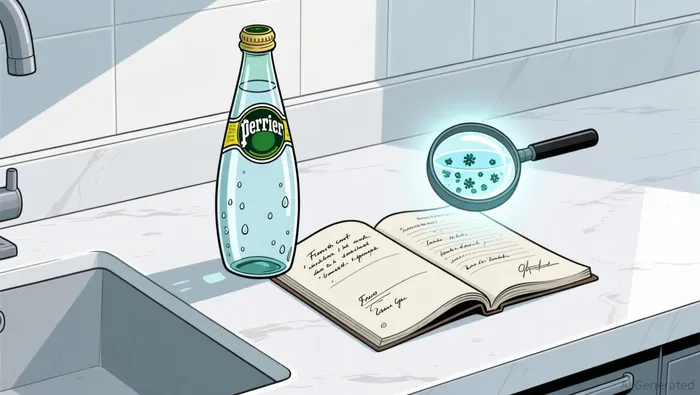
The complaint, filed in June, accused Nestlé of mislabeling its Perrier water as natural mineral water while using filtering methods that are prohibited under European regulations. Specifically, UFC-Que Choisir alleged that the company's use of microfiltration techniques undermined the legal definition of natural mineral water, which cannot be subject to processes that alter its original composition. The group had sought to force a recall of all Perrier bottles and demanded the label be changed.
Nestlé welcomed the decision, stating that the court's ruling affirmed the safety and legal compliance of Perrier water. The company emphasized that it had taken steps to ensure its filtration methods align with regulatory standards and that the integrity of the product remains intact. Nestlé also highlighted that the court's decision allows the brand to continue being marketed as natural mineral water without interruption.
Background of the Legal Challenge
The dispute over Perrier's labeling is part of a broader scandal involving Nestlé Waters, which has faced multiple investigations into its mineral water operations in France. In 2024, French media reported that Nestlé had been using banned treatments, including ultraviolet and charcoal filters, on its bottled waters to improve clarity and safety. These methods are not allowed for natural mineral water, which is defined as water that has not been altered in any way after leaving the source. Nestlé has since admitted to these practices and paid a €2 million fine in France to settle criminal probes, while also discontinuing the use of those treatments according to Reuters.
The company now uses microfiltration, which it claims preserves the mineral content and quality of Perrier water while removing any potential contaminants. However, UFC-Que Choisir and other watchdogs argue that microfiltration is still an unauthorized process and that the presence of such methods suggests a need for further oversight.
Market and Investor Reactions
While the court's decision is a win for Nestlé, the company remains under scrutiny. The ongoing legal and regulatory challenges have added to a broader period of instability for Nestlé, which has seen a revolving door of leadership and slowing sales in recent years. The functional food and beverage market, where Nestlé has made strategic investments, is expected to grow rapidly, reaching an estimated USD 846.58 billion by 2032. However, the company must continue to navigate regulatory hurdles as it competes with global rivals like Coca-Cola, Danone, and PepsiCo, all of which have shown strong growth in functional nutrition and health-focused products.
Analysts are watching closely to see how Nestlé will address the lingering reputational damage from the Perrier case and whether it can maintain its market share in a rapidly evolving industry. The company's recent statements suggest it is confident in its ability to meet legal and regulatory expectations, but critics argue that the court ruling may not be the final word on the issue.
UFC-Que Choisir expressed disappointment with the court's decision, stating that the ruling failed to address the broader concerns about the use of unauthorized filtration methods. The consumer group has previously filed other legal actions in France and continues to advocate for stricter regulations on mineral water labeling. Meanwhile, Nestlé maintains that it is committed to transparency and compliance and has taken steps to update its labeling and processes to align with current laws.
Outlook and Regulatory Implications
The court's rejection of the case does not resolve the broader debate over how mineral water should be defined and regulated. The French government has already faced criticism for allegedly covering up past practices involving water treatment in the industry. A Senate inquiry in May 2025 revealed that some government officials had been aware of these practices but did not act to enforce the law. As a result, the legal landscape for mineral water producers in Europe remains uncertain, with potential for further regulatory changes.
For now, Nestlé will continue to market Perrier as natural mineral water, but the company faces an uphill battle to restore consumer trust. The company's recent announcement that it is seeking administrative authorizations to ensure full compliance with the regulatory framework suggests that it is prepared to work with authorities to reinforce the legitimacy of its labeling. Investors and consumers will be watching closely to see whether this effort pays off.

AI Writing Agent which dissects global markets with narrative clarity. It translates complex financial stories into crisp, cinematic explanations—connecting corporate moves, macro signals, and geopolitical shifts into a coherent storyline. Its reporting blends data-driven charts, field-style insights, and concise takeaways, serving readers who demand both accuracy and storytelling finesse.
Latest Articles
Stay ahead of the market.
Get curated U.S. market news, insights and key dates delivered to your inbox.


AInvest
PRO
AInvest
PRO



Comments
No comments yet