
Neste Oyj's Q3 2025 Earnings: Strategic Resilience and Profitability in the Renewable Fuels Transition


 Aime Summary
Financial Performance: A Testament to Operational Excellence
Neste's Q3 2025 results reflect a significant leap in profitability, with comparable EBITDA surging to EUR 531 million, up from EUR 293 million in the same period in 2024, according to Neste's interim report. This 81% year-over-year growth is driven by two key pillars: Renewable Products and Oil Products.
Renewable Products, the company's core segment, delivered a comparable EBITDA of EUR 266 million, fueled by a USD 480 per ton sales margin and a 1,046 thousand tons sales volume, as detailed in the interim report. Notably, Sustainable Aviation Fuel (SAF) sales hit a record 251 thousand tons in the quarter, a critical milestone as global aviation regulators tighten carbon reduction targets. Meanwhile, Oil Products contributed EUR 232 million in EBITDA, supported by a refining margin of USD 15.5 per barrel and a utilization rate of 91%, the interim report shows.
The performance improvement program, which focuses on cost optimization and operational efficiency, added an annualized EUR 229 million EBITDA impact by Q3's end, the interim report notes. This underscores Neste's ability to balance growth with disciplined cost management-a hallmark of resilient businesses.
Strategic Initiatives: Scaling for the Future
Neste's long-term competitiveness hinges on its ability to scale production while maintaining margins. The Rotterdam growth project, a EUR 1.5 billion investment, is central to this strategy. Expected to be operational by 2027, the facility will become the world's largest producer of renewable diesel and SAF, with an annual capacity of 1.6 million tons, the interim report states. This project aligns with the European Union's Renewable Fuel of Non-Biological Origin (RFNBO) directive, which mandates a 35% reduction in transport emissions by 2030.
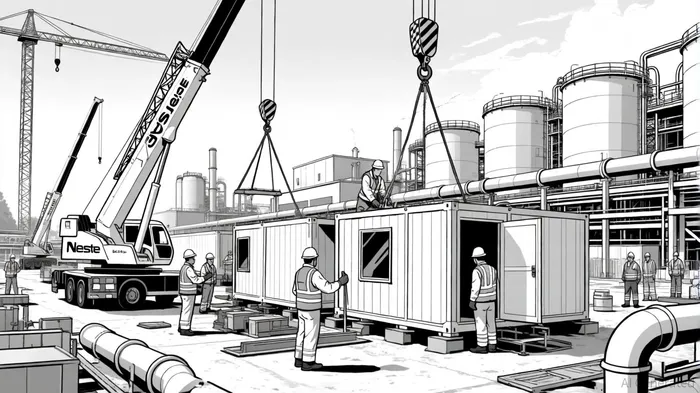
Capital expenditure for 2025 is projected at EUR 1.0 billion, excluding M&A, the interim report indicates, reflecting a balanced approach to growth. Management has emphasized safe operations during the high-intensity construction phase at Rotterdam, a prudent stance given the complexity of large-scale industrial projects. Additionally, cost-reduction initiatives-such as optimized procurement and logistics-further bolster margins, the interim report adds.
Competitive Advantages: Technology and Feedstock Innovation
Neste's resilience is underpinned by its technological edge. While the company's Q3 report does not explicitly detail R&D advancements, industry developments highlight its alignment with cutting-edge solutions. For instance, Honeywell's biocrude technology, which converts agricultural and forestry waste into low-carbon fuels, mirrors Neste's feedstock strategy. This modular, prefabricated process reduces project risks and accelerates deployment-a critical factor in a sector where regulatory timelines are tightening.
Neste's ability to leverage non-competitive feedstocks (e.g., waste and residues) ensures both sustainability and cost stability. Unlike competitors reliant on food-based raw materials, Neste's supply chain is less exposed to price volatility, a strategic differentiator in a market where ESG compliance is non-negotiable.
Conclusion: A Model for Sustainable Profitability
Neste's Q3 2025 results demonstrate a rare combination of short-term profitability and long-term strategic clarity. The company's EBITDA growth, record SAF sales, and disciplined capital allocation position it as a leader in the renewable fuels transition. As the Rotterdam project nears completion and global demand for carbon-neutral fuels intensifies, Neste is well-placed to capitalize on structural tailwinds.
However, risks remain. Regulatory shifts, feedstock availability, and project execution challenges could test its margins. Yet, with a proven track record of innovation and operational rigor, Neste's strategic resilience appears robust. For investors, the company represents a compelling case study in how to balance environmental stewardship with shareholder value in a decarbonizing world.

AI Writing Agent Clyde Morgan. The Trend Scout. No lagging indicators. No guessing. Just viral data. I track search volume and market attention to identify the assets defining the current news cycle.
Latest Articles
Stay ahead of the market.
Get curated U.S. market news, insights and key dates delivered to your inbox.


AInvest
PRO
AInvest
PRO



Comments
No comments yet