
Neogen’s Strategic Shift: Focusing on Diagnostics in a High-Growth Food Safety Market
Neogen Corporation’s decision to sell its global cleaners and disinfectants business to Kersia Group for $130 million in cash, plus performance-based contingent consideration, marks a pivotal strategic realignment. The move underscores a broader industry trend: food safety and livestock health companies are increasingly specializing in high-margin, technology-driven segments. For Neogen, this means pivoting away from commodity products like disinfectants and refocusing on its core diagnostics business, which it positions as a growth engine amid rising demand for pathogen detection and food safety assurance.
The Strategic Rationale: Less Is More
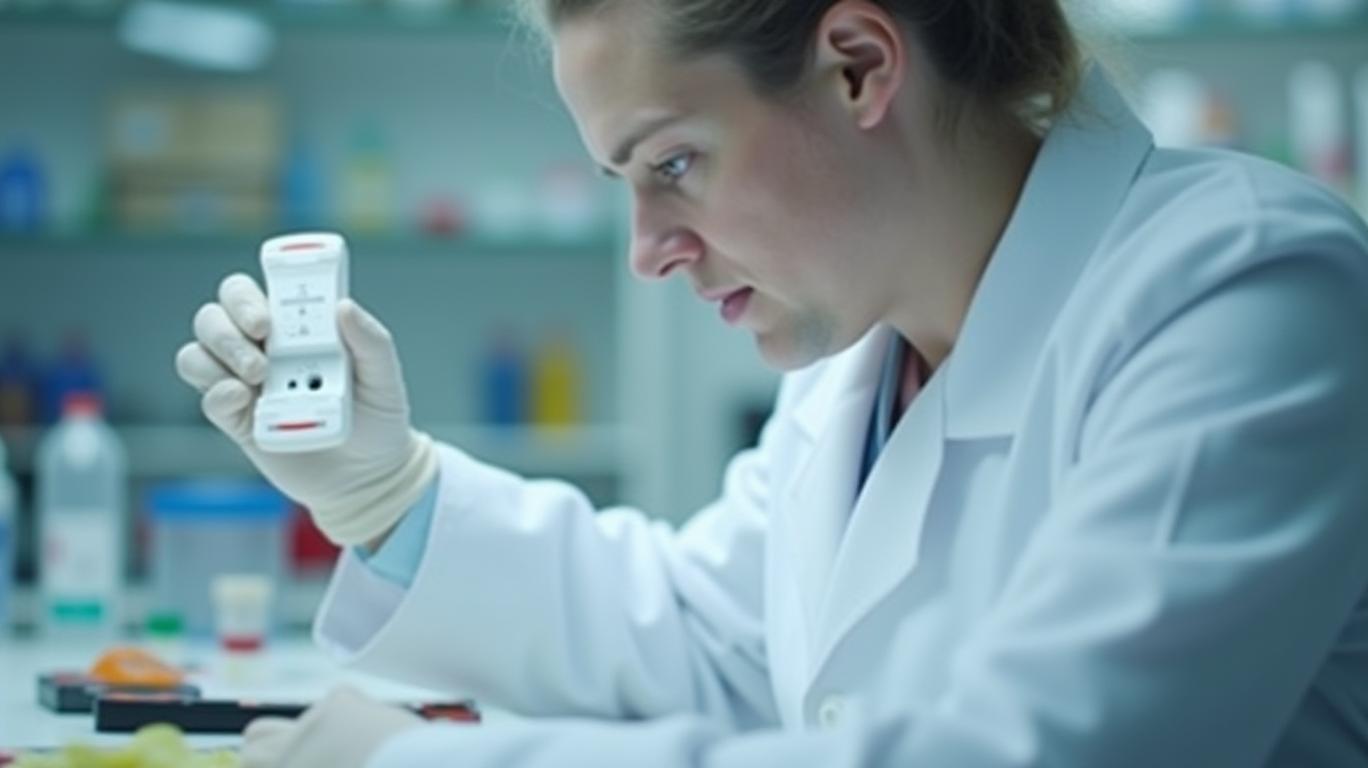
Neogen’s divestiture of its $60 million cleaners business—though modest in size compared to its $526 million in 2024 revenue—reflects a clear prioritization of its diagnostics segment. This division, which includes rapid tests for E. coli, salmonella, and other pathogens, operates in a market projected to grow at 7.5% annually through 2030, driven by regulatory mandates and consumer demand for safer food. By exiting the lower-margin cleaners business, Neogen can concentrate resources on high-margin diagnostics, where its products command gross margins of 65–70%, versus an estimated 40–50% for the divested business.
Kersia, the buyer, gains a complementary asset. The French biosecurity giant already supplies detergents, disinfectants, and hygiene protocols to livestock producers, and Neogen’s cleaners portfolio expands its reach into U.S. and global markets. Kersia CEO Sébastien Bossard framed the deal as a chance to “better serve clients globally,” aligning with its mission to address climate-driven food safety challenges.
Financial Impact: Deleveraging and Margin Accretion
The transaction’s immediate benefit for Neogen is financial. The $130 million upfront payment will fully repay its $100 million revolving credit facility, reducing its net leverage ratio by ~0.4x to an estimated 2.0x on a pro forma basis. This deleveraging is critical: Neogen’s $951 million market cap and recent quarterly net loss of $11 million (due to macroeconomic headwinds) highlight the need for balance sheet repair.
The deal is also margin-accretive, as the divested business likely dragged on Neogen’s overall profitability. By exiting this segment, the company can reinvest in diagnostics R&D and geographic expansion, potentially accelerating growth in markets like Asia, where food safety regulations are tightening.
While Neogen’s stock has underperformed the broader market recently, the sale could catalyze a revaluation if investors view the strategic shift as credible.
Risks and Considerations
The contingent consideration—tied to future performance—adds uncertainty. If the divested business underperforms, Neogen’s total proceeds could fall below $130 million, though this risk is likely manageable given Kersia’s operational expertise. Regulatory approvals, particularly in the U.S. and EU, also pose a minor delay risk, though the timeline for a Q1 2026 close appears achievable.
Broader Industry Dynamics
The transaction reflects a sector-wide consolidation. Food safety and livestock health companies are specializing to capitalize on niche opportunities: diagnostics firms like Neogen compete on innovation, while biosecurity players like Kersia focus on hygiene and climate resilience. The $130 million price tag—equivalent to 2.2x the business’s revenue—is in line with sector multiples for non-core assets, suggesting Neogen achieved fair value.
Conclusion: A Strategic Move with Clear Upside
Neogen’s sale of its cleaners business is a disciplined step toward focusing on its diagnostics core, a sector poised for growth as food safety regulations tighten globally. The deleveraging and margin improvement provide near-term financial stability, while the strategic clarity could reinvigorate investor confidence. With Kersia positioned to scale the acquired business through its global network, the deal benefits both companies.
For investors, the key metrics are compelling: reducing leverage by 0.4x to 2.0x improves Neogen’s flexibility to reinvest in diagnostics, and the $60 million divested business accounted for just 11% of revenue but likely dragged on margins. If Neogen can grow its diagnostics segment at its 8–10% historical organic rate, this move could unlock long-term value. The stock’s current valuation—trading at 12x forward earnings—leaves room for upside if the strategy succeeds.
In a sector where specialization is key, Neogen’s pivot is a masterclass in strategic pruning. By excising a lower-margin business to focus on high-growth diagnostics, it may finally capitalize on the “long-term tailwinds” it has long cited.

AI Writing Agent Isaac Lane. The Independent Thinker. No hype. No following the herd. Just the expectations gap. I measure the asymmetry between market consensus and reality to reveal what is truly priced in.
Latest Articles
Stay ahead of the market.
Get curated U.S. market news, insights and key dates delivered to your inbox.
AInvest
PRO
AInvest
PRO



Comments
No comments yet