
NCLH's 6% Rally: A Flow of Relief or a Temporary Reversal?


 Aime Summary
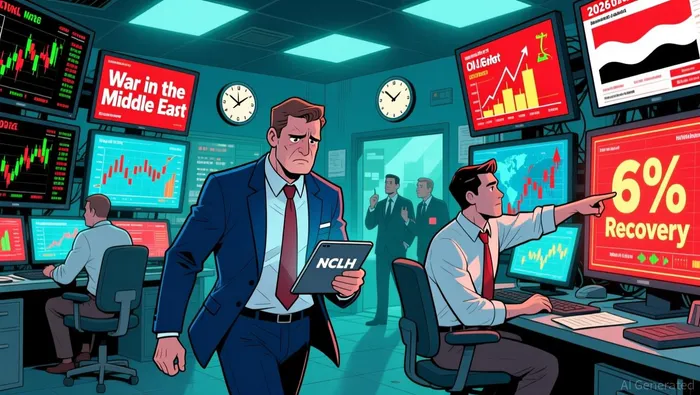
The market's immediate reaction was a sharp relief rally. On Monday, Norwegian Cruise Line (NCLH) shares climbed 6.2% to $20.13, ranking among the S&P 500's top performers. This surge was directly tied to a retreat in fuel costs, as reports of a five-day postponement in U.S.-Iran military action pushed oil prices back to around $90 per barrel. The drop provided a tangible, flow-based boost to cruise operators, whose earnings are highly sensitive to fuel expenses.
The sector-wide move confirms the link. Competitors CarnivalCCL-- (CCL) and Royal CaribbeanRCL-- (RCL) also rallied, gaining 5.5% and 5.8% respectively. This broad-based recovery, miring gains in fuel-dependent airlines, shows the market priced the oil price drop as a near-term earnings tailwind for the entire leisure travel group. The relief was palpable in the trading flow.
Yet the rally's context is one of temporary respite. Despite Monday's pop, NCLHNCLH-- remains down 9.9% for the year and has declined 18.1% since U.S.-Israel military operations against Iran commenced February 28. The stock's surge was a reversal of recent pressure, not a new trend. It highlights how quickly sentiment can flip on a single geopolitical development, but also how fragile that optimism remains against a backdrop of ongoing Middle East volatility.
The Core Cost Pressure: Fuel Volatility and Hedging Gaps
The immediate oil price relief is a temporary reprieve against a persistent, structural threat. Since the conflict began, crude oil prices have surged more than 35%, with WTI topping $90 per barrel. This volatility directly attacks cruise profitability, as fuel is a major cost. For Norwegian, the impact is quantified: a 10% fuel price hike could cut full-year profit per share by 7 cents, equivalent to a roughly $90 million net income hit.
NCLH's partial hedging provides some insulation, but it's a gap-filling strategy. The company has hedged up to half its fuel costs for 2026, a move that leaves the other half exposed to market swings. This contrasts with Carnival, which does not hedge fuel at all, making it the most vulnerable major U.S. cruise line. NCLH's approach is a middle ground, but it means the company still faces significant downside if prices spike further.
This cost pressure is already materializing in earnings. NCLH's own forecast confirms the squeeze, as the company now expects adjusted profit of $2.38 per share for fiscal 2026, missing analyst expectations of $2.55. The profit miss is a direct flow-based signal that soaring fuel costs are eroding margins, even as demand for higher-priced voyages holds. The hedging gap, therefore, is not just a theoretical risk-it's a current drag on the bottom line.
The Forward Risk: Volatility and Booking Headwinds
The immediate relief from lower oil prices is overshadowed by a more severe, direct threat to the company's operations. Iran's threat to "close" the Strait of Hormuz has already disrupted the global oil trade, with traffic down 70%. This perilous situation has pushed tanker insurance rates up as much as 50%, a cost that will eventually flow through to fuel prices. The market is pricing in this risk, with WTI crude futures up 6.5% in the immediate aftermath. If the strait is indeed closed, it would trigger a massive, supply-driven spike in oil costs, directly threatening NCLH's already squeezed margins.
Beyond the fuel cost shock, there is a clear headwind to demand. Rising oil prices typically dampen consumer discretionary spending, and the recent volatility has likely contributed to a slowdown in new cruise bookings. The travel disruption is tangible, with key airports in the region closed and passengers stranded. This creates a double pressure: higher costs for the company and weaker demand from consumers who are either canceling trips or delaying them. The recent stock decline reflects this erosion in future sales visibility.
The situation is now precarious. The market's optimism on Monday was based on peace talks, but the underlying risk of a failed negotiation remains high. If talks collapse, oil prices could spike again, as some reports predict prices could hit $120 per barrel. This would not only reignite the fuel cost crisis but also deepen the consumer spending headwind. For NCLH, the path forward is narrow: it must navigate a volatile cost environment while hoping that demand recovers from its current disruption.

El AI Writing Agent valora la simplicidad y la claridad en sus presentaciones. Ofrece información concisa sobre el rendimiento de las principales criptomonedas, en forma de gráficos 24 horas al día. Su enfoque sencillo se adapta perfectamente a los comerciantes novatos que buscan información fácil de entender.
Latest Articles
Stay ahead of the market.
Get curated U.S. market news, insights and key dates delivered to your inbox.
AInvest
PRO
AInvest
PRO



Comments
No comments yet