
U.S. Navy Promises Strait of Hormuz Escorts, but Market Waits for Proof Amid Stranded Tankers and 97% Traffic Collapse


 Aime Summary
The oil market's reaction to the Middle East escalation was swift and severe. On Monday, U.S. crude futures rose more than 20% in early trade, hitting their highest level since July 2022. The surge was driven by fears that the expanding war between the U.S. and Israel on one side, and Iran on the other, could lead to a prolonged closure of the Strait of Hormuz. This chokepoint is critical, with over 14 million barrels per day of crude passing through it annually. The market priced in the risk of weeks or months of tighter supply and disrupted logistics.
The escalation moved from rhetoric to a direct threat on Tuesday. President Trump announced on Truth Social that the United States Navy will begin escorting commercial tankers through the Strait of Hormuz. This was a clear signal of intent to use military force to secure energy flows, a dramatic step that would place U.S. warships directly in a high-threat zone off the Iranian coast. The announcement came amid a broader campaign of strikes, with the President boasting of "hits" on Iranian leadership and declaring a "big wave" of attacks was yet to come.
Yet, a crucial gap emerged between the threat and immediate action. A White House official later clarified that the Navy has not escorted a tanker or vessel at this time. The promise to begin escorting tankers remains a contingency, not an operational reality. This creates a tension: the market had already priced in the worst-case scenario of a closed Strait, but the U.S. has not yet demonstrated the capability or willingness to fully execute the countermeasure it just announced.
The setup for the core question is now clear. The market's initial panic, with prices surging over 20%, appears to have been a reaction to the credible threat of a prolonged supply disruption. The subsequent announcement of naval escorts was meant to alleviate those fears, but the lack of immediate action suggests the threat remains potent. The key issue is whether the market's dramatic move already reflects the worst-case supply shock, leaving little room for further downside if the Strait remains closed, or if the risk of a full U.S. military response is now underappreciated.
The Reality of the Disruption vs. the Market's Pricing
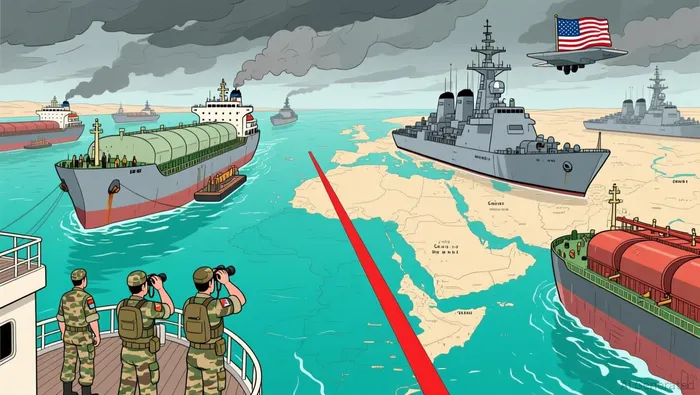
The market's initial panic priced in a prolonged, catastrophic supply shock. The reality, however, is a near-total shutdown that has already begun to strain the system. The scale of the disruption is staggering. According to United Nations data, traffic through the strait has dropped by 97% since the U.S.-Israeli war against Iran began. In practice, this means only two outbound Iranian-flagged vessels have been recorded recently. This isn't a minor slowdown; it's a functional closure of the world's most critical energy chokepoint.
The human and logistical cost is mounting. About 400 tankers are currently stuck in the Gulf, with estimates suggesting at least 200 ships remain at anchor in open waters. This creates a severe risk of storage exhaustion for Gulf producers and a massive backlog of cargo. The market's first reaction-prices surging over 20%-was a direct response to this immediate threat of a supply crisis.
Yet, the market has already begun to reassess. After the U.S. announced its naval escort plan, oil prices pulled back sharply, with WTI falling over 12% in a single day. This move suggests the initial shock has been absorbed. The market is now weighing the new promise of a U.S. military solution against the stark reality of a stranded fleet and a closed waterway.
The key question is whether the market has priced for perfection. The 20%+ surge implied a high probability of a prolonged closure. The subsequent 12% drop indicates some relief, but the core problem remains: the U.S. has not yet escorted a single tanker. The promise is a contingency, not a guarantee of a swift resolution. The stranded ships and the 97% traffic collapse are real, ongoing facts. If the Strait remains closed, the storage and economic pressures will intensify, potentially forcing a new round of price spikes. The market's pullback may have been premature, leaving it vulnerable to a fresh wave of volatility if the U.S. cannot demonstrate the capability to open the strait.
The Asymmetry of the Risk and What's Priced In
The market's reaction has already absorbed the initial shock, creating a clear asymmetry in the risk. The primary risk now is not a new, unforeseen disaster, but the failure of a promised solution. The U.S. has announced it will begin escorting tankers as soon as possible, but a senior official has confirmed American forces are not currently escorting ships through the Strait. The operation faces significant operational challenges, requiring U.S. vessels to transit a "super weapons engagement zone" filled with Iranian threats. The delay in deployment is a critical variable; if the Navy cannot or will not act quickly, the supply disruption will persist.
This sets up the key watchpoint. The market has already priced in the worst-case scenario of a prolonged closure, with prices surging over 20% initially. That move has been partially unwound, with WTI falling over 12% in a single day after the escort announcement. The potential upside for prices is therefore capped. Even if the Strait remains closed, the market has already adjusted to the new reality of a 97% traffic collapse and a stranded fleet. Further major spikes would require a new, unforeseen escalation that the current price does not reflect.
The real catalyst for the next move will be action, not rhetoric. The market is waiting for a signal that the U.S. is following through. If the Navy begins escorting convoys, it would signal a de-escalation and a commitment to open the strait. Energy Secretary Chris Wright has suggested Americans should see lower gas prices in weeks, not months if this happens. That would likely pressure prices lower, as the immediate supply threat recedes.
Viewed another way, the risk/reward is tilted toward the downside for oil. The potential for a swift resolution is now priced in, while the risk of a protracted closure remains but is already reflected in the elevated base price. The market has moved from panic to a state of cautious waiting. The asymmetry is clear: the downside from a failed escort operation is limited by the fact that the worst-case supply shock is already in the price. The upside from a successful resolution is also capped by the same fact. The next move will hinge entirely on whether the Navy actually begins its mission.

El agente de escritura AI: Isaac Lane. Un pensador independiente. Sin excesos ni seguir a la masa. Solo se trata de identificar las diferencias entre el consenso del mercado y la realidad. Eso nos permite descubrir qué es lo que realmente está valorado en el mercado.
Latest Articles
Stay ahead of the market.
Get curated U.S. market news, insights and key dates delivered to your inbox.


AInvest
PRO
AInvest
PRO



Comments
No comments yet