
Navigating Weak Durables Data: Sector Rotation Strategies for a Slowing Economy
 Aime Summary
The U.S. economy is at a crossroads. While August 2025's durable goods orders ex defense data showed a rebound, rising 2.9% month-over-month to $312.1 billion, the preceding July collapse—a 9.4% drop, the largest since April 2020—signals deeper structural fragility. This volatility, driven by tariffs, supply chain bottlenecks, and the Federal Reserve's aggressive rate hikes, underscores the need for investors to recalibrate their strategies. In a slowing industrial environment, sector rotation is no longer optional—it is imperative.
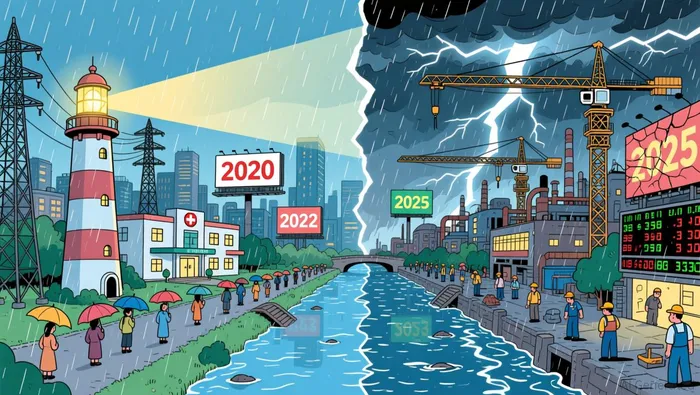
The Durables Dilemma: A Macro Signal, Not a Fluke
The July 2025 plunge in durable goods orders, particularly the 22.4% drop in transportation equipment, reflects a broader slowdown in business investment. With borrowing costs elevated by 500 basis points since 2023, companies are delaying capital expenditures on machinery, aircraft, and infrastructure. This trend mirrors the 2022 inflationary downturn, when similar data triggered a flight to defensive assets.
The August rebound, while encouraging, may be partly inflation-driven. Tariffs on imported goods have inflated manufacturing costs, masking underlying demand weakness. For instance, the 50.1% surge in defense aircraft orders could reflect price hikes rather than volume growth. Investors must distinguish between genuine recovery and statistical artifacts.
Sector Rotation: A Historical Blueprint for Resilience
History offers a clear playbook. During the 2020 pandemic and 2022 inflationary slump, defensive sectors like Utilities, Consumer Staples, and Healthcare outperformed the S&P 500 by 2–3 percentage points annually. These sectors thrive in high-interest-rate environments due to their stable cash flows, low volatility, and inelastic demand.
Conversely, cyclical sectors such as Industrials and Technology have underperformed. In 2022, the S&P 500 Industrials Index fell 12% year-to-date, while the Nasdaq Composite dropped 30%. The pattern repeats in 2025: as consumer credit growth slows and GDP trends toward sub-2% growth, cyclical sectors face heightened risk.
Strategic Reallocation: Where to Be and Where to Avoid
- Defensive Overweights:
- Utilities (XLU): With stable demand and dividend yields near 3.5%, utilities act as a hedge against inflation and rate hikes.
- Healthcare (XLV): Inelastic demand for medical services and pharmaceuticals ensures resilience, even in recessions.
Consumer Staples (XLP): Essential goods remain in demand regardless of economic cycles, offering downside protection.
Cyclical Underweights:
- Industrials (XLI): Sensitive to capital spending, this sector has underperformed by 1.8 percentage points during sub-2% GDP growth periods.
Technology (XLK): High-growth tech stocks face valuation corrections as interest rates rise, reducing the appeal of future cash flows.
Tactical Adjustments:
- Short-Duration Bonds: Long-term bonds face downward pressure in a high-rate environment. Short-duration instruments offer liquidity and lower interest rate risk.
- Sector ETFs: Use tools like XLV and XLF (Financials) to rotate into defensive plays without overexposure to individual stocks.
The Fed's Tightrope and the Path Forward
The Federal Reserve's 500-basis-point hiking cycle has created a fragile equilibrium. While the August durables rebound suggests some stabilization, the long-term outlook remains clouded. Econometric models project U.S. durable goods orders to trend around 1.30% in 2026 and 0.80% in 2027, but volatility from tariffs and global supply chains could disrupt this trajectory.
Investors must prepare for a prolonged period of defensive positioning. The Beacon Capital Management Vantage 3.0 Model, which uses moving averages to dynamically rebalance sector weights, offers a disciplined approach. By equally weighting 11 sectors and adjusting based on trend indicators, it reduces risk concentration while capturing defensive momentum.
Conclusion: Discipline in Uncertainty
Weak durables data is not a mere statistic—it is a macroeconomic signal. In a slowing economy, agility and discipline are paramount. By rotating into defensive sectors, avoiding cyclical overexposure, and leveraging tactical tools like sector ETFs, investors can preserve capital and position for eventual recovery.
As the Fed navigates its tightrope, the message is clear: in a world of rising rates and economic uncertainty, the best offense is a well-structured defense.

Stay ahead of the market.
Get curated U.S. market news, insights and key dates delivered to your inbox.


AInvest
PRO
AInvest
PRO



Comments
No comments yet