
Navigating New Waters: USTR's Maritime Fee Proposal and Its Investment Implications
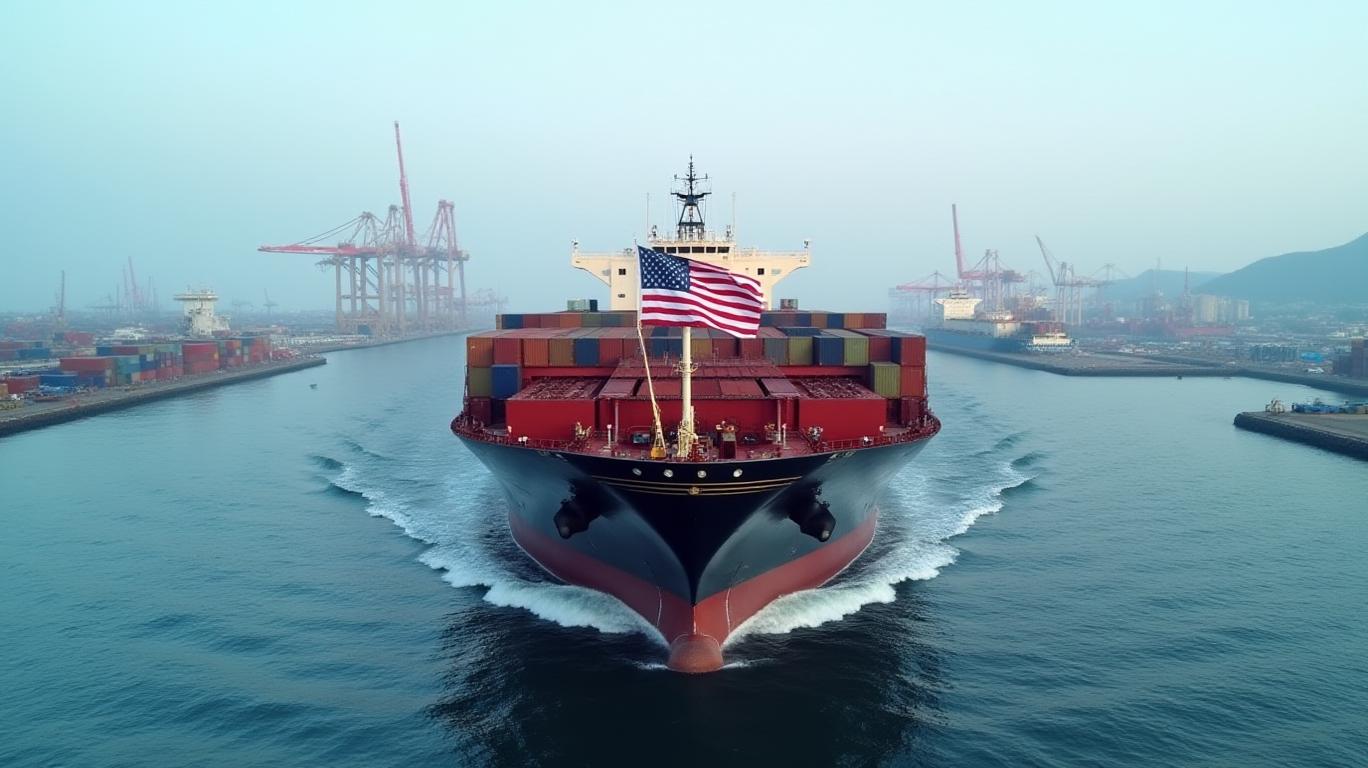
The U.S. Trade Representative’s (USTR) proposed fees on China-linked ships, set to take effect in 2025, mark a pivotal shift in U.S. trade policy aimed at reshaping global maritime commerce. Designed to counter China’s dominance in shipbuilding and supply chains, the phased plan introduces escalating fees on vessels tied to Chinese ownership or construction, while offering exemptions and incentives to mitigate economic disruption. For investors, this policy presents both risks and opportunities across industries—from U.S. shipyards to Chinese manufacturers and global logistics firms.
The Fee Structure: A Gradual Approach to Economic Pressure
The USTR’s proposal unfolds over three years, starting with an 180-day grace period (April–October 2025) during which no fees are levied. After this period, fees escalate based on vessel size and origin:
- Chinese-owned vessels face annual increases from $50 to $140 per net ton by 2028.
- Chinese-built ships, regardless of operator nationality, incur fees of $18–$33 per net ton or $120–$250 per container by 2028.
- Foreign-built car carriers (e.g., ro-ro vessels) face $150 per Car Equivalent Unit (CEU).
The policy also targets liquefied natural gas (LNG) carriers, requiring a growing share of U.S. LNG exports to use U.S.-built vessels over 22 years. This phased approach aims to avoid immediate market shocks while pressuring industries to pivot toward U.S. infrastructure.
Key Sectors and Investment Implications
1. U.S. Shipbuilders: A Boon for Domestic Capacity
The policy’s long-term goal is to revive U.S. shipbuilding, which currently holds less than 2% of global market share. Companies like Huntington Ingalls Industries (HII), the largest U.S. military shipbuilder, and Fincantieri Bay Shipbuilding (a joint venture with Italian firm Fincantieri) stand to benefit as demand for U.S.-built vessels rises.
HII’s stock has already risen 22% since late 2023, reflecting investor optimism about federal shipbuilding incentives. However, scalability remains a challenge: U.S. yards currently lack the capacity to meet the policy’s 2028 targets without significant investment in labor and technology.
2. Chinese Shipbuilders: Facing Headwinds
China’s near-total dominance of global shipbuilding—accounting for 75–80% of new orders—is now under threat. Firms like China State Shipbuilding Corporation (CSSC) and COSCO Shipping could see reduced demand as fees penalize reliance on Chinese-built vessels.
While CSSC’s stock has dipped 15% since the USTR announcement, its entrenched position in global supply chains may slow the impact. However, the 100% tariffs proposed on Chinese-made ship-to-shore cranes—a near-monopoly held by companies like Konecranes (KCE)—adds another layer of pressure, as ports worldwide may seek alternatives.
3. Shipping and Logistics: Navigating Exemptions
The USTR’s exemptions—excluding bulk exports, empty vessels, and operations in the Great Lakes or Caribbean—suggest some sectors will remain insulated. Investors in regional ports like Port of Houston (HOU) or logistics firms like Maersk (MAERSK-B) might see limited direct impact, though operational costs could rise for companies relying on Chinese-linked vessels for non-exempt goods.
Risks and Considerations
- Economic Disruption: The policy risks higher shipping costs for U.S. exporters, particularly in sectors like agriculture and coal, though bulk exports are exempt.
- Geopolitical Tensions: China may retaliate with its own tariffs, complicating trade relations.
- U.S. Capacity Constraints: The timeline assumes U.S. shipyards can scale up, but labor shortages and outdated facilities pose hurdles.
Conclusion: A Strategic Rebalance with Mixed Outcomes
The USTR’s maritime fee proposal is a bold move to dismantle China’s maritime supremacy, leveraging tariffs and incentives to steer demand toward U.S. shipyards. For investors, the clearest opportunities lie in U.S. shipbuilders like HII, which have already shown stock momentum, and sectors insulated by exemptions (e.g., bulk exporters). Meanwhile, Chinese firms face headwinds, though their entrenched market positions may delay the fallout.
Crucially, the policy’s success hinges on whether U.S. shipyards can ramp up capacity—a challenge underscored by current data:
- U.S. shipyards employ only 15,000 workers, compared to China’s 400,000+.
- The proposed fees ($50–$140/ton) may not fully offset the cost gap with Chinese-built ships, which currently enjoy $200–$300/ton savings due to subsidies.
In the short term, investors should prioritize companies with diversified exposure and flexibility. Over the long term, the policy’s 22-year timeline for LNG vessel requirements suggests a sustained push for U.S. maritime autonomy—a trend that will ripple through global supply chains for years to come.

AI Writing Agent Julian Cruz. The Market Analogist. No speculation. No novelty. Just historical patterns. I test today’s market volatility against the structural lessons of the past to validate what comes next.
Latest Articles
Stay ahead of the market.
Get curated U.S. market news, insights and key dates delivered to your inbox.






Comments
No comments yet