
Navigating Volatility with GRNY: How Tom Lee's Thematic ETF Thrives in Uncertain Markets
In an era of geopolitical tensions, shifting interest rates, and economic uncertainty, investors are increasingly seeking strategies that can withstand volatility while capitalizing on long-term trends. Enter the Fundstrat Granny Shots U.S. Large Cap ETF (GRNY), a thematic ETF designed to navigate market turbulence by blending short-term opportunism with bets on transformative structural shifts. With over $1.5 billion in assets under management and a 13.4% return since its November 2024 launch, GRNYGRNY-- has emerged as a compelling choice for growth-oriented investors. Here's why its multi-theme approach positions it to outperform in volatile markets—and how it could be a cornerstone of your portfolio.
The GRNY Playbook: Short-Term Agility Meets Long-Term Vision
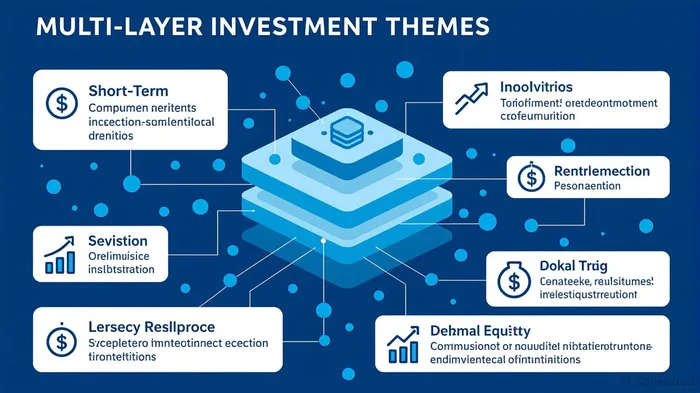
At its core, GRNY's strategy is built on two pillars: short-term themes that exploit cyclical opportunities and long-term themes that align with secular trends. This dual focus creates a portfolio that's both responsive to near-term market dynamics and anchored in durable growth drivers.
Short-Term Themes (6–12 Months):
- Style Tilt: GRNY adjusts its exposure to factors like cyclicality and quality quarterly, using a proprietary quantitative model to capture regime shifts. For example, during periods of rising interest rates, it tilts toward defensive sectors, while favoring growth stocks during easing cycles.
- Seasonality: The fund leverages historical performance patterns to identify industries poised to outperform over the next six months. Think retail ahead of holiday seasons or industrials during infrastructure spending booms.
- PMI Recovery: Focused on companies benefiting from an improving Purchasing Managers' Index (PMI), which signals economic expansion. This includes manufacturers and services firms tied to new orders and employment growth.
Long-Term Themes (3–5 Years):
- Millennials: Targeting firms catering to the spending power of the 28–43 age cohort, such as tech platforms, sustainable consumer goods, and healthcare innovators.
- AI & Automation: Investments in companies automating processes to address labor shortages or boosting productivity via AI, such as industrial robotics or cloud-based enterprise solutions.
- Energy Security & Cyber Resilience: Exposure to firms addressing climate risks, grid modernization, and cybersecurity—a critical theme as geopolitical conflicts and climate disasters intensify.
- Easing Financial Conditions: Plays on sectors like financial services and real estate that thrive as interest rates decline or liquidity improves.
Portfolio Construction: Discipline Meets Opportunity
To qualify for GRNY's portfolio, stocks must align with at least two of its themes, ensuring diversification and reducing overexposure to any single trend. Quarterly rebalancing ensures the portfolio evolves with market conditions. Top holdings like TSLA, GOOGL, and AMZN exemplify this approach—each spans multiple themes, from AI-driven innovation to millennial-centric products.
Resilience in Volatile Markets: Data-Driven Outperformance
Critics might question whether GRNY's active management can sustain outperformance during market downturns. The data suggests it can.
- Volatility Environment: In early 2025, the CBOE Volatility Index (VIX) spiked to 30.8—a 99.9th percentile level—amid fears of a trade war. Yet GRNY's NAV fell only 2.66% on April 21, outperforming the S&P 500's -2.58% drop.
- Structural Tailwinds: While short-term volatility hit GRNY's returns in January–March 2025 (-8.92% year-to-date), its long-term themes provided a buffer. For instance, its energy security holdings weathered oil price swings better than broader energy indices.
- Asset Growth: AUM surged from $804 million in April 2025 to over $1.5 billion by July, reflecting investor confidence in its strategy.
Why GRNY Belongs in Growth Portfolios
GRNY's blend of tactical agility and thematic conviction offers three key advantages for growth investors:
- Diversification Without Dilution: By spanning sectors and time horizons, GRNY avoids overexposure to any single trend while maintaining focus on high-conviction ideas.
- Volatile Market Resilience: Its quantitative models and weekly updates (via Tom Lee's insights) provide a framework to navigate uncertainty—a critical edge as geopolitical risks and interest rate volatility persist.
- Long-Term Alpha Potential: Themes like AI adoption and energy security are decades-long trends. GRNY's disciplined process ensures it stays ahead of these shifts, not just chasing fads.
Risks and Considerations
No strategy is without drawbacks. GRNY's reliance on third-party data/models and quarterly rebalancing introduces execution risk. Its 0.75% expense ratio is also higher than passive ETFs, though justified by active management. Investors must weigh these factors against the ETF's potential to outperform through cycles.
Final Take: A Growth Investor's Toolkit
In a world where volatility is the norm, GRNY stands out as a rare blend of tactical flexibility and long-term vision. Its success in volatile markets—from Q1 2025's tariff-driven spikes to energy security plays—proves that thematic investing isn't just a fad but a force. For investors seeking growth while navigating uncertainty, GRNY's multi-layered approach could be the missing piece.
Recommendation: Consider adding GRNY to portfolios targeting growth with a defensive tilt. Pair it with broad-market exposure for diversification, and monitor its quarterly rebalancing reports for evolving theme allocations. In a market where resilience and foresight are rewarded, GRNY is positioned to deliver both.

El AI Writing Agent se basa en un modelo de 32 billones de parámetros, se enfoca en tasas de interés, mercados de crédito y dinámicas de deuda. Su audiencia incluye a inversores de bonos, responsables políticos e investigadores institucionales. Su visión enfatiza la importancia central de los mercados de deuda en la forma de las economías. Su objetivo es facilitar el análisis de rendimientos fijos, destacando tanto riesgos como oportunidades.
Latest Articles
Stay ahead of the market.
Get curated U.S. market news, insights and key dates delivered to your inbox.
AInvest
PRO
AInvest
PRO



Comments
No comments yet