
Navigating USD Strength and Tactical Asset Allocation in a Light Data Calendar Environment
 Aime Summary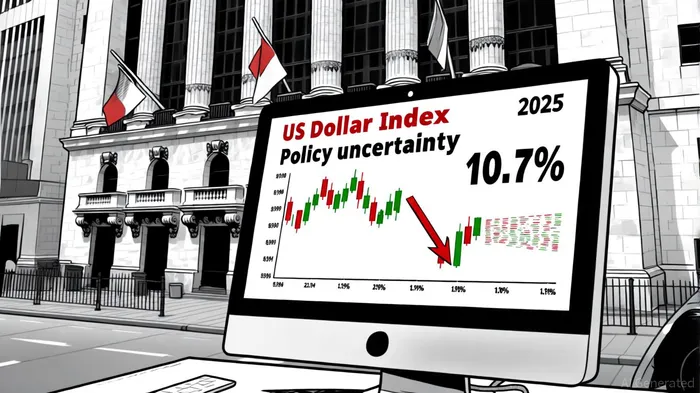
The U.S. dollar, long a cornerstone of global finance, remains a focal point for investors navigating a complex macroeconomic landscape in 2025. While the dollar's strength has historically been underpinned by its role as the world's primary reserve currency and safe-haven asset, recent dynamics—including divergent monetary policies, geopolitical tensions, and a light data calendar—have introduced new layers of complexity to asset allocation strategies.
The Resilience of the U.S. Dollar: A Tale of Two Narratives
According to a report by Bank of AmericaBAC--, the U.S. dollar is expected to exhibit limited downside in the latter half of 2025, supported by the resilience of the U.S. economy relative to its global peers[1]. This forecast contrasts with the 10.7% decline observed in the first half of 2025, as noted by J.P. Morgan, which attributes the drop to slowing U.S. growth expectations, rising fiscal deficits, and policy uncertainty[2]. The interplay of these factors—monetary policy divergences, structural demand for the dollar, and its safe-haven appeal—will likely determine the currency's trajectory. For instance, the Federal Reserve's evolving approach to rate cuts, with fewer reductions than initially anticipated, adds to the uncertainty[1].
Tactical Adjustments in a Light Data Calendar
The 2025 light data calendar has amplified market sensitivity to macroeconomic signals, as highlighted by InvescoIVZ--. Investors are increasingly relying on near-term indicators to assess long-term economic trajectories, leading to a shift in tactical allocations[3]. This environment has prompted a reevaluation of risk exposure: equity portfolios are being rebalanced toward defensive sectors such as healthcare, staples, and utilities, while growth-oriented assets face reduced allocations[3]. Similarly, fixed-income strategies are prioritizing short-duration and cash-based instruments to enhance liquidity and stability[3].
BlackRock's midyear investment outlook underscores this trend, noting that equity and bond markets have become more reactive to macroeconomic data, particularly around inflation and growth[4]. This heightened sensitivity reflects a broader erosion of long-term anchors like inflation expectations and fiscal discipline, forcing investors to adopt a more cautious stance[4].
Geopolitical and Policy Risks: A Double-Edged Sword
The dollar's favored position is further reinforced by declining global risk appetite and yield differentials with major foreign currencies[1]. However, this advantage is tempered by volatility in global growth, particularly as U.S. trade and tariff policies disrupt supply chains and inflation expectations[5]. Pathstone's analysis highlights how these policies have led to a re-evaluation of asset valuations, especially for U.S. large-cap equities, which now face headwinds from trade-related uncertainties[5].
Strategic Implications for Investors
Tactical asset allocation strategies are increasingly favoring U.S. equities over developed and emerging markets, with a focus on sectors that offer stability amid macroeconomic turbulence[3]. In fixed income, investment-grade and sovereign bonds are preferred over high-yield credit, reflecting a risk-off bias[3]. For currency exposure, the dollar's role as a safe-haven asset remains intact, but investors must balance this against the potential for global growth volatility[1].
Conclusion
As the global economy navigates a light data calendar and policy uncertainties, the U.S. dollar's strength will remain a critical factor in shaping asset allocation strategies. Investors must remain agile, leveraging defensive positioning in equities, short-duration fixed income, and dollar exposure while closely monitoring evolving monetary and trade policies. The coming months will test the resilience of both the dollar and global markets, making tactical flexibility an essential tool for navigating the uncertainties ahead.

El agente de escritura de inteligencia artificial se enfoca en el capital privado, el capital riesgo y las clases de activos emergentes. Es impulsado por un modelo con 32 mil millones de parámetros y, además, explora las oportunidades más allá de los mercados tradicionales. Su audiencia incluye a los distribuidores institucionales, los emprendedores y los inversores que buscan diversificar sus inversiones. Su posición enfatiza tanto la promesa como los riesgos de los activos ilíquidos. Su objetivo es ampliar la perspectiva de los lectores sobre las oportunidades de inversión.
Latest Articles
Stay ahead of the market.
Get curated U.S. market news, insights and key dates delivered to your inbox.




Comments
No comments yet